Buying Guide
Choosing the best incense cones starts with identifying how you plan to burn them. A standard cone is intended to sit on a suitable heat-resistant holder, while a backflow cone has a channel that directs smoke downward through a compatible waterfall-style burner. The selected products include both formats, so burner compatibility should come before scent preference.
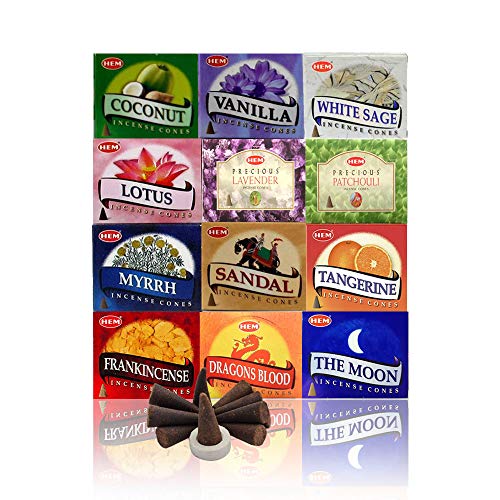
Traditional cones are the more flexible choice for a simple home-fragrance routine. Yajna, Tulasi, HEM Opium, HEM’s assorted pack, ARO VATIKA, Raajsee, and Nippon Kodo present their cones as options for meditation, yoga, relaxation, ritual use, or general room fragrance. Nippon Kodo is the most compact option and includes a mini metal holder, while the larger multi-box products are better suited to repeated use or scent rotation.
Backflow cones are a different design choice. Kingrol documents dimensions and compatibility with backflow burners, and HEM Sandalwood specifically describes the downward smoke effect. These products are appropriate when the visual smoke movement is part of the experience. They should not be treated as a replacement for a regular holder because the intended burner design is different. Keep the burner on a stable, heat-resistant surface and follow the holder maker’s instructions.
Match scent variety to your routine
A variety pack is useful when you are still learning which fragrance family fits your room. Tulasi lists 12 scents that include musk, frankincense and myrrh, sage, vanilla, rose, lavender, sandalwood, citronella, cinnamon, jasmine, patchouli, and night queen. HEM’s assorted pack also lists 12 profiles, including white musk, white sage, cinnamon, patchouli, frankincense, myrrh, coconut, magnolia, lavender, and red rose. These assortments provide a broad starting point without committing to one aroma.
ARO VATIKA takes a similar approach with 12 named fragrances spanning sage, Palo Santo, dragon’s blood, chakra, musk, benzoin, Nag Champa, lavender, patchouli, rose, spiritual love, and sandalwood. Raajsee narrows the choice to six scents: Nag Champa, lavender, sandalwood, patchouli, white sage, and Japanese rose. That smaller selection may be easier to manage if you want variety without a large fragrance menu.
Single-scent packs make more sense when you already know your preference. Yajna focuses on frankincense and myrrh, HEM Opium focuses on opium, and Nippon Kodo describes a mild sandalwood note. HEM Sandalwood is the single-scent backflow option. A focused pack also helps maintain a consistent room profile, whereas a mixed box is more useful for experimenting.
Check burn-time evidence
Burn duration is one of the most useful specifications when planning a session, but it is not supplied consistently across listings. Yajna states 20 to 30 minutes per cone. ARO VATIKA states 25 minutes. Raajsee states 15 to 20 minutes, and Kingrol states about 10 to 15 minutes for its backflow cones. STRN states about five minutes. These figures are listing claims, not independent measurements, so use them as planning guidance rather than a guarantee.
When a product does not provide a duration, do not assume it matches another cone. Tulasi, HEM’s assorted pack, HEM Opium, Nippon Kodo, and HEM Sandalwood provide useful scent or format information but no precise burn-time figure in the supplied evidence. If session length matters, favor a listing with a stated range and keep the first burn supervised.
Read ingredient and production claims carefully
The most specification-aligned supplied ingredient detail appears in products that name materials or production methods. Yajna describes hand-rolled cones treated with essential oil and a minimum 48-hour soaking period. Raajsee cites essential oils, herbs, natural wood incense powder, honey, natural resins, and traditional techniques. HEM’s assorted pack identifies woods, resins, and essential oils, while HEM Sandalwood identifies wood powder and essential oils.
Other listings use broad terms such as natural, organic, non-toxic, or clean burning without providing a complete ingredient list. Those descriptions may be useful context, but they do not establish every material used. A practical buyer should distinguish between a named material, such as wood powder or essential oil, and a general marketing statement. Anyone sensitive to fragrance or smoke should review the product information carefully and use ventilation.
Consider pack size and storage
Large packs are convenient for frequent burning but require dry, organized storage so scents do not mingle. Kingrol’s 468-cone backflow pack is the largest selected option and lists nine separate fragrance types. Tulasi provides 180 cones across 12 boxes, while HEM’s assorted and Opium packs provide 120 cones in 12 boxes. Separated boxes can make scent selection easier than one mixed container.
Smaller packs can be preferable for occasional use, gifting, or testing a fragrance. Nippon Kodo has 12 cones and a holder. HEM Sandalwood has 40 backflow cones, and Yajna has 60 focused-scent cones. Keep packages closed between uses, and avoid storing incense near heat, moisture, food, or items that could absorb fragrance.
Use cones safely
Place every cone on a stable, nonflammable holder with room for ash. Light the tip, allow it to catch, and extinguish the flame as directed by the listing or holder instructions. STRN specifically instructs users to wait 10 to 20 seconds before snuffing the flame. Never leave a burning cone unattended, and keep it away from children, pets, curtains, paper, and moving air. Ventilation is sensible because incense creates smoke, even when a listing describes natural materials.
Final Recommendation
Kingrol 468-Piece Backflow Cone Variety Pack ranks first overall in this specification-based comparison under the published weighted criteria.
Yajna Frankincense-and-Myrrh Natural Cones is the first overall specification-based choice among the returned products.
The final choice among the best incense cones depends on the documented features that match your intended use.
Yajna combines a clear resin scent, detailed production information, and a stated 20- to 30-minute burn range. For a broad fragrance trial, Tulasi is a well-documented choice, while ARO VATIKA is useful when a stated 25-minute duration matters. Kingrol is the better fit for a large backflow collection, and Nippon Kodo is the most compact option with a holder included.
Among the top incense cones, the right selection depends less on a universal winner than on format, scent, and session length. Choose Yajna or HEM Opium for a defined aroma, a 12-scent pack from Tulasi or HEM for rotation, Raajsee for a smaller handmade gift format, or HEM Sandalwood and Kingrol for backflow use. Treat burn times as supplied estimates, verify holder compatibility, and use every cone on a stable heat-resistant surface.
Frequently Asked Questions
What are the best incense cones for a first-time buyer?
A variety pack is usually the easiest starting point because it lets you compare fragrance families without committing to one scent. Tulasi and HEM’s assorted pack both list 12 named fragrances. Raajsee offers a smaller six-scent selection if you prefer fewer choices. If you already prefer sandalwood, Nippon Kodo provides a focused option and includes a mini holder.
Are backflow cones different from regular incense cones?
Yes. Backflow cones are designed with a smoke channel that directs smoke downward through a compatible burner. Kingrol and HEM Sandalwood document backflow use. Standard products such as Yajna, Tulasi, HEM Opium, and Nippon Kodo are not identified in the supplied evidence as backflow products. Check the burner design before purchasing.
Which cones have a stated burn time?
Yajna lists 20 to 30 minutes, ARO VATIKA lists 25 minutes, Raajsee lists 15 to 20 minutes, Kingrol lists 10 to 15 minutes, and STRN lists about five minutes. The remaining selected products do not provide a precise duration in the supplied listing information. These are manufacturer or seller claims rather than independent test results.
How should I store incense cones?
Store them sealed in a cool, dry place away from heat and moisture. Separate boxes are useful because they reduce scent mixing; Tulasi, HEM’s assorted pack, HEM Opium, and Kingrol provide separated or organized fragrance formats in the supplied descriptions. Keep incense away from food and materials that could absorb its aroma.
What safety steps should I follow when burning cones?
Use a stable, heat-resistant holder, keep the cone away from combustible materials, and provide reasonable ventilation. Never leave a lit cone unattended. Extinguish it according to the product or holder instructions, and keep burning incense away from children and pets. STRN’s listing specifically advises waiting 10 to 20 seconds before snuffing the flame after lighting.