Buying Guide
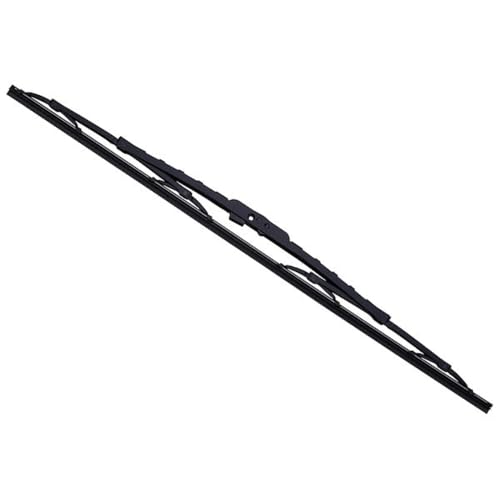
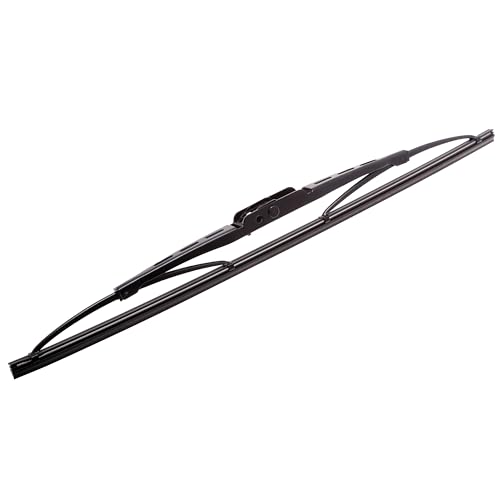
The best conventional windshield wiper blades are framed replacements that use a metal support structure to press a flexible wiping element against the glass. Unlike a listing based only on length, a useful comparison considers the frame, the rubber or wiping edge, pressure distribution, arm connection, and weather-related materials. The products above vary from single blades to matched pairs and from general sizes to vehicle-specific sets.
Start with exact length and vehicle fit
Wiper blades are not interchangeable solely because they look similar. Check the driver-side and passenger-side lengths in the vehicle manual or the existing blade, then compare the arm connection. The selected products document several different arrangements: Rain-X lists a 26-inch and 16-inch pair; wenyant lists 26 and 19 inches; Clix and JINGOU provide equal-length pairs; and the PEAK and Bosch products are single blades.
Arm style matters just as much. Bosch uses a DirectConnect format, Rain-X includes a multi-adapter, Clix lists J-hook and pin compatibility, and the 5 PLUS Ford pair includes a J-hook adapter. The wenyant pair identifies J/U-hook installation. These details are more useful than assuming that a universal-looking blade will attach to every vehicle. Vehicle-specific products such as the 5 PLUS Toyota set and the Ford-specific pair should be considered only for the applications named in their listings.
Compare frame construction
A conventional frame normally uses articulated metal sections or related steel support components to distribute force along the blade. Rain-X explicitly identifies a galvanized steel frame, Clix specifies an all-steel frame, ACDelco lists all-metal construction, and Hella uses galvanized steel. PEAK adds stainless steel hardware, including the frame, spline, and rivets. These descriptions make the construction easier to evaluate from specifications.
The 5 PLUS Ford product is particularly clear about its traditional metal design and eight pressure points. JINGOU lists a metal iron frame with dual memory steel sheets, while the Toyota-specific 5 PLUS product documents galvanized memory-metal springs. Those spring details help explain the support system, although they do not replace checking whether the complete assembly matches the original blade and arm.
Examine the wiping element
The wiping edge is the part that contacts the windshield, so material information deserves close attention. Rain-X, Hella, JINGOU, and the wenyant pair identify natural rubber. Clix lists graphite-coated rubber, Hella lists graphite-coated natural rubber, and Bosch specifies a precision-cut natural rubber edge. The 5 PLUS Toyota listing identifies PTFE-coated natural rubber.
Coatings and formulations should be treated as specification details rather than proof of a particular result. A graphite coating may be relevant to buyers seeking a stated smooth-wiping design, while a natural-rubber description gives clearer information about the listed material. ACDelco refers to precisely fitted wiping elements but does not identify the rubber compound in the supplied evidence, so its score reflects the available information rather than an assumption.
Even pressure distribution is a recurring design goal in framed blades. Rain-X lists multiple pressure points and embedded friction reducers. The 5 PLUS Ford set specifies eight pressure points and dampers. JINGOU describes dual spring sheets and an asymmetric spoiler, while the Toyota-specific 5 PLUS product lists 2,000 force points. These features are useful for comparing how each listing addresses contact across the windshield.
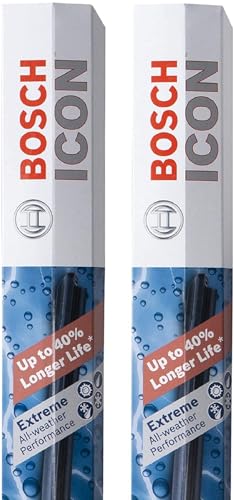
Bosch uses a vented metal frame intended to reduce wind lift, and the ACDelco dogleg profile is intended to contour to high-wrap vehicles. PEAK describes a larger wipe surface. Such features can help distinguish products on paper, but they should not be treated as independent test results. The comparison is based on what each public listing states.
Consider weather and corrosion details
For year-round use, inspect whether the listing mentions corrosion-resistant hardware or weather-related rubber properties. Rain-X describes galvanized steel that resists rust and corrosion and natural rubber intended to resist cracking, splitting, and tearing. Hella also identifies galvanized steel and weather-resistant flexible rubber. PEAK specifies a rust-resistant stainless steel frame, spline, and rivets.
Clix mentions an all-steel frame and an all-weather rubber blade with graphite coating. Avoid transferring a weather claim from one model to another, even when products share a brand.
Choose a single blade or a pair
A pair is convenient when both front blades need replacement, but the sizes and connection must match the vehicle. Rain-X, Clix, JINGOU, the 5 PLUS products, and wenyant provide pairs. Bosch, ACDelco, Hella, and PEAK are listed as single-blade products. A single blade can make sense when only one position needs replacement or when the other side uses a different size.
Read the unit count carefully. A product described as a pair may still use different driver and passenger lengths, while a matched pair may use two identical blades. The correct configuration is the one that matches the vehicle’s specified positions, not necessarily the one with the most pieces.
Installation and final checks
Before installation, confirm the arm type, length, side position, and any required adapter. Remove protective covers where the instructions call for it; Bosch specifically says to remove its rubber lip protector, and the wenyant listing says to remove a yellow protective cover. Check that the blade is fully seated before lowering the arm onto the glass.
For the best conventional windshield wiper blades, the most defensible paper-based choice is the model whose documented design matches your vehicle. A detailed frame description is helpful, but correct fitment remains the first filter. If a listing lacks a connector or exact-size detail, use the vehicle application and existing arm as the deciding references rather than guessing.
Final Recommendation
Rain-X WeatherBeater 820147 ranks first overall in this specification-based comparison under the published weighted criteria.
The final choice among the best conventional windshield wiper blades depends on the documented features that match your intended use.
Rain-X WeatherBeater 820147 is the highest-scoring returned product and the first overall specification-based choice. It combines a galvanized steel frame, natural rubber, multiple pressure points, friction reducers, and a pre-installed multi-adapter in a clearly documented conventional pair. Among the top conventional windshield wiper blades, Bosch Direct Connect 40516 is the focused single-blade alternative, while ACDelco Silver 8-4415 is notable for all-metal construction and a dogleg profile.
Choose Clix when a matched 20-inch pair and J-hook or pin arm are appropriate. Choose Hella or PEAK when galvanized or stainless hardware is the priority and a single blade is suitable. The 5 PLUS Ford and Toyota products are better treated as application-specific choices, not general substitutes. JINGOU and wenyant provide additional paired configurations, but their exact lengths and arm connections must be checked carefully.
Frequently Asked Questions
What makes conventional windshield wiper blades different from beam blades?
A conventional blade uses a framed support structure or articulated metal components to hold the wiping element against the windshield. In this comparison, Rain-X, Clix, Hella, ACDelco, PEAK, and the 5 PLUS Ford model explicitly document metal or steel construction. A beam-style or bracketless design should not be assumed to be conventional simply because it is sold as a windshield blade.
How do I select the best conventional windshield wiper blades for my car?
Begin with the vehicle’s specified driver and passenger lengths, then identify the arm connection. Compare those details with the listing. For example, the Clix pair lists J-hook and pin arms, Bosch uses DirectConnect, and the wenyant pair lists J/U-hook installation. Vehicle-specific products require an additional model and year check.
Should I buy a single blade or a pair?
Buy a pair when both front positions need replacement and the listed lengths match your vehicle. A single blade can be appropriate when only one side needs replacement or when the two positions use different products. Rain-X provides a staggered pair, while Bosch, ACDelco, Hella, and PEAK are listed as single blades.
Are graphite-coated or natural-rubber blades preferable?
The supplied evidence identifies both types but does not provide hands-on testing to establish a universal preference. Graphite-coated rubber is listed by Clix and Hella, while natural rubber is identified by Bosch, Rain-X, Hella, and wenyant. Use the stated material as one comparison point alongside fit, frame construction, and arm compatibility.