Buying Guide
The best bike derailleur gears are not interchangeable simply because they share a speed count. A correct match depends on whether you need a rear or front derailleur, how the unit attaches to the frame, which shifting system it supports, and how much gear range it can handle. The products above are ranked from supplied listing specifications only. No hands-on testing or customer-opinion analysis was used.
Rear versus front derailleur
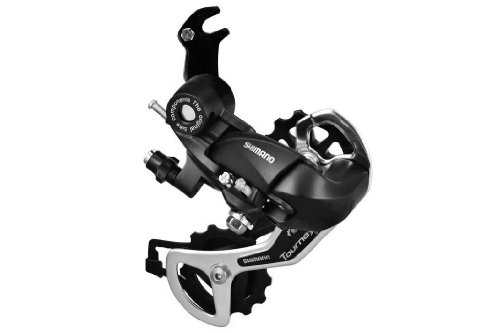
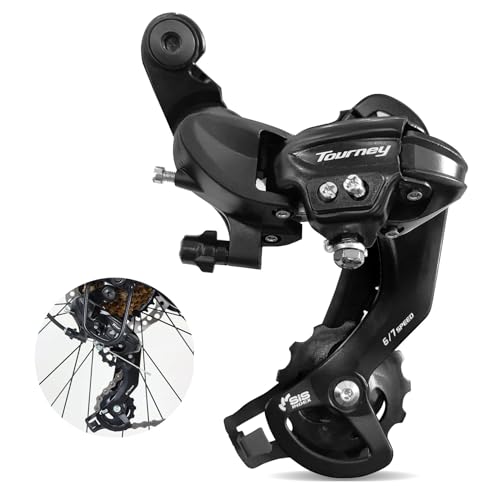
Most shoppers searching for a replacement derailleur are looking for a rear unit. Rear derailleurs guide the chain across the rear cassette and typically use a cage to manage chain slack. The Shimano Tourney RD-TY300-SGS, Airuzara RD-TX800, Relwears RD-TX800, Huazu RD-TY300, Relwears RD-TY300, RainFlowwer RD-TY300, Relwears RD-TY21B, and Frandilo RD-TZ31A entries are rear derailleur products.
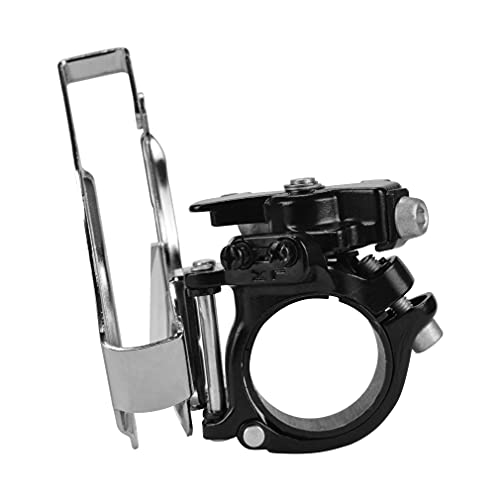
The LITEONE and Tookie entries are front derailleurs. A front derailleur moves the chain between front chainrings and cannot replace a rear derailleur. Choose the LITEONE model when the supplied 42-34-24T crankset, 31.8mm or 34.9mm clamp sizing, and top- or bottom-routing details match your bicycle. The Tookie model is a pull-up front-shift option with a clamp-band design, but its listing does not provide an exact clamp diameter.
Match the speed count
Start by counting the rear cassette or freewheel positions and the front chainrings separately. The Shimano and Huazu models are documented for 6/7-speed SIS systems. The Airuzara and Relwears RD-TX800 models are documented for 8-speed systems. The Frandilo listing references 6/7-speed and 18/21-speed configurations, while the front models describe front-chainring applications rather than rear cassette counts.
A derailleur marked for 6/7-speed should not automatically be treated as an 8-speed replacement. Cable pull, shifter indexing, and cassette spacing can differ. The Airuzara and Relwears RD-TX800 entries are the most direct matches in this selection when an 8-speed SIS rear system is confirmed. For a 6/7-speed rear system, the Shimano, Huazu, Relwears RD-TY300, RainFlowwer, or Relwears RD-TY21B listings provide more relevant starting points.
Check direct, bracket, and hanger mounting
Mounting style is a major compatibility issue. The Huazu, Relwears RD-TX800, RainFlowwer, Relwears RD-TY21B, and Frandilo listings discuss direct mounting or direct-mount variants. The Shimano listing identifies bracket attachment, and the Airuzara description specifies bracket fit under the wheel nut. These terms should be compared with the derailleur currently installed on the bicycle.
Do not rely only on a product title. The Relwears RD-TY300 title says direct mount, while its description also mentions bracket fit under the wheel nut. That makes a visual comparison with the existing hardware especially important. The Frandilo listing similarly references direct and hanger-mount versions. A hanger-mounted frame may require a compatible hanger or a different derailleur configuration; the supplied evidence does not establish that every listed model fits every frame.
Consider capacity and sprocket size
Capacity describes how much chain slack a derailleur can manage across the drivetrain. The Shimano RD-TY300-SGS and Huazu RD-TY300 listings both document a 43-tooth total capacity and support for sprockets up to 34 teeth. The Airuzara RD-TX800 also lists 43T total capacity and a 34T maximum low sprocket. These detailed figures make those three models easier to compare for wide-range gearing.
The Relwears RD-TY300 lists the same 43T total capacity and 34T maximum low sprocket. The Relwears RD-TY21B specifies a 34T tooth capacity, but it does not present the same complete range information. RainFlowwer and Frandilo provide less detailed capacity data, so their compatibility should be checked against the original unit and cassette. Capacity figures are not a substitute for matching the shifter, cable routing, and mounting interface.
Review construction and installation details
Construction information can help distinguish products when fit is already established. Aluminum alloy is mentioned for the Airuzara, Huazu, RainFlowwer, Relwears RD-TY21B, and Frandilo listings. Shimano documents a limited warranty and 13-tooth pulleys, while Airuzara, Huazu, and Relwears RD-TY300 list 13/13T pulley details. The Relwears RD-TY21B lists an 11T guide wheel.
Installation descriptions are also useful. Huazu mentions direct mounting and multiple adjustment points. Relwears RD-TY21B describes adjusting limit stops, cable tension, and related settings. LITEONE supports top- and bottom-routing, which may simplify model matching for a front derailleur. These details describe the products as listed; they do not establish tested shifting quality or durability.
How to use this comparison
First identify front or rear placement. Next count the relevant speeds, inspect the mounting interface, and compare the cassette or crankset specifications. Finally, check cable routing and the adjustment features. The top bike derailleur gears for one bicycle may be unsuitable for another if the mount or drivetrain count differs.
Final Recommendation
Among the top bike derailleur gears, the ranked products differ under documented drivetrain speed fit, gear range capacity, mounting compatibility, shifting-system fit, and construction and installation.
Huazu RD-TY300 6/7-Speed ranks first overall in this specification-based comparison under the published weighted criteria.
Shimano Tourney RD-TY300-SGS is the highest-scoring returned product and the first overall specification-based choice. Its documented 6/7-speed SIS fit, SGS long cage, 34-tooth sprocket support, and 13-tooth pulleys give it the most complete rear-derailleur profile in this comparison.
For an 8-speed SIS bicycle, the Airuzara RD-TX800 offers the clearest combination of speed, capacity, and application details, while the Relwears RD-TX800 is the more specifically identified direct-installation alternative. For a 6/7-speed direct-mount setup, Huazu RD-TY300 is especially well documented. If the problem is at the front chainrings, select between the LITEONE and Tookie front designs only after confirming clamp, routing, and crankset details. These are the best bike derailleur gears here by supplied specifications, not by test results or customer sentiment.
Frequently Asked Questions
How do I choose the best bike derailleur gears for my bicycle?
Identify whether you need a front or rear derailleur, count the drivetrain speeds, and inspect the current mounting style. Then compare cassette capacity, crankset compatibility, cable routing, and the listed shifting system. A speed match alone is not enough if the mount or cable arrangement differs.
Are the Shimano RD-TY300 and Huazu RD-TY300 interchangeable?
Both listings describe 6/7-speed SIS rear derailleur use, long-cage or wide-range capability, and support around a 34-tooth sprocket. However, the supplied evidence does not establish that they are direct substitutes in every bicycle. Confirm the mounting interface, cable setup, and existing drivetrain before choosing either model.
What is the difference between a rear and front derailleur?
A rear derailleur moves the chain across the rear cassette and manages chain slack. A front derailleur moves the chain between front chainrings. The LITEONE and Tookie products are front derailleur designs, while the other selected models are rear derailleur listings.
Is direct mount the same as hanger mount?
No. The listings treat direct mounting and hanger mounting as different installation arrangements. Relwears RD-TX800, Huazu RD-TY300, RainFlowwer RD-TY300, and Relwears RD-TY21B document direct-mount designs or requirements. Compare the replacement with the bicycle’s existing attachment point before ordering.
Which selected derailleur has the clearest 8-speed specifications?
Airuzara RD-TX800 has the most detailed 8-speed figures in the supplied evidence, including SIS compatibility, 43T total capacity, a 34T maximum low sprocket, and 13/13T pulleys. Relwears RD-TX800 is another 8-speed option, but its key distinction is the explicitly stated direct-installation format.