Buying Guide
Choosing the best double-sided origami paper starts with matching paper specifications to the models you actually want to fold. Sheet count, paper weight, square size, and color or pattern range each shape how a pack performs in practice, from classroom demonstrations to detailed modular origami.
Match Square Size to Project Type
Most double-sided origami paper in this comparison is cut to 6x6 inches (15x15 cm), which is the most versatile standard size for cranes, flowers, and modular designs.
For traditional origami, 6x6 inches is the most suitable choice. For larger display pieces or simple paper planes, an 8-inch square reduces visible joins. For tiny ornaments, cards, and scrapbook layers, a smaller square is easier for small hands and tighter corners.
Read Paper Weight and Thickness Closely
Mid-weight papers in this range balance crisp creases with easy folding for beginners. Thinner papers fold more easily but may show a faded white back, while thicker papers hold complex shapes but demand more pressure.
Double-sided coloring is the key specification here. Look for documented double-sided color rather than single-sided sheets with a white reverse, since finished models reveal both faces. The BUBU 1000-sheet pack explicitly avoids a faded white backside, and the Phinus 300-sheet pack lists 20 colors with both sides dyed for layered depth.
Evaluate Sheet Count Against Use Case
Sheet count determines how far a pack goes before resupplying. Bulk options like the IOOLEEM 1000-sheet black pack and HPST 1100-sheet multicolor pack are designed for workshops and repeated classroom use. Mid-range packs at 300 to 500 sheets, including Origami Craze’s 500-sheet bundle and Phinus’s 300-sheet set, suit hobby folders and family projects. Smaller packs around 200 sheets, such as BUBU’s 6x6 multi solid pack and the Praisebank black bundle, work well for short courses or sampling a color range.
For modular origami that consumes 30 to 60 sheets per model, lean toward higher sheet counts. For single-model practice, smaller packs are easier to store and finish.
Consider Color and Pattern Range
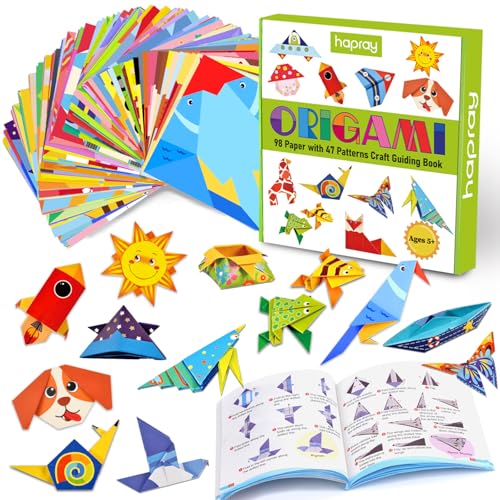
Color and pattern range affects both decorative appeal and teaching clarity. Solid-color packs, like the BUBU 6x6 multi solid pack, are useful for symmetry and geometry lessons because each fold is easy to follow. Pattern-rich packs, including the hapray 47-pattern kit and the Tuttle Chiyogami and Washi packs, add visual depth to finished models. The Tuttle packs include 12 different designs per pack across 500 sheets, blending pattern variety with bulk.
Specialist formats, such as the Phinus 2060-sheet star strips, focus on one craft type. Match the format to the project: squares for traditional folds, strips for lucky stars and narrow ornaments.
Look for Crease Retention and Tear Resistance
Documented crease retention and tear resistance separate durable paper from flimsy stock. The BUBU 1000-sheet pack lists thickened 70gsm sheets that resist cracking at sharp folds, and HPST documents strong crease behavior across its 1100 sheets. For complex models with reverse folds or sink folds, prioritize packs that explicitly describe fold performance rather than only color variety.
Use Instructional Support When Learning
Instructional support matters most for beginners. The GAMENOTE kit includes a 55-page manual with 54 documented projects, and hapray provides a 49-page instruction book plus 10 pages of basic folding techniques. The Praisebank black pack includes a printed step-by-step guide, while HPST and IOOLEEM point to online tutorial videos. If you prefer printed instructions over digital, prioritize kits with bundled manuals such as GAMENOTE, hapray, and Praisebank.
Final Recommendation
BUBU 1000-Sheet Double Sided Origami Paper, 6x6 Inch, Vivid Colors ranks first overall in this specification-based comparison under the published weighted criteria.
After comparing sheet count, paper weight, square size, color range, crease behavior, and instructional support, the IOOLEEM Black Origami Paper, 1000 Sheets, 6 Inch Square, Double Sided is the first overall specification-based choice for folders who want the best double-sided origami paper in serious volume with a clean square format. For mixed-color classroom use, the BUBU 1000-Sheet Double Sided Origami Paper, 6x6 Inch, Vivid Colors is a strong alternative that pairs vivid double-sided coloring with documented 70gsm crease performance. For pattern-driven hobby folding, the hapray Origami Kit for Kids with 47 Patterns and Tutorial Book delivers the top double-sided origami paper experience in pattern variety within a guided format, while the Tuttle Chiyogami and Tuttle Japanese Washi packs offer 12 printed designs each across 500 sheets for folders who prefer decorative paper. Match your pick to your project scale, color preference, and whether you need a printed guide or can rely on digital tutorials.
Frequently Asked Questions
What size square should I choose in the best double-sided origami paper?
Is 70gsm a good weight for double-sided origami paper?
Yes, 70gsm is a documented middle ground that balances crisp folds with easy bending.
Which pack is best for teaching kids how to fold?
Kits with printed instruction manuals score highest for instructional support. The GAMENOTE kit includes a 55-page manual with 54 projects, hapray provides a 49-page instruction book with 10 pages of basic techniques, and the Praisebank black bundle ships with a step-by-step printed guide.
Should I pick solid colors or printed patterns?
Solid colors, like those in BUBU’s multi solid pack, are ideal for symmetry lessons and clean demonstrations. Printed patterns, like the 47-pattern hapray kit or the 12-design Tuttle Chiyogami and Washi packs, add decorative depth to finished models. Choose based on whether clarity or visual richness matters more for your project.
How many sheets do I need for modular origami?
Modular models typically consume 30 to 60 sheets per finished piece. For repeated modular work, bulk packs such as the IOOLEEM 1000-sheet black set, the BUBU 1000-sheet vivid set, or the HPST 1100-sheet multicolor pack provide the best double-sided origami paper reserves without frequent resupply.