Buying Guide
Choosing the best card making decorative craft paper starts with understanding how sheet count, paper weight, pattern range, and finish interact in your finished card. The picks in this guide cover patterned pads, glitter cardstock, vintage sheets, and mixed-texture sets, so the comparison below focuses on evidence you can verify directly from each product’s published specifications.
Understanding Sheet Count and Design Variety
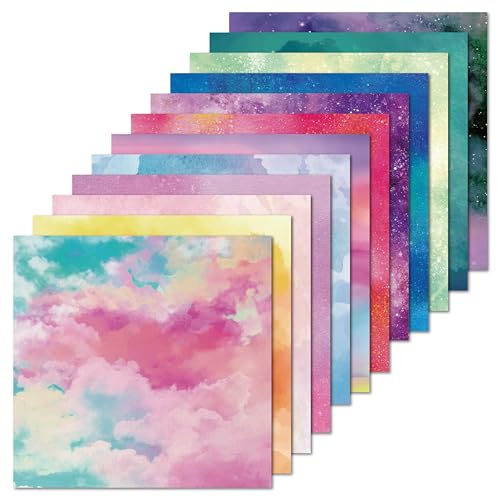
Sheet count drives how many cards you can produce from a single pack, while design variety determines how visually flexible the pack is across different occasions. Roylco’s 192-sheet decorative paper set leads on raw sheet volume with 64 unique patterns across 8 color schemes, making it a strong match for classrooms or large card batches. Smaller pads such as the YASMEN vintage 6x6 pad and WLXTREE floral 6x6 pad trade volume for tighter thematic coherence, with 24 sheets and 12 designs each.
If you want one pad to cover birthdays, weddings, and seasonal themes, a higher design count reduces the need to combine multiple packs. For themed card series, a focused 12-pattern pad can keep your project visually unified. Match the sheet count to the size of card run you actually plan to make.
Paper Weight and Durability
Paper weight, measured in grams per square meter (GSM), affects how a card holds its shape and how well it tolerates layering. The Desecraft 12x12 Watercolor Flora pad and Desecraft Shimmer Watercolor 6x6 pad both list 200 GSM, the heaviest stock in this roundup, which is well suited to gatefold or layered designs.
For standard A2 or 5x7 folded cards, 160-200 GSM usually balances flexibility and stiffness. For larger formats or pop-up elements, lean toward the heavier end of this range.
Pattern and Finish Range
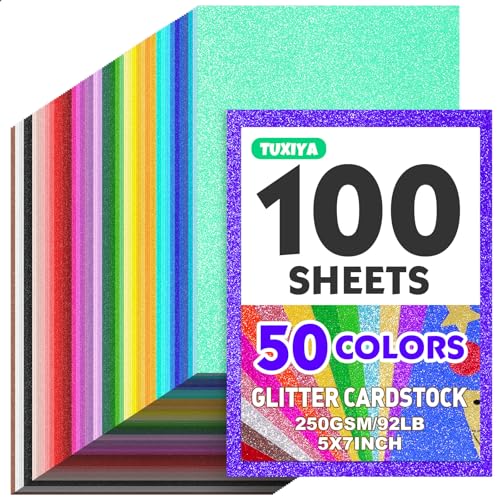
Pattern range describes how many distinct designs appear in a pack, while finish range covers surface treatments like glitter, pearl shimmer, vintage matte, or textured paper. The TUXIYA glitter cardstock pack brings a 50-color glitter finish on a single decorative side, ideal when sparkle is the main visual element. The ARTSMONA mixed-media set broadens finish range by combining textured paper with mesh fabric, which works well for dimensional card accents.
The Desecraft 12x12 Watercolor Flora pad combines pearl, textured, and UV-printed finishes in one pad, giving you multiple surface looks without buying separate packs. When you plan a card around a specific finish, look for that finish mentioned explicitly in the product specifications rather than implied by the listing photo.
Card Size Compatibility
Card size compatibility is about whether the sheet dimensions match common card bases. Pads sized 6x6 inches, such as YASMEN vintage and WLXTREE floral, trim easily to square cards and small panels. Pads at 12x12 inches, like Desecraft Watercolor Flora and Feivando lavender, support full-panel cards, scrapbook layouts, and envelope liners.
If your card format is consistent, choose a pad sized to minimize trimming. If you switch between square, A2, and slimline cards, a 12x12 pad offers the most flexibility.
Print Quality and Archival Properties
Print quality covers resolution, color vibrancy, and whether designs are single- or double-sided. Archival properties, such as acid- and lignin-free paper, affect how well a card resists yellowing over time. The YASMEN and WLXTREE pads both specify acid- and lignin-free stock, supporting long-term storage. The Desecraft pads are made from FSC-certified material, indicating responsible fiber sourcing.
For keepsake cards like wedding invitations or anniversary keepsakes, prioritize acid-free and lignin-free specifications. For everyday cards, the main consideration is whether prints are single- or double-sided, since double-sided paper reduces visible white backs when layering.
Versatility for Card Making
Versatility reflects how well a pack supports multiple card styles, from single-layer greeting cards to decoupage, mixed-media, and themed series. The ARTSMONA mixed-media set scores highest here by combining textured paper and mesh in one pack. The Desecraft Watercolor Flora pad earns strong versatility through its mix of finishes within a single pad.
Consider the techniques you plan to use. Decoupage favors smooth, uniform paper like Mifuner, while mixed-media cards benefit from varied textures like ARTSMONA. Glitter-heavy designs call for a dedicated glitter cardstock such as TUXIYA rather than a patterned pad.
Matching Pack to Card Style
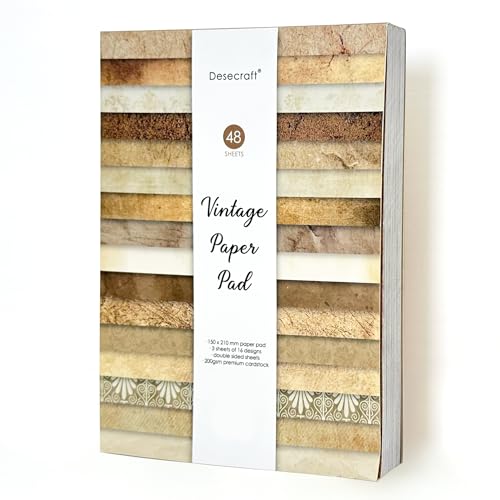
Once you have weighed sheet count, weight, finish, size, and print quality, the final filter is your card style. For elegant wedding stationery, lean on Desecraft vintage or shimmer pads at 200 GSM. For classroom or bulk use, the Roylco 192-sheet set delivers maximum pattern variety.
The best card making decorative craft paper for your projects is the one whose sheet dimensions, GSM, and finish specifications most closely match the cards you want to make. Use the criteria above as a checklist whenever you compare two pads side by side.
Final recommendation
Desecraft 12x12 Watercolor Flora Cardstock Pad, 48 Sheets ranks first overall in this specification-based comparison under the published weighted criteria.
The final choice among the best card making decorative craft paper depends on the documented features that match your intended use.
For a specification-led first overall choice, the Desecraft 12x12 Watercolor Flora Cardstock Pad stands out with 48 sheets across 16 designs at 200 GSM, a 12x12 sheet size, and a mix of pearl, textured, and UV-printed finishes on FSC-certified paper. Its combination of heavy stock, large sheet size, and varied finishes supports everything from full-panel greeting cards to layered designs. Among the top card making decorative craft paper options in this guide, it offers the broadest balance of weight, finish range, and sheet size for general card-making use, while themed pads like TUXIYA glitter, Roylco decorative hues, and ARTSMONA mixed media each address more specific card styles.
Frequently Asked Questions
What GSM should I look for in card making decorative craft paper?
For most folded greeting cards, 160-200 GSM provides a good balance of flexibility and stiffness. Heavier 200 GSM stock, like the Desecraft pads in this guide, holds shape better for layered or gatefold cards, while 160 GSM pads cut and fold more easily for standard A2 or 5x7 designs.
Are 6x6 inch pads suitable for card making?
Yes, 6x6 inch pads are well suited to card making. They fold neatly into square card bases and trim easily into accent panels. Pads such as the YASMEN vintage 6x6 and WLXTREE floral 6x6 are designed for this format, while 12x12 pads like Desecraft Watercolor Flora and Feivando lavender offer larger sheets for full-panel cards.
Does the best card making decorative craft paper need to be acid-free?
Acid- and lignin-free paper is recommended for keepsake cards such as wedding invitations or anniversary cards, since it resists yellowing over time. Several picks in this guide, including YASMEN vintage and WLXTREE floral, specify acid- and lignin-free stock for that reason.
Can I use glitter cardstock in a standard card maker or die cutter?
Glitter cardstock can be cut with manual die cutters and many electronic cutting machines, though the abrasive surface may wear blades faster than smooth cardstock. The TUXIYA glitter cardstock pack specifies that it cuts smoothly with Cricut machines and by hand, while its 250 GSM weight supports folded card bases.
Patterned pads are best when you want a coordinated visual theme across many cards, while mixed-media packs like the ARTSMONA set are best when you plan to layer textures, mesh, and accents. If your card style relies on a single decorative look, a patterned pad is usually enough. If you want dimensional effects, a mixed-media pack adds materials that patterned pads do not include.