Buying Guide
The best double-wall water bottles are easier to compare when insulation, lid design, opening, and dimensions are considered together. Public listing language can show what a bottle is designed to offer, but it does not replace hands-on testing. This comparison therefore focuses on documented specifications and practical design details rather than customer sentiment.
Start with the insulation claim
Double-wall vacuum construction is the central feature in this category. Several selected bottles document both hot and cold targets, including Owala, ThermoFlask, Fijinhom, Farsea, POWCAN, Bambaw, and Volhoply. Their listings generally claim cold retention up to 24 hours and hot retention up to 12 hours, although these are listing claims rather than independent test results.
Other bottles document only part of that picture. Contigo and the smaller Fijinhom model emphasize cold use, while ENCOOL also claims cold retention. That does not establish how they perform with other beverages; it simply means the supplied evidence supports a narrower conclusion. If hot drinks are important, prioritize a listing that explicitly gives a hot-retention period.
Match capacity to the day
Capacity affects refill frequency and portability. POWCAN has the largest selected capacity at 40 ounces, making it a logical fit for long activities, sports, or travel when carrying more liquid matters. Owala’s 32-ounce format also favors extended hydration. The trade-off is transport: both listings note limitations involving standard car cupholders.
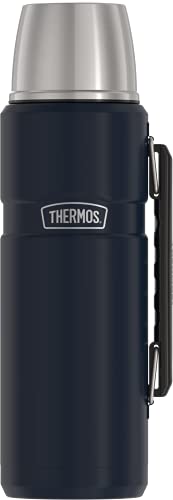
Mid-size choices such as Contigo, ThermoFlask, Fijinhom’s 24-ounce bottle, and Bambaw offer a conventional everyday balance. ThermoFlask’s two-bottle format is useful when one bottle can stay at home or when two people need matching bottles. Smaller choices such as Farsea at 18 ounces, the compact Fijinhom at 18 ounces, and Volhoply at about 17 ounces are easier to place in bags or vehicles but may require more refills.
Choose the drinking interface
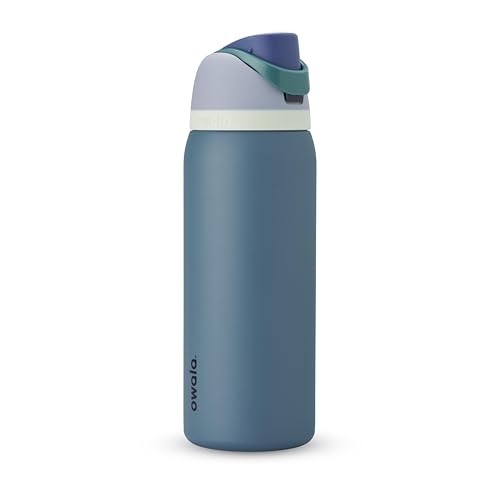
Lid design changes how a bottle works in motion. Owala’s FreeSip spout supports upright sipping through a built-in straw or tilting back to swig. Contigo uses a push-button AUTOSEAL system: pressing the button opens the bottle and releasing it seals the opening. These designs are useful when one-handed access is a priority.
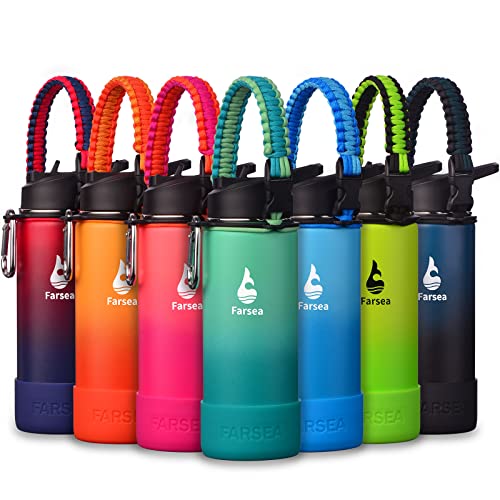
Several models offer two approaches in the same package. ENCOOL includes a straw lid and twist cap. Farsea includes straw and spout lids, while POWCAN combines a straw and spout in one lid. The selected Fijinhom 18-ounce bottle also combines a flip straw and push-button spout. These options offer flexibility, but more lid parts can mean more components to clean and store.
Consider leak control and protection
Leak-control or spill-resistant language appears throughout the selected listings, but the mechanisms differ. Contigo provides a button lock and protective spout cover. Owala uses a push-button lid with a protective cover and locking carry loop. ENCOOL describes a tight-sealing lid, while Fijinhom, Farsea, Bambaw, and Volhoply describe leak-control construction or seals.
Protection can extend beyond the lid. Farsea includes a silicone bottom intended to help protect against dents and noise. ENCOOL’s foldable handle is designed to lie flat for packing. These features may matter more to active travelers than decorative finishes. Read the exact care and closure instructions before placing any bottle inside a work or school bag.
Check materials and cleaning details
The clearest material specifications in this selection identify 304 or 18/8 stainless steel. ThermoFlask, Farsea, Bambaw, and Volhoply provide especially clear steel details, while the other stainless-steel models also document double-wall construction. BPA-free language appears in many listings. These statements describe supplied product specifications; they are not independent material certifications reviewed for this guide.
Cleaning access is another practical differentiator. Bambaw’s wide opening is described as large enough for ice or a tea infuser and reachable with a bottle brush. Fijinhom’s 24-ounce model also identifies a wide mouth. POWCAN lists a wide mouth and dishwasher-safe lid, while Contigo lists a dishwasher-safe lid. The selected Fijinhom 18-ounce model gives dishwasher guidance but cautions against using the dishwasher too frequently. Lid complexity, narrow openings, and removable straw parts can all affect maintenance, so choose the simplest design that meets your drinking needs.
Think about vehicle and bag use
The best double-wall water bottles for driving should fit the intended holder, not merely have a convenient capacity. Volhoply is explicitly described as fitting car cupholders. Contigo is listed as fitting most cupholders, and Owala has a cup-holder-friendly base but is specifically noted as incompatible with standard automotive cupholders. POWCAN also does not fit standard car cupholders according to its listing.
For bags, leak-control features and a secure closure are more important than a large capacity alone. A handle, loop, carabiner, or foldable grip can make carrying easier, but those additions also introduce more parts. Consider the bottle’s listed dimensions and weight alongside capacity, especially for children, cyclists, and commuters.
Final recommendation
Volhoply Insulated Stainless Steel Bottle 17 oz ranks first overall in this specification-based comparison under the published weighted criteria.
Owala FreeSip Stainless Steel 32 oz is the highest-scoring returned product and the first overall specification-based choice.
The best double-wall water bottles depend on the documented features that match your intended use. Owala’s double-wall insulation, two-way FreeSip design, protective push-button lid, wide opening, and useful capacity give it a broad feature balance in this comparison. The standard automotive cupholder limitation is a meaningful caveat.
Among the top double-wall water bottles, Contigo Cortland Chill 2.0 is the clear pick for one-handed spill control, ThermoFlask is the practical set choice, and Volhoply is the compact vehicle-oriented option. Choose POWCAN when capacity matters most, Farsea or ENCOOL when lid flexibility is important, and Bambaw when a wide, maintenance-friendly opening is central to your routine. These recommendations are based solely on supplied public listing evidence, not hands-on testing or customer opinions.
Frequently Asked Questions
What makes the best double-wall water bottles different from single-wall bottles?
A double-wall design separates the inner liquid chamber from the exterior wall, and many selected listings describe vacuum insulation between those walls. This construction is intended to reduce heat transfer and condensation. The exact temperature outcome depends on use and conditions; this guide reports listing claims rather than independent measurements.
Which selected bottle is best for a car?
Volhoply is the most directly documented vehicle choice because its listing says the compact bottle fits car cupholders. Contigo is also listed as fitting most cupholders. Owala has a cup-holder-friendly base but is not compatible with standard automotive cupholders, and POWCAN’s 40-ounce size is likewise documented as not fitting standard car cupholders.
Which bottle offers both straw and conventional drinking?
Owala’s FreeSip spout supports straw-style sipping and swigging from the spout opening. ENCOOL includes a straw lid and twist cap, Farsea includes separate straw and spout lids, and POWCAN uses a two-in-one straw and spout lid. The compact Fijinhom model combines a flip straw with a push-button spout.
Are these bottles suitable for hot drinks?
Several listings explicitly claim hot retention up to 12 hours, including ThermoFlask, Fijinhom’s 24-ounce bottle, Farsea, POWCAN, Bambaw, and Volhoply. The supplied evidence for Contigo, ENCOOL, and the 18-ounce Fijinhom model emphasizes cold retention instead. Check individual product instructions and lid guidance before using a bottle with hot beverages.
What should I look for if cleaning is a priority?
A wide opening can make it easier to add ice and reach the interior with a brush; Bambaw and Fijinhom’s 24-ounce bottle document this type of design. POWCAN lists a dishwasher-safe lid, and Contigo lists a dishwasher-safe lid as well. Multi-part straw lids can offer convenient drinking but may require more careful cleaning of removable pieces.
This is a specification-based comparison, not a hands-on product test. Editorial scores use documented temperature retention (25%), lid and leak-control features (20%), materials and build details (20%), drinking and cleaning design (15%), and capacity and portability (20%). A limited non-published marketplace adjustment is applied internally after the editorial formula; its underlying values are not reproduced.