Buying Guide
The best flip-top water bottles are easier to compare when the lid, body material, capacity, care instructions, and carrying format are considered together. A flip-top can mean a covered chug spout, a trigger-action mouthpiece, a flip straw, or a push-button lid. Those designs do not deliver the same drinking experience, so start with how you expect to use the bottle rather than with capacity alone.
Choose the drinking style first
A direct chug opening is useful when you want a faster pour, while a straw can be more convenient when the bottle stays upright during a commute or workout. The Owala FreeSip Sway is the most flexible option in this group because its FreeSip spout supports upright straw sipping or a direct swig. The Ello Pop & Fill also offers straw and chug access, and the ENCOOL model combines a straw lid with a twist cap.
A covered spout can be helpful when the bottle travels in a bag or is used outdoors. The YETI Rambler has a covered flip chug spout, while the Pogo lid covers its chug spout. The STANLEY IceFlow uses a flip straw that is described as leak resistant when closed. These features address access and coverage, but they do not replace checking that the lid is fully closed before transport.
Match capacity to your routine
The selected bottles range from 18 to 32 ounces, with one 30-ounce insulated tumbler and several 32-ounce plastic designs. Smaller formats such as the YETI Rambler and Pogo are easier to carry and may fit short outings, desk use, or gym sessions. They also generally require more refills. The 22-ounce Ello and 24-ounce STANLEY Quick Flip GO sit in the middle and can be convenient when a large bottle is unnecessary.
The 30- and 32-ounce options are better suited to longer periods away from a refill point. The Owala FreeSip Sway and STANLEY IceFlow offer 30 ounces, while the Enerbone and Fanhaw provide 32 ounces. Larger capacity can reduce refill frequency, but it can also increase the filled weight and the amount of space needed in a bag or cup holder.
Decide whether insulation matters
If keeping drinks cold is a priority, focus on the stainless steel models with explicit insulation claims. The Owala FreeSip Sway documents triple-layer insulation and cold retention for up to 24 hours. The ENCOOL bottle states cold retention for up to 24 hours, while the STANLEY IceFlow documents cold retention for up to 12 hours and ice retention for up to 2 days. The STANLEY Quick Flip GO is the most flexible for temperature because its listing covers hot and cold drinks.
The YETI Rambler also documents double-wall vacuum insulation. By contrast, the Opard, Pogo, Enerbone, and Fanhaw are plastic bottles without supplied insulation claims. That does not make them poor hydration bottles; it simply means the listing evidence does not support choosing them for extended temperature retention. Plastic can still be attractive when low weight, visibility, or easier carrying is more important.
Check cleaning instructions carefully
Cleaning convenience varies. The STANLEY IceFlow, STANLEY Quick Flip GO, Ello Pop & Fill, and Opard Zip listings specifically describe dishwasher-safe components or parts. The Pogo is also listed as top-rack dishwasher safe. Wide openings can make it easier to reach the interior and add ice, as documented for the Owala, YETI, STANLEY Quick Flip GO, and several plastic bottles.
The Enerbone listing explicitly says it is not dishwasher safe, so it should be selected only if hand washing fits your routine. The Owala bottle body requires hand washing even though its lid is dishwasher safe. Straw and multi-part lids can offer useful drinking choices, but they introduce more areas to disassemble and rinse. Follow the supplied care instructions rather than assuming that every part is dishwasher compatible.
Consider transport and fit
A carry loop or handle is valuable for gym bags, school, commuting, and outdoor use. The STANLEY IceFlow has a rotating handle, the Owala has a bucket handle, and the ENCOOL handle folds flat for storage. The Pogo, Fanhaw, and Enerbone also document carry features. The Owala, YETI, STANLEY IceFlow, and STANLEY Quick Flip GO listings mention cup-holder compatibility, although cup-holder dimensions vary by vehicle and holder design.
Lightweight plastic models can be more comfortable when the bottle is carried for long periods. The Opard is specifically positioned as a lightweight alternative to stainless steel, and the Pogo lists a low product weight. Stainless steel is the better-documented choice here for vacuum insulation, but it may feel heavier when filled. A handle, strap, or loop can make either material easier to transport.
Read leak claims in context
Leak control is especially important for bags and electronics. The Owala, Ello, ENCOOL, Pogo, Enerbone, and Fanhaw listings describe leakproof or leak-prevention features. The YETI Rambler is described as 100% leakproof, while the STANLEY models use leak-resistant or spill-proof wording. These are product-listing claims, not results from independent testing. Keep the bottle upright when appropriate, close the lock completely, and inspect removable seals as part of routine care.
Final Recommendation
Owala FreeSip Sway 30 oz ranks first overall in this specification-based comparison under the published weighted criteria.
The Owala FreeSip Sway is the highest-scoring returned product and the first overall specification-based choice. Its two-way FreeSip spout, locking push-button lid, 30-ounce capacity, triple-layer insulation, carry handle, and wide opening give it the most complete documented feature mix in this comparison. The best flip-top water bottles are not identical, so the right alternative depends on your priorities.
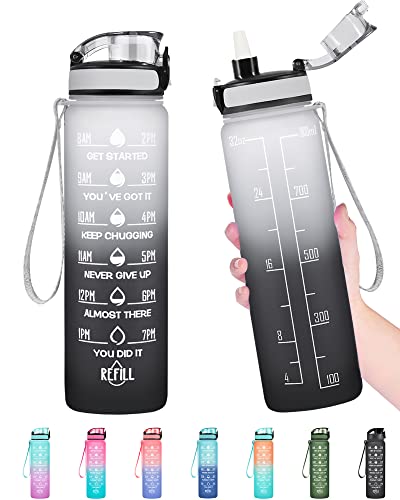
Choose the STANLEY IceFlow if a flip straw, rotating handle, dishwasher-safe care, and cold-drink retention are more important. The YETI Rambler is a compact insulated choice, while the STANLEY Quick Flip GO adds documented hot-and-cold versatility. For easier cleaning, the Ello Pop & Fill and Opard Zip are compelling. The ENCOOL offers insulated straw access with a foldable handle, and the Pogo, Enerbone, and Fanhaw focus on lighter construction, larger capacity, or hydration tracking.
Among the top flip-top water bottles, insulated steel models are the stronger fit for temperature retention, while Tritan or copolyester models can make more sense for lower weight and visible water levels. Use the supplied capacity, lid, care, and carrying details to narrow the list to your routine.
Frequently Asked Questions
What should I look for in the best flip-top water bottles?
Start with the drinking opening and closure. Decide whether you prefer a straw, chug spout, or two-way design, then check the leak-control wording, capacity, cleaning instructions, carry feature, and any documented insulation claim. A locking lid is useful for transport, but proper closure still matters.
Which selected bottle offers two ways to drink?
The Owala FreeSip Sway documents straw sipping and direct swigging through one FreeSip spout. The Ello Pop & Fill documents straw and chug use, while the ENCOOL combines a straw lid with a twist cap. These designs offer flexibility, but their care requirements and capacities differ.
Are all of these flip-top bottles insulated?
No. The Owala, STANLEY IceFlow, YETI Rambler, STANLEY Quick Flip GO, and ENCOOL listings document insulation or cold-retention claims. The Opard, Pogo, Enerbone, and Fanhaw listings describe plastic construction without supplied insulation claims. The Ello listing also does not provide an insulation claim.
Which choices are easiest to clean?
The Ello Pop & Fill states that all parts are dishwasher safe. The STANLEY IceFlow, STANLEY Quick Flip GO, Opard Zip, and Pogo also document dishwasher-safe care for their components or parts. The Owala body requires hand washing, and Enerbone is explicitly not dishwasher safe.
Is a larger bottle always better?
Not necessarily. A 30- or 32-ounce bottle can reduce refill trips, but it may occupy more space and weigh more when full. An 18- or 22-ounce bottle can be easier for short outings. Choose capacity based on access to refills, carrying needs, and whether the bottle must fit a specific cup holder or bag.