Buying Guide
The best free-standing shoe racks with drawers are not all the same type of furniture. Some use open metal or fabric shelves for quick visibility, while others conceal footwear behind flip drawers. A third group combines shoe compartments with a tabletop or separate accessory drawers. Start by deciding whether your priority is fast access, a cleaner enclosed appearance, maximum capacity, or the smallest possible projection into a walkway.
Open racks versus enclosed cabinets
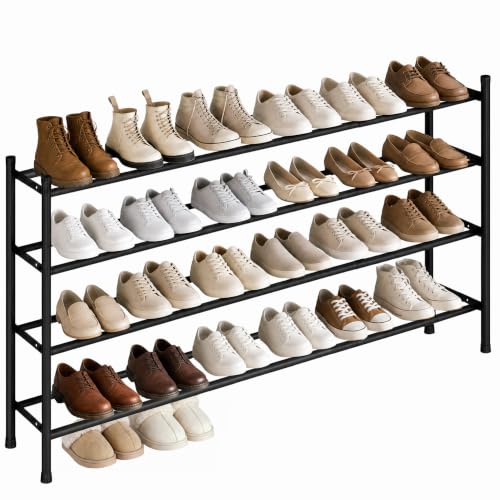
Open racks such as the YATINEY, Snughome, VASAGLE four-tier model, and UNITSTAGE make it easy to see shoes at a glance. They are useful for households that rotate footwear frequently or want to place boots on taller or removable tiers. Their shelves can also make drying or airing shoes more straightforward, although the supplied listings do not establish odor or drying performance. Fabric drawers add a place for socks, gloves, keys, or charging cables, but they do not enclose the shoe shelves.
Enclosed cabinets such as the VASAGLE four-drawer cabinet, Maupvit models, QIVOMIX, BORNOON, and HOMCOM keep shoes behind flip fronts. This can create a more orderly visual appearance and helps keep footwear away from view. It also changes how you plan storage: flip drawers need room to open forward, even when the cabinet itself is shallow. Check the walkway in front of the intended position before assembly.
Measure the complete installation area
Depth is especially important in an entryway. Selected cabinets range from about 9.25 to 9.5 inches in stated depth, while open racks are generally around 11 inches deep. That difference can matter in a narrow hall. Width varies more substantially: the HOMCOM is listed at 21.25 inches wide, the VASAGLE cabinet at 41.7 inches, and the Maupvit four-drawer cabinet at 47.24 inches. A high-capacity cabinet may therefore need a broad, uninterrupted wall even if its front-to-back projection is modest.
Height deserves equal attention. The selected products range from approximately 32.1 inches for the VASAGLE open rack to 51.57 inches for the three-drawer Maupvit cabinet. Measure from the floor to any trim, shelf, switch, window, or molding. Tall cabinets can use vertical space well, but they may visually dominate a small foyer and should be installed with the supplied anti-tip hardware where applicable.
Match capacity to shoe type
Published pair counts are estimates and depend on footwear size and shape. The Maupvit four-drawer cabinet is listed at 30 to 38 pairs, and the three-drawer version at 28 to 36 pairs. Those figures make them candidates for larger collections. By contrast, the QIVOMIX is listed at about 14 adult pairs, the BORNOON at approximately 12 to 16 pairs, and the HOMCOM at up to 15 pairs.
Open racks describe capacity differently. The YATINEY listing states that it holds 26 pairs and specifically separates four shoe shelves from two taller boot tiers. UNITSTAGE states 16 to 20 pairs and allows a shelf to be removed for boots. Snughome identifies a dedicated boot area without giving a numeric pair count. If your collection includes boots, heels, or high-top shoes, prioritize removable panels or taller tiers over a headline pair estimate.
Examine shelf flexibility
Adjustability is valuable because a fixed two-level compartment may fit everyday sneakers but not taller footwear. The VASAGLE cabinet uses adjustable shelves with three positions, while the Maupvit, QIVOMIX, BORNOON, and HOMCOM listings describe adjustable or removable internal panels. This allows a compartment to be changed for flats, heels, sneakers, or boots, though removing a shelf can reduce the number of pairs stored.
The open-rack alternatives offer flexibility in a different way. UNITSTAGE lets you remove a shelf, and YATINEY has separate boot tiers. Snughome identifies a boot area but provides less detail about shelf adjustment. When comparing models, look beyond the number of drawers: the useful question is whether the internal layout can change as your footwear changes.
Consider the top and accessory storage
A shoe cabinet or rack often becomes the landing zone for keys, wallets, bags, and decor. YATINEY provides a tabletop and two drawers. QIVOMIX offers a thickened tabletop that the listing rates for up to the current price. The VASAGLE cabinet adds two side hooks and a raised-edge top, while HOMCOM has a flat tabletop. BORNOON documents a top guardrail, and Snughome and UNITSTAGE include wooden tops.
These features are useful only if the surface remains accessible. A tall cabinet may put the top beyond convenient reach for some users, while a low open rack may be easier for children to use. Separate accessory drawers can also reduce clutter without taking space away from shoe compartments.
Review stability and assembly details
Several selected products document anti-tip kits or devices, including YATINEY, VASAGLE, QIVOMIX, BORNOON, and HOMCOM. Adjustable feet appear on YATINEY, Snughome, VASAGLE, UNITSTAGE, and some cabinet designs. These are specification-level features, not proof of performance in a particular home. Follow the installation instructions and use wall anchoring as directed, especially for tall or heavily loaded cabinets.
Assembly is expected across this category. YATINEY, VASAGLE, UNITSTAGE, BORNOON, and HOMCOM describe labeled parts, instructions, or included tools. The presence of instructions can make setup more structured, but it does not establish a specific assembly time or difficulty. Before beginning, confirm the package includes all panels and hardware and leave enough floor space to assemble the unit safely.
Final recommendation
Maupvit Large Rattan Cabinet with 4 Flip Drawers ranks first overall in this specification-based comparison under the published weighted criteria.
YATINEY 6-Tier Shoe Rack with 2 Drawers is the first overall specification-based choice among these selections. It combines a tabletop, two drawers, four shoe shelves, two taller boot tiers, adjustable feet, X-braces, and anti-tip fittings. For an open design with a smaller footprint, Snughome is a practical alternative, while the VASAGLE four-tier rack provides particularly clear shelf and load guidance.
For enclosed storage, the VASAGLE four-drawer cabinet is a strong compact farmhouse-style option with hooks and adjustable shelves. The Maupvit four-drawer cabinet is better suited to a larger footwear collection, but its width must fit the room. QIVOMIX and BORNOON are more appropriate when narrow depth is the deciding factor. These top free-standing shoe racks with drawers cover the main trade-offs: visibility versus concealment, vertical capacity versus wall width, and open access versus dust-blocking cabinet fronts.
The best free-standing shoe racks with drawers should ultimately be judged against your actual shoes and installation area. Confirm dimensions, stated size limits, and capacity assumptions before ordering, and treat product specifications as planning guidance rather than a guarantee that every pair will fit identically.
Frequently Asked Questions
Among the best free-standing shoe racks with drawers, are open shelves or flip drawers better for an entryway?
Open shelves provide faster visual access and make it easier to place boots or unusually shaped footwear on a suitable tier. Flip drawers conceal shoes and can make the room look tidier, but they need clearance in front to open. Choose open shelving for frequent rotation and visibility; choose flip drawers when a concealed appearance and narrow front-to-back cabinet matter more.
How much depth do narrow shoe cabinets need?
The selected narrow cabinets are generally listed at about 9.25 to 9.5 inches deep. That can preserve walkway space, but the full opening movement of a flip drawer still needs to be checked. Also verify shoe-size limits: HOMCOM lists compatibility up to US men’s size 10, while other models provide different capacity or size guidance.
Do drawers on a shoe rack store shoes?
It depends on the design. Flip drawers on the VASAGLE, Maupvit, QIVOMIX, BORNOON, and HOMCOM cabinets are the main shoe compartments. Fabric drawers on the Snughome, VASAGLE open rack, UNITSTAGE, and YATINEY models are described for smaller items such as socks, gloves, keys, or accessories. Read the internal layout rather than assuming every drawer has the same purpose.
What should I check before installing a tall shoe cabinet?
Measure the available height and width, check for baseboards and nearby doors, and confirm the cabinet will not obstruct switches or walkways. Review the stated shoe-size limit and capacity, then identify whether shelves can be adjusted or removed. Use the included anti-tip hardware according to the instructions where provided, particularly for taller freestanding cabinets.
How do I choose between the YATINEY and a narrow cabinet?
Choose YATINEY if you want visible shelves, dedicated boot tiers, a tabletop, and two accessory drawers. Choose a narrow enclosed cabinet if keeping footwear hidden and minimizing front-to-back projection are higher priorities. The right choice depends on whether your room has more usable wall width for an open rack or more need for a slim, concealed profile.