Buying Guide
The best shoe organizers are not all designed for the same room or footwear collection. A useful comparison starts with the space available, then considers how many pairs need a home, how often they are used, and whether protection or visibility matters more.
Match the organizer to the available space
Measure the intended area before choosing a format. Narrow freestanding options such as the Kitsure and UNITSTAGE models use roughly 11 to 12 inches of listed depth, while the VASAGLE cabinet is listed at 9.4 inches deep. These formats can work in entryways where a deeper cabinet would interfere with movement. Height matters too: the Kitsure reaches 69.3 inches, the LANTEFUL reaches 62.2 inches, and the SpaceAid tower reaches 63 inches. Check overhead clearance before selecting a tall unit.
Door organizers are useful when floor space is limited, but they need a compatible door. The UVIAHOMI is the selected door option in this comparison because its 20 pockets and 22.5-inch width offer more documented capacity. Measure the door thickness and consider whether the organizer could affect closing or handle clearance.
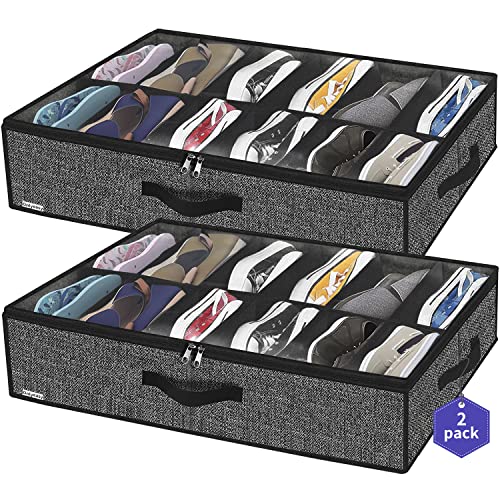
Under-bed storage works differently. The Onlyeasy set is listed at 5.9 inches high, so it can use a low, otherwise wasted area. This format is most useful for seasonal shoes, but retrieval is less immediate because the bags must be pulled out. Leave enough clearance to use the handles without scraping the bed frame.
Capacity numbers are not interchangeable. Onlyeasy lists up to 24 pairs of flats but 12 pairs of sneakers, while the VASAGLE lists room for up to 14 to 16 pairs. The LANTEFUL states 40 to 50 pairs, and the ROJASOP eight-tier rack states 26 to 32 pairs. These differences reflect shelf size, compartment design, and the volume of the footwear being stored.
For a large family collection, a covered tall rack or door system may be more practical than a three-tier shelf. The LANTEFUL provides ten tiers and removable coverage, and the UVIAHOMI uses deep pockets for multiple footwear types. For a smaller everyday rotation, the ROMGUAR CRAFT or VASAGLE may be easier to place and maintain. If boots are part of the collection, look for adjustable or removable shelves. The VASAGLE, ROJASOP eight-tier, and Kitsure listings specifically document ways to create taller spaces.
Decide between open, covered, and enclosed storage
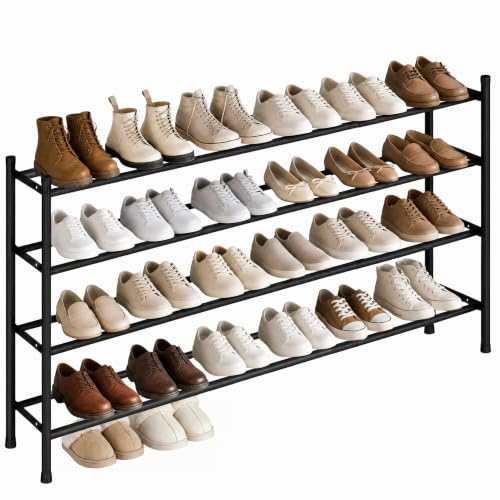
Open shelves offer fast visibility and easy access. The ROMGUAR CRAFT and SpaceAid tower are suitable when shoes should remain on display, while the ROJASOP eight-tier rack provides open access plus hooks for accessories. Open designs are less protective against dust than covered or boxed alternatives.
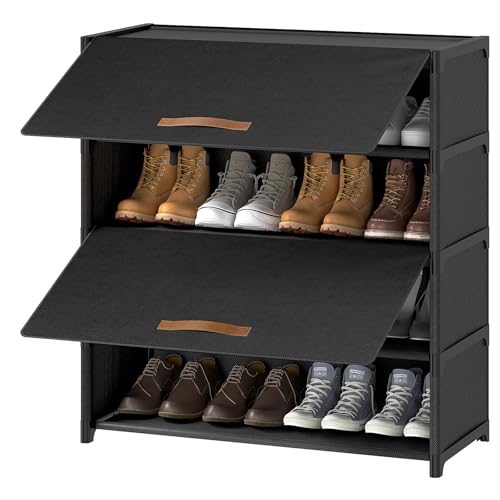
Covers and doors add a layer between shoes and the room. The Kitsure has a zippered dust cover with a roll-up flap, the LANTEFUL has a removable cover, and the UNITSTAGE uses an enclosed front. These formats can make a busy entryway look tidier, though they may require an extra step when selecting a pair. The VASAGLE uses flip drawers, giving it a more cabinet-like appearance while retaining a relatively narrow profile.
Clear boxes emphasize protection and identification. Kuject’s boxes are clear, stackable, and listed as providing dust and pet-hair protection. The model from Kuject also has a larger stated fit range than many standard shoe boxes, but shoppers should still compare the listed dimensions with bulky footwear. Box systems can be expanded in a modular way, but they require more individual pieces than a single rack.
Check construction and assembly details
Specification-based build checks include the frame material, shelf material, connectors, doors, and installation method. Metal tubes appear in the Kitsure, LANTEFUL, ROJASOP, and UNITSTAGE designs. The ROMGUAR CRAFT uses bamboo, while Kuject uses ABS plastic boxes and the VASAGLE uses MDF and particleboard. These materials describe construction; they do not replace checking dimensions and intended load limits.
Assembly also varies. Kitsure documents tool-free insertion assembly, while ROMGUAR CRAFT describes a simple setup. ROJASOP includes labeled parts and a wooden hammer, and UNITSTAGE includes installation tools and instructions. Clear box systems may involve multiple units, so allow time to connect and arrange each box. For any tall rack, place it where its full height and width can be used without obstructing doors or walkways.
Prioritize visibility and retrieval
If shoes are used daily, visibility can save time. Clear boxes, transparent windows, open shelves, and slanted pockets all provide different forms of identification. Kuject offers clear fronts, Onlyeasy has transparent windows, and UVIAHOMI uses clear PVC sections. The SpaceAid tower takes a display-oriented approach by rotating, while VASAGLE’s flip drawers conceal pairs but keep them grouped by drawer.
Think about the shape of each compartment. Deep pockets may suit sneakers and boots, but they can make smaller items harder to see. Adjustable shelves are useful when one organizer must hold flats, heels, and boots. The VASAGLE and UNITSTAGE listings document adjustable shelf arrangements, while the Kitsure and ROJASOP racks document removable shelves or tiers.
Final Recommendation
UVIAHOMI 20-Pocket Over-the-Door Organizer ranks first overall in this specification-based comparison under the published weighted criteria.
The VASAGLE 2-Drawer Shoe Storage Cabinet is the first overall specification-based choice among these best shoe organizers because it combines a narrow profile, adjustable storage, enclosed access, and documented safety features. The top shoe organizers in this comparison otherwise divide into clear use cases: choose the LANTEFUL for a large covered rack, UVIAHOMI for door-based capacity, Kuject for clear modular boxes, Onlyeasy for under-bed storage, and ROMGUAR CRAFT for a compact bamboo shelf.
For mixed footwear, the ROJASOP eight-tier rack offers useful height variation and hooks. The Kitsure is a strong narrow covered alternative, while UNITSTAGE provides a compact enclosed fabric format. SpaceAid is the distinctive pick when rotating display access is more important than a slim footprint. Before ordering, compare the organizer’s listed dimensions with your room, door, bed, or closet and account for the type of shoes you actually plan to store.
Frequently Asked Questions
What should I look for in the best shoe organizers for a small entryway?
Prioritize depth, door clearance, and vertical use. The VASAGLE is listed at 9.4 inches deep, while the Kitsure is 17.5 inches wide and designed vertically. A narrow cabinet may look more finished, while a tall rack can provide more open capacity. Measure the available wall and floor area first, including the space needed to open drawers or retrieve shoes.
Are covered shoe racks better than open shelves?
They serve different needs. A cover or door can help limit dust and conceal clutter, as documented for the Kitsure, LANTEFUL, and UNITSTAGE. Open shelves such as the ROMGUAR CRAFT provide faster visual access. Choose covered storage for a dusty entryway or less frequently used shoes, and open storage when daily retrieval is the priority.
Which selected organizer is best for seasonal shoes?
Onlyeasy is specifically suited to seasonal rotation because its two under-bed bags are foldable, have clear windows, and use a low 5.9-inch profile. Its listed capacity differs by footwear type, so flats and sneakers should not be counted identically. The bags also need enough clearance to be pulled out by their handles.
How do I choose between shoe boxes and a rack?
Choose boxes when individual dust protection, visibility, and modular stacking matter. Kuject provides clear stackable boxes with a stated larger-shoe fit range. Choose a rack when you want faster access or need to store many pairs in one vertical structure, such as the LANTEFUL or ROJASOP eight-tier model. Check each product’s listed dimensions against your footwear.
Do over-the-door organizers fit every door?
No. Door thickness and available clearance matter. UVIAHOMI lists compatibility up to 1.98 inches thick, and its four hooks and reinforced rings support the hanging design. Measure your door before buying, then check whether the organizer could interfere with closing, trim, or the handle. Door-based storage is most useful when the door can carry the organizer without obstructing normal use.