Buying Guide
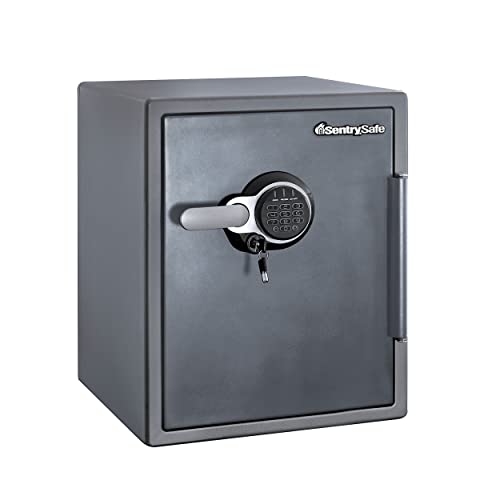
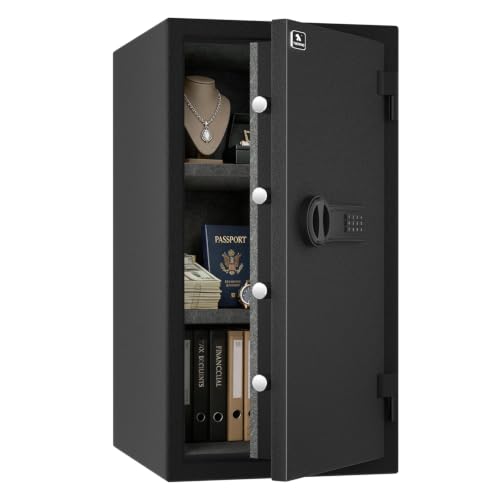
The best electronic cabinet safes differ less by keypad appearance than by how their dimensions, locking hardware, mounting provisions, and backup access fit the intended location. Treat the product listings as specification sheets: confirm the available space, compare the stated exterior and interior dimensions, and decide whether you need a compact box, a shelf-equipped home safe, a deposit-slot unit, or a tall firearm cabinet.
Match the safe to the installation location
Start with the exterior measurements rather than the advertised capacity. The Amazon Basics slim drawer safe is only 4.4 inches high externally, making it the clearest fit for a shallow desk drawer. Its interior height is 1.7 inches, so it is aimed at flat or small items rather than folders and bulky objects.
Compact 0.23-cubic-foot models from Bonsaii and Tenamic are easier to place in drawers, closets, shelves, or under a table. The Sdstone model is also compact but is specifically described for wall or cabinet fixing. Measure the opening, allow room for the door and keypad, and check whether the mounting surface can accept the supplied hardware.
Larger products need a different plan. The Broynix G25 is 13.78 inches high and provides 1.2 cubic feet, while the Amazon Basics 1.8-cubic-foot model and VEVOR 1.7-cubic-foot depository safe are taller still. The DAYI D-45 reaches 17.75 inches in height. The KAER cabinet is a separate category within the comparison at 55.2 inches tall and is intended for firearm storage, not a typical desk or kitchen cabinet.
Compare electronic access and backup entry
A programmable keypad is useful for regular access, but every selected model also documents a second entry method through a physical override key or another backup route. Keep any emergency key outside the safe and in a location that is secure but available when needed.
The Bonsaii SF002 documents three opening methods: personal code, emergency keys, and Type-C charging for the battery box. The Bonsaii SF005 similarly documents USB-C support for an external power bank. Sdstone lists an external power supply, while the KAER firearm cabinet includes an external battery box. These features address depleted batteries, but accessories such as power banks and cables are not always included.
Other models rely on override keys. Check the battery requirement and included accessories before installation; the Amazon Basics 1.8-cubic-foot safe, for example, specifies AA batteries but says they are not included.
Evaluate door construction and locking hardware
Listing language about steel construction is useful, but the level of detail varies. The Amazon Basics 1.8-cubic-foot safe specifies an 8-gauge steel door and 14-gauge steel body, along with two live-door bolts and concealed pry-resistant hinges. The DAYI D-45 lists four 1.2-inch-diameter live-locking bolts. KAER lists four 20 mm locking bolts for its tall cabinet.
Several compact designs document two bolts and concealed or pry-resistant hinges. Bonsaii SF002 and SF005 list two 18 mm active bolts; the Amazon Basics slim model lists two live-door bolts; Sdstone lists two thickened movable bolts; and Tenamic lists a pry-resistant door with concealed hinges. These are documented design features, not a guarantee against every attack method, so avoid treating a listing description as a burglary or fire certification.
The VEVOR safe has a carbon-steel structure, thickened front door and body, pry-proof bolts, and a deposit-slot baffle. That baffle is relevant when the safe receives cash or documents through the slot, but it also makes the product more specialized than a standard storage box.
Choose the right interior layout
Capacity is only useful when the interior shape matches what you plan to store. The DAYI D-45 stands out for two removable shelves, hooks, and an integrated LED sensor light. The Broynix G25 includes a removable shelf and LED light, and the Bonsaii SF002 includes a removable shelf and felt-lined bottom. These details help divide mixed items and improve visibility, but they do not turn a safe into a filing cabinet.
The Amazon Basics 1.8-cubic-foot model includes an interior shelf, making it more suitable for separating documents, jewelry, devices, and cash than a bare compact box. By contrast, the mini safes from Bonsaii, Tenamic, and similar models are better matched to small valuables. Verify interior dimensions, not just cubic-foot capacity, if you need to store passports, envelopes, binders, or electronic devices.
The KAER cabinet has the most specialized organization: rifle racks, pistol pouches, removable shelves, and an adjustable partition. Its design is documented for firearms and accessories, so it should be considered only where that storage purpose and the required tall installation space are appropriate.
Consider alarms, lighting, and mounting hardware
Alarms and lighting are convenience or deterrence features rather than substitutes for anchoring. Broynix documents an alarm and a 60-second lockout after three wrong entries. Tenamic describes warning beeps after repeated incorrect entries. DAYI lists a 70-decibel alarm for three incorrect attempts or a forceful breach, and KAER documents an alarm with audible and silent modes.
Interior lighting appears on DAYI, Broynix, Sdstone, and KAER. It can make small contents easier to identify, especially in a cabinet or closet, but lighting is not listed on every model. If discretion matters, note that Broynix and KAER document silent-mode options, while other products do not provide that specification.
Most selected safes include pre-drilled holes or mounting hardware. Mounting locations include wall, floor, drawer, cabinet, or combinations of these. Follow the supplied installation instructions and confirm the substrate, clearance, and door swing before choosing a location. A compact safe that cannot be anchored appropriately may not serve the same purpose as a larger, properly mounted cabinet.
Final recommendation
KAER 13-15 Gun Cabinet with Biometric Lock ranks first overall in this specification-based comparison under the published weighted criteria.
The final choice among the best electronic cabinet safes depends on the documented features that match your intended use.
The DAYI D-45 is the highest-scoring returned product and the first overall specification-based choice. It combines the largest listed household-safe capacity among the general-purpose options with two removable shelves, hooks, LED lighting, four live-locking bolts, keypad and key access, an alarm, and a fireproof and waterproof bag. Those features make it the most versatile choice when the installation area can accommodate its larger dimensions.
The top electronic cabinet safes are not interchangeable. Choose the Amazon Basics slim model for a shallow drawer, Bonsaii SF002 for a mid-size safe with three documented access routes, VEVOR for deposit-slot use, or KAER when a tall firearm cabinet is the actual requirement. For small valuables, compare the compact dimensions and backup-access details carefully rather than selecting by capacity alone.
Frequently Asked Questions
Are electronic cabinet safes fireproof?
The supplied listings do not establish that the safes themselves are fireproof or certified for fire resistance. DAYI includes a fireproof and waterproof bag, but that is a separate included storage item. Do not infer a fire rating from steel construction, a keypad, or an alarm. If fire protection is essential, look for a separately documented rating in the product specifications.
Which best electronic cabinet safes fit inside a drawer?
The Amazon Basics slim desk drawer safe is the clearest drawer-oriented option because its listing specifically says it fits inside a drawer and provides hardware for drawer mounting. Bonsaii SF005, Bonsaii SF002, Tenamic, and other compact models may fit some drawers or shelves, but their exterior dimensions and door clearance must be checked first. A safe can be physically small yet still be too tall or deep for a particular drawer.
Do these safes work if the batteries run out?
Most selected products document emergency-key access. Bonsaii SF002 and SF005, Sdstone, and the KAER cabinet additionally document an external power route, although the necessary power bank or cable may not be included. Always confirm the stated battery type, keep override keys outside the safe, and follow the product manual rather than assuming that every keypad has the same emergency procedure.
What is the difference between a deposit-slot safe and a standard electronic safe?
A deposit-slot safe lets users place cash or documents through an opening without opening the main door. The VEVOR model documents a slot with a saw-tooth baffle intended to prevent fishing, plus two programmable code sets and override keys. A standard electronic safe usually requires opening the door for every deposit. Select the slot design only when frequent deposits are useful; it may add unnecessary complexity for ordinary household storage.
Should an electronic cabinet safe be mounted?
Mounting is a practical security step, and many selected products include pre-drilled holes or mounting hardware for a wall, floor, cabinet, or drawer. The exact installation surface and hardware suitability are not universal. Check the dimensions, door swing, anchor location, and supplied instructions before installation. The listing evidence supports mounting capability, but it does not support a guarantee of resistance to removal or every forced-entry method.