Buying Guide
The best industrial emergency exit warning signs should match the facility’s message, substrate, lighting, and exposure conditions. A warehouse door under a roof may need a cleanable adhesive label, while a fenced exterior exit may be better served by a rigid reflective aluminum plate. An electrically powered exit unit is a different installation category and should be considered only where wiring and the required mounting arrangement are available.
Start with the message
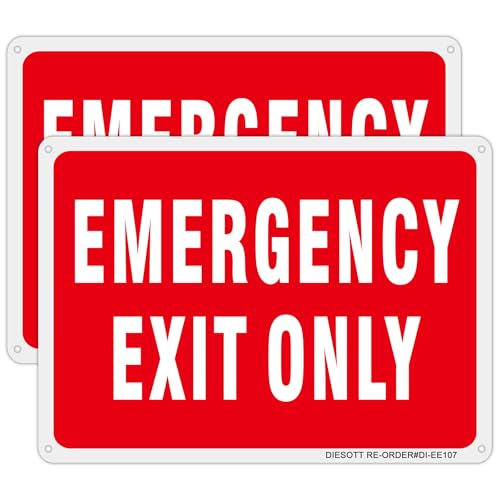
First decide what people must understand. “Emergency Exit Only” identifies restricted use, while “Do Not Block” focuses on keeping the route accessible. The DazhiSigns, ANZEKE, DIESOTT, Venicor, NMC, SmartSign, Sunco Lighting, and SITISFI products all document emergency-exit messaging. AccuformNMC is more specific when obstruction control is the priority because its supplied wording is “Emergency Exit - Do Not Block.”
A sign should be large enough for the viewing distance and placed where the door or route is naturally approached. The 14 x 10-inch Venicor and NMC formats provide a larger face than the 7 x 10-inch AccuformNMC sign. The 10 x 14-inch SmartSign label also offers a substantial printed area. Smaller narrow strips, such as a 9 x 3-inch design, can work beside a door, but that format is not among the selected products here.
Choose the substrate for the surface
Rigid aluminum is a practical choice when a sign will be exposed to weather, wind, or incidental contact. DazhiSigns, ANZEKE, DIESOTT, and Venicor document aluminum construction, with the listings describing rust resistance or weather-oriented protection. Venicor specifically states a 60 mil thickness, while DIESOTT specifies 1 mm aluminum. These plates generally call for screws, nails, ties, tape, or other attachment methods compatible with the pre-punched holes.
Adhesive vinyl is more forgiving when the door or frame is curved. AccuformNMC and NMC document adhesive mounting on curved or irregular surfaces, while SmartSign describes use on flat or curved surfaces. Adhesive installation avoids drilling, but the surface still needs to be clean and suitable for the backing. In dusty, oily, or frequently washed areas, verify the substrate and installation instructions before relying on a peel-and-stick sign.
Consider cleaning and impact exposure
Industrial environments can place dirt, dust, grease, and abrasion near exit doors. SmartSign’s laminated vinyl label is specifically described as wipeable and mar-resistant, with graphics protected from weather and abuse. That makes it a useful option when routine cleaning matters. NMC’s protective coating is described as resisting fading, scratches, scuffing, and moisture.
Aluminum plates provide a rigid alternative where impact or outdoor exposure is a concern. However, the supplied evidence does not establish that any particular sign is suitable for every chemical, washdown process, or high-impact area. Match the documented material claims to the actual location instead of assuming that a weatherproof label is appropriate for a wet industrial process zone.
Plan for low-light conditions
Low-light visibility separates passive printed signs from reflective, photoluminescent, and illuminated designs. DazhiSigns, ANZEKE, and DIESOTT describe reflective surfaces. Reflective material generally needs an external light source to return light toward the viewer, so review the approach path and available lighting.
SITISFI and Sunco Lighting use photoluminescent adhesive formats. Their listings describe charging under ambient light and glowing in darkness; SITISFI also states a 50-foot visibility claim and a glow period of at least 90 minutes. These signs do not require electrical wiring for the glow feature, but the adhesive surface and charging conditions still matter.
Amazon Basics is a hardwired double-face LED unit with a battery backup and multiple mounting orientations. Its listing specifies 120/277VAC operation and 90-minute backup power. That format may be better for a commercial facility designed for illuminated exit equipment, but it requires electrical installation and is listed for damp rather than wet conditions.
Match the mounting method to the facility
Use pre-punched or pre-drilled holes when a permanent mechanical attachment is preferred. DazhiSigns, ANZEKE, DIESOTT, and Venicor all document hole-based installation. This approach can be useful on masonry, fencing, poles, or other structures where adhesive may not be dependable.
Adhesive products are simpler for smooth doors, glass, and painted surfaces. AccuformNMC, NMC, SmartSign, SITISFI, and Sunco Lighting document adhesive-backed formats. Before installation, confirm that the sign will not be placed across a moving seam, hinge, handle, or other hardware. For an illuminated unit, check whether wall, ceiling, or end mounting aligns with the electrical layout.
Compare packs and placement needs
Pack size can matter when a facility has multiple emergency exits, stairwell approaches, or sides of a building that need consistent identification. DazhiSigns, ANZEKE, DIESOTT, Venicor, SITISFI, and Sunco Lighting provide multi-unit formats. A single laminated or adhesive label may be preferable when only one door needs marking, while a four-pack or two-pack can simplify consistent placement across a small site.
Do not treat pack quantity as a substitute for checking each location. A sign that works on an interior metal door may not be the right choice for an exterior gate, a curved frame, or a dim corridor. The top industrial emergency exit warning signs in this comparison differ mainly in substrate, visibility method, and installation demands.
Verify facility requirements before ordering
This comparison uses public listing specifications, not a code inspection or hands-on test. Confirm the required legend, dimensions, mounting height, illumination method, electrical rating, and environmental rating with the responsible safety professional or facility requirements. AccuformNMC’s listing references OSHA and ANSI requirements, while Amazon Basics documents UL certification and electrical details; those statements should still be checked against the specific installation.
Final Recommendation
DazhiSigns 2-Pack Reflective Aluminum Exit Signs ranks first overall in this specification-based comparison under the published weighted criteria.
DazhiSigns 2-Pack Reflective Aluminum Exit Signs is the highest-scoring returned product and the first overall specification-based choice. Its documented combination of reflective visibility, rust-free aluminum, UV protection, four mounting holes, and outdoor positioning makes it the broadest fit for industrial walls, gates, poles, and exterior approaches.
Choose ANZEKE or DIESOTT when a two-pack aluminum plate with reflective or weather-oriented features fits the site. Venicor is a useful larger rigid option, while NMC and SmartSign suit adhesive installations where curved surfaces or cleaning are important. For darkness without wiring, compare SITISFI and Sunco Lighting. For a facility equipped for electrical installation, Amazon Basics provides an illuminated double-face format with battery backup.
Among the best industrial emergency exit warning signs, no single design is right for every door. The final choice should follow the surface, viewing distance, lighting, exposure, and facility requirements rather than pack size alone. The top industrial emergency exit warning signs are the ones whose documented construction and installation method fit the actual route.
Frequently Asked Questions
Are reflective aluminum signs suitable for industrial outdoor exits?
DazhiSigns, ANZEKE, and DIESOTT document aluminum construction, outdoor suitability, and reflective or low-light visibility features. Their pre-punched holes also support attachment to walls, fences, poles, or gates. Confirm that the selected mounting hardware and substrate are appropriate for the location.
Which of the best industrial emergency exit warning signs works without wiring?
SITISFI and Sunco Lighting are photoluminescent adhesive signs and do not require electrical wiring for their glow feature. Their listings describe charging from ambient light and glowing in darkness. They are adhesive products, so use them on clean, suitable surfaces and consider whether the environment could damage the backing.
Should I choose adhesive vinyl or aluminum?
Choose adhesive vinyl when a curved or smooth surface and simple installation are important. AccuformNMC, NMC, and SmartSign document adhesive use, with SmartSign also describing a wipeable laminated surface. Aluminum may be preferable where rigidity, outdoor exposure, or mechanical mounting is more important, as documented for DazhiSigns, ANZEKE, DIESOTT, and Venicor.
What is the difference between a passive sign and an illuminated exit unit?
A passive sign relies on printed graphics, reflective material, or photoluminescence. An illuminated unit such as Amazon Basics uses LEDs, hardwired power, and battery backup. The illuminated format may suit facilities designed for electrical exit equipment, but it requires compatible installation and has specific environmental limits.
What should I check before installing an exit warning sign?
Check the required wording, viewing distance, sign size, surface condition, mounting method, lighting, and indoor or outdoor exposure. Also verify any applicable facility or code requirements. The supplied listings provide useful product specifications, but they do not replace a site assessment or professional compliance review.