Buying Guide
The best heavy-duty industrial warning signs are not interchangeable. A sign for a fuel tank communicates a different risk from one placed beside a conveyor, while a vehicle banner needs a different format from a wall plate. Start with the hazard and the viewing direction, then compare the substrate, printing or reflective treatment, and mounting method.
Match the message to the hazard
Use a specific message whenever the listing documents one. The Wrapco Diesel Fuel sign adds an NFPA 704 1-2-0 diamond to the fuel wording, making it more informative than a general caution label. The Sutter Signs Danger Electrical Room Sign identifies a restricted electrical location, and the SmartSign Moving Gate sign names the mechanical risk at an access point.
For machinery, the Victory Lane Graphics Moving Parts decal is designed around entanglement, pinch-point, and draw-in hazards. That level of specificity can help place the warning close to conveyors, rollers, presses, belts, or pulleys. Similarly, the silica-dust labels explain that wet sweeping is required, so they communicate a procedure as well as a danger.
Choose the substrate for the location
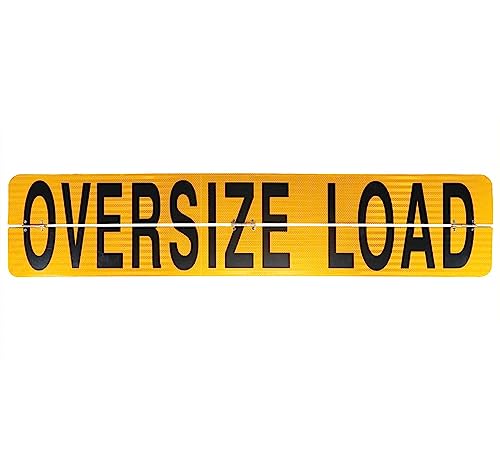
Aluminum is a strong fit for fixed outdoor signs in this selection. The MUXYH biohazard signs use rust-free aluminum, while the two SmartSign plates specify 40-mil aluminum. Aluminum can be appropriate for fences, gates, walls, and utility areas where a rigid plate is preferred over an adhesive label. The Mytee Products oversize-load sign also uses aluminum, but its hinged, 12 x 60-inch vehicle format serves a very different installation.
Plastic can work well when weight and mounting flexibility matter. The Wrapco fuel sign is plastic, weatherproof, UV-protected, and supplied with corner holes. It is a practical middle ground for a fuel-storage warning where a rigid plate is useful but a long vehicle banner is unnecessary.
Vinyl decals are better suited to clean, smooth surfaces on machinery, doors, cabinets, walls, and equipment. The Victory Lane moving-parts, hearing-protection, and silica-dust products all document heavy-duty vinyl and strong adhesive. Their format avoids drilling, but surface preparation and compatibility become important considerations. A decal may not be the right choice for rough masonry, dusty equipment, or a surface that is regularly replaced.
Consider visibility and viewing distance
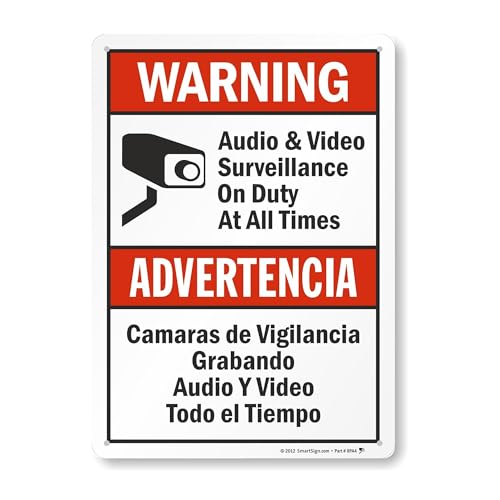
A sign should be large enough for the people who need to read it. The 5 x 7-inch hearing-protection and silica labels are useful for close-range reminders at entrances, stations, or equipment. The 10 x 7-inch aluminum signs offer a somewhat larger rigid plate for electrical, gate, and biohazard messages. The 10 x 14-inch SmartSign surveillance sign provides more area for a bilingual entrance notice.
Vehicle and property applications may need special treatments. The Mytee Products sign uses Diamond Grade reflective sheeting and 10-inch lettering in a 12 x 60-inch banner. The Lydia’s Deal no-trespassing signs use a reflective coating on a 14 x 10-inch plate. These features are documented for visibility, but they do not make every sign appropriate for every nighttime or traffic condition; placement and local requirements still matter.
Review mounting before ordering
Pre-drilled holes are useful for permanent installation. They appear on the Wrapco, MUXYH, Sutter Signs, SmartSign, and Lydia’s Deal products. The Lydia’s Deal set also includes cable ties, which may simplify attachment to fences and gates. SmartSign describes several possible fasteners, but its accessories are not included.
Adhesive products install differently. The Victory Lane decals use permanent adhesive, and the listings describe bonding to surfaces such as metal, plastic, glass, painted equipment, doors, walls, and machinery. Confirm that the surface is clean, smooth, and suitable before applying. Removing a permanent label may not be as simple as relocating a plate secured with ties or screws.
Check standards and documented protection
The most specification-aligned specifications are those that explain both the message format and the environmental treatment. ANSI Z535-style designs appear in the Victory Lane machinery and hearing-protection listings. The Wrapco listing identifies OSHA and NFPA compliance for its diesel-fuel sign. Other products describe OSHA-style presentation without providing the same level of formal detail, so do not assume that all warning graphics carry identical regulatory status.
Weather claims also vary. Several listings mention UV resistance, waterproofing, weatherproofing, laminate, or resistance to chemicals and abrasion. Treat these as product-specific claims rather than universal properties of every aluminum, plastic, or vinyl sign. If a facility has unusual chemicals, wash-down routines, heat, or heavy vehicle contact, compare the stated protection with the actual environment.
How this comparison was scored
This is a specification-based comparison using public listing data, not hands-on testing and not a summary of customer opinions. Editorial scores consider hazard-message clarity, material durability, environmental resistance, installation flexibility, and visibility or format. No score uses ratings, review activity, purchase activity, marketplace labels, or popularity signals. Products were selected only when the supplied title, features, and specifications supported a useful comparison.
Final Recommendation
MUXYH Caution Biohazard Aluminum Signs ranks first overall in this specification-based comparison under the published weighted criteria.
Wrapco Diesel Fuel NFPA 1-2-0 Sign is the first overall specification-based choice among these best heavy-duty industrial warning signs because it combines a specific fuel message, NFPA hazard identification, weather protection, high-contrast graphics, and pre-drilled mounting holes. It is a focused option for fuel storage rather than a general-purpose facility sign.
Among the top heavy-duty industrial warning signs, the MUXYH Caution Biohazard signs are a strong fixed-location choice for laboratories and industrial areas, while the Victory Lane Graphics decals are better when the warning belongs directly on machinery, equipment, or a smooth wall. Choose the SmartSign Moving Gate plate for a gate-specific message, the Sutter Signs plate for an electrical room, and the Mytee Products banner when the warning must be displayed across a truck or trailer.
Before ordering, verify the exact hazard language, required regulatory format, sign dimensions, viewing distance, mounting surface, and exposure conditions. A durable material alone does not compensate for an ambiguous message or an unsuitable installation method.
Frequently Asked Questions
What makes the best heavy-duty industrial warning signs different from ordinary signs?
The useful distinction is documented suitability for an industrial setting. In this comparison, that may mean aluminum or durable plastic construction, heavy-duty vinyl, UV or weather protection, reflective sheeting, formal warning styling, or mounting features such as pre-drilled holes. The exact combination should match the hazard and location.
Should I choose aluminum, plastic, or vinyl?
Choose aluminum when you need a rigid plate for a wall, gate, fence, or utility area. Plastic may be suitable for a lightweight rigid warning such as the Wrapco fuel sign. Vinyl decals are useful on clean, smooth equipment and walls where drilling is undesirable. The listings do not establish that one material is universally superior.
Are ANSI, OSHA, and NFPA references interchangeable?
No. The supplied products use these references in different ways. Wrapco specifically describes an NFPA 704 placard and OSHA compliance. Victory Lane Graphics describes ANSI Z535-style warning designs. Other listings use OSHA-style language or graphics. Confirm the standard required for your facility, hazard, and jurisdiction instead of treating the references as interchangeable.
Are reflective signs necessary for outdoor industrial areas?
They can be useful when a sign must be noticed in lower-light conditions, but the need depends on placement and traffic. The Mytee Products oversize-load sign documents Diamond Grade reflective sheeting, and the Lydia’s Deal property signs document reflective coating. These features are especially relevant to vehicle or boundary warnings, but they do not replace proper positioning and lighting.
What should I verify before installing an adhesive warning label?
Check that the surface is clean, smooth, dry, and compatible with permanent adhesive. The Victory Lane listings describe use on several industrial surfaces and resistance to moisture or contaminants, but they do not guarantee adhesion to every substrate. Also confirm that the label will remain visible and will not be covered by equipment movement, grime, or replacement parts.