Buying Guide
The best fabric adhesive transfer tape is the one whose adhesive behavior matches the project. A permanent pressure-sensitive roll is useful for a quick hem, while a fusible web needs an iron but may offer a sewable, washable bond. Temporary tape solves a different problem: holding a costume, neckline, banner, or short-term adjustment without committing the fabric to a permanent adhesive.
This comparison uses listing descriptions and specification fields. It does not represent hands-on testing, independent measurements, or customer-opinion analysis. Because fabric types and care routines vary, follow the product’s stated instructions and test an inconspicuous scrap when the listing recommends it.
Start with the application method
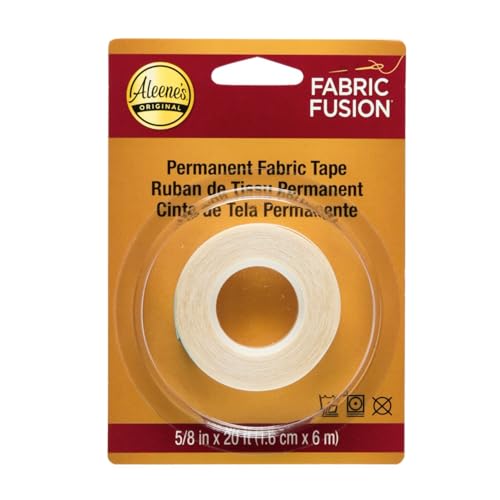
Peel-and-stick tape is the most direct format in this group. HeatnBond Peel n Stick Fabric Fuse, Aleene’s Fabric Fusion Adhesive Fabric Tape, and the consumer double-sided rolls are applied by cutting, peeling, and pressing. This avoids an iron and is convenient for quick repairs or projects where heat could be inconvenient. HeatnBond is described for hems, clothing, décor, felt, ribbon, and trims, while Aleene’s provides a narrower but more explicit woven-fabric profile.
Iron-on products work differently. Aleene’s Fabric Fusion Fusible Web Heavy-Duty and Outus Iron-On Hemming Tape are not ordinary sticky tapes before activation. Aleene’s fusible web requires heat and is described as sewable, flexible, permanent, and machine washable. Outus likewise requires an iron and damp fabric surface, with the listing specifying about 150 degrees Celsius. These products are worth considering when a heat-set hem is acceptable and a large amount of hemming material is useful.
The Scotch Permanent Fabric Tape Strips use a pre-cut format rather than a continuous roll. That can simplify short sections because the supplied pieces already measure 3/4 by 4 inches. The trade-off is less freedom to cut a single continuous strip for a long seam. The Scotch Removable Fabric Tape remains a roll, but its temporary design makes it better suited to repositioning than to a permanent finished hem.
Decide whether the bond should be permanent
Permanent products should be selected only when the fabric or project will not need easy reversal. HeatnBond, Aleene’s Fabric Fusion tape, Scotch Permanent Fabric Tape Strips, Aleene’s fusible web, and Outus are all described with permanent or durable bonding language. Their care directions differ, so “permanent” should not be treated as a universal promise for every material or wash routine.
Removable products give you more flexibility. Scotch Removable Fabric Tape is explicitly repositionable and intended for items that will not be washed. shimsol’s listing describes strong adhesion with removal without residue, but it also does not establish machine-wash durability. ETNRHP describes temporary and repositionable fixation alongside strong bonding, while TEAWOO does not clearly define whether its bond is permanent or removable. When a listing leaves permanence or wash care unclear, use the tape for a controlled project and test the material first.
The 3M Scotch ATG Adhesive Transfer Tape 924 is a professional-style option. It is described as a clear, permanent transfer tape that bonds fabrics and other substrates, but it is intended for an ATG applicator. That makes it a better fit for controlled adhesive transfer work than for a casual no-sew clothing repair.
Match the tape to the fabric
Fabric compatibility is not interchangeable across products. Aleene’s specifically names cotton, denim, flannel, silk, nylon, and trims, while warning against stretchy fabrics, patches, heavy synthetics, and felt. Scotch Permanent Fabric Tape Strips document a broader list that includes cotton, polyester, loose-weave linen, microsuede, fleece, polyester/cotton blends, polyester/spandex blends, duck cloth, satin, velvet, and PVC vinyl. The listing still recommends testing a small area or scrap and excludes silk or other delicate fabrics.
HeatnBond lists fabric, felt, ribbon, trims, and décor uses, and its description states that the tape leaves no residue or stiffness. Aleene’s fusible web is positioned for heavy-duty projects and lightweight stretch fabrics, which distinguishes it from Aleene’s pressure-sensitive Fabric Fusion tape. Outus says that heavier fabrics may need two or more strips for a stronger bond, while also cautioning that very smooth or sticky fabrics may be unsuitable.
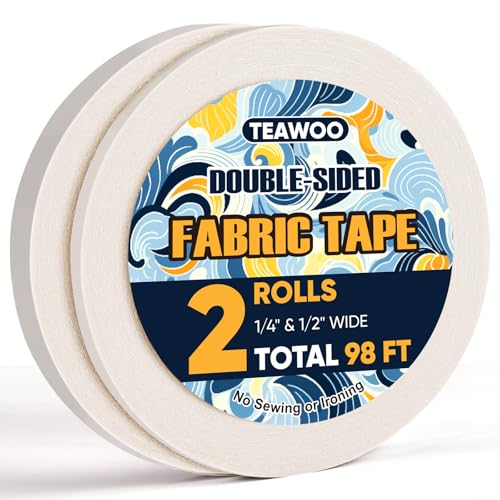
The mixed-width products from ETNRHP and TEAWOO are practical for general clothing fixes and crafts, but their supplied evidence is less specific about named fabric types and finished-garment care. In general, favor the product with the clearest compatibility statement for the particular textile rather than assuming that a stronger-sounding adhesive suits every surface.
Width affects placement. A 1/4-inch strip can fit a narrow seam or trim, while 1/2-inch and 5/8-inch widths cover more of a standard hem. ETNRHP and TEAWOO both provide 1/4-inch and 1/2-inch rolls. shimsol offers a 0.5-inch roll, and HeatnBond and Aleene’s use 5/8-inch formats. The Scotch strips are 3/4 inch wide and 4 inches long, which is convenient for short sections rather than continuous edges.
Length matters when the project includes multiple hems or curtains. Outus provides two 27-yard rolls, Aleene’s fusible web supplies 16 yards, HeatnBond supplies 30 feet, and 3M 924 supplies 36 yards. A shorter pre-cut pack may still be preferable when you want consistent pieces and less measuring. For occasional repairs, a smaller roll can also be easier to store and handle.
Follow care and preparation instructions
Washability is product-specific. Aleene’s Fabric Fusion tape and Aleene’s fusible web are described as machine washable. HeatnBond is described as washable, while Scotch Permanent Fabric Tape Strips specify hand washing and line drying after 72 hours; machine washing may be possible for some fabrics. Scotch Removable Fabric Tape is intended for items that will not be washed. Outus states that the finished hem can be washed or dry cleaned, but its activation instructions still matter.
Preparation also affects the documented use. Apply tape to clean, dry surfaces when the instructions say to do so, press firmly, and use a scrap test for uncertain fabrics. With iron-on products, avoid direct contact between a hot iron and the adhesive unless the instructions call for it. Do not assume that a product described for fabric-to-skin fashion holds the same way as a washable garment hem.
Final recommendation
HeatnBond Peel n Stick Fabric Fuse ranks first overall in this specification-based comparison under the published weighted criteria.
HeatnBond Peel n Stick Fabric Fuse is the first overall specification-based choice for the best fabric adhesive transfer tape because it combines no-heat application, a permanent double-sided bond, a 30-foot roll, and documented washable clothing and décor uses. It is a practical top fabric adhesive transfer tape for shoppers who want a continuous roll rather than pre-cut pieces or a heat-activated web.
Choose Aleene’s Fabric Fusion when your project uses compatible woven fabrics and you want explicit flexibility and machine-wash information. Choose Scotch Permanent Fabric Tape Strips for small repairs where pre-cut pieces and a broad listed fabric range are helpful. Aleene’s Fusible Web Heavy-Duty is the better match when an iron-on, sewable web is preferred, while Outus offers substantial twin-roll coverage for hemming.
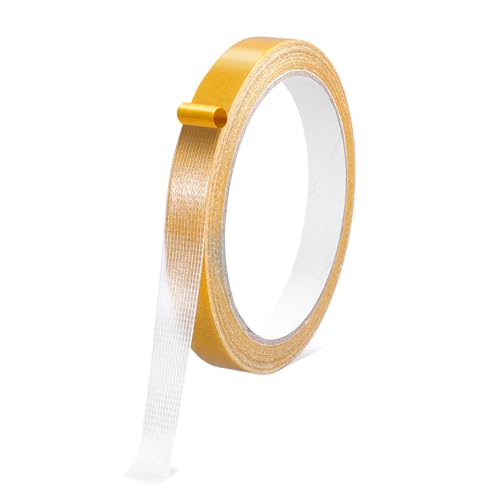
For temporary work, Scotch Removable Fabric Tape is the clearest fit because repositionability is directly documented. shimsol adds reinforced mesh and residue-free removal language. ETNRHP and TEAWOO provide mixed widths for general craft and clothing fixes, while 3M Scotch ATG 924 is the specialized choice for users who already have the intended applicator and want a professional transfer-roll format.
Frequently Asked Questions
What is the best fabric adhesive transfer tape for a permanent no-iron hem?
HeatnBond Peel n Stick Fabric Fuse is the most specification-aligned specification-based match in this selection. The listing describes a permanent, pressure-activated bond for hems and clothing, with no sewing or heat required. Aleene’s Fabric Fusion Adhesive Fabric Tape is another option for compatible woven fabrics and is described as machine washable. Check the fabric limitations and care instructions before applying either product.
Is fabric adhesive transfer tape washable?
Some products are described as washable, but the instructions differ. HeatnBond and Aleene’s Fabric Fusion tape are listed as washable or machine washable. Scotch Permanent Fabric Tape Strips specify hand washing and line drying after 72 hours, with machine washing dependent on the fabric. Scotch Removable Fabric Tape is intended for items that will not be washed. Treat washability as a product-specific claim, not a category-wide feature.
Should I use peel-and-stick tape or iron-on hemming tape?
Use peel-and-stick tape when you want an immediate application without an iron. HeatnBond and Aleene’s Fabric Fusion tape follow that approach. Choose iron-on tape or fusible web when heat activation is acceptable and the project benefits from a heat-set bond; Aleene’s Fusible Web is also described as sewable. Outus similarly requires an iron and damp fabric surface, so it is not interchangeable with pressure-sensitive tape.
Which option is best for temporary clothing adjustments?
Scotch Removable Fabric Tape is the clearest documented choice because it is removable, repositionable, and intended for temporary holds. shimsol also describes a strong but removable, residue-free bond and includes fashion uses. Neither should automatically be treated as washable garment adhesive; the supplied listings do not establish the same care profile as the permanent washable products.
Does width matter when choosing fabric tape?
Yes. Narrow 1/4-inch tape can suit small seams or trims, while 1/2-inch and 5/8-inch formats cover more of a typical hem. ETNRHP and TEAWOO provide two widths in one set. A 3/4-inch pre-cut strip, such as Scotch Permanent Fabric Tape Strips, can be convenient for short repairs but offers less flexibility than a continuous roll. Choose a width that fits inside the seam allowance without extending beyond the fabric edge.