Buying Guide
Choosing the best high-temperature fabric tape starts with identifying the heat source and the surface being protected. “Fabric tape” covers several constructions in this group: polyester non-woven cloth for wiring harnesses, glass cloth for electrical insulation and masking, PTFE-coated fiberglass for sealing equipment, and polyimide film for circuit-board work. These materials are not interchangeable simply because each listing uses high-temperature language.
Match the tape to the job
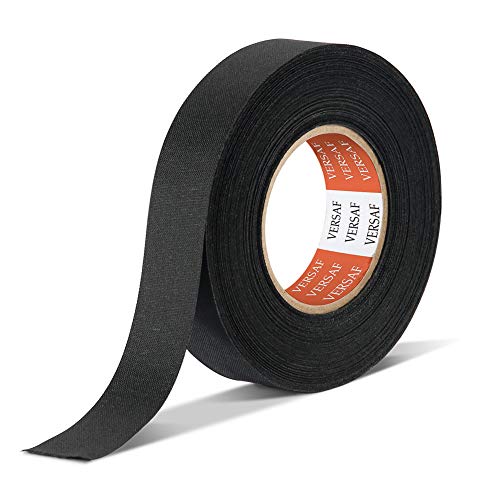
For automotive wire bundles, look first at cloth harness tape. XFasten, Trazon, and RED WOLF document 3/4-inch widths and applications involving wiring harnesses, cable protection, or noise reduction. Their flexible construction is intended to wrap irregular bundles. XFasten emphasizes a bi-directional weave and resistance to puncture, abrasion, and corrosion. Trazon adds marine, RV, motorcycle, and home-wiring applications, while RED WOLF specifies dashboard harnesses, wire joints, and engine or circuit maintenance.
For sealing machines, PTFE-coated fiberglass is the more relevant design. GCQ names vacuum, hand, and impulse sealers and includes placement guidance for those machines. TOAXUUL and BOMEI PACK also list sealing equipment, hot-melt machines, motors, or cable insulation among their uses. PTFE contributes a smooth, non-stick surface, so this category is a better fit where film or heated material must release from the tape.
For electrical masking, APT and ELEGOO offer different approaches. APT uses glass cloth and provides a Class H electrical insulation description for 600-volt dry-location applications. ELEGOO uses polyimide film and supplies four narrow-to-wide sizes, making it adaptable for circuit boards, soldering, electrical insulation, and splicing wires.
Compare the stated heat limit
A numerical temperature specification is useful, but it should be read in context. InnoHHustle lists up to 300°C or 572°F. BOMEI PACK’s selected PTFE products list up to 270°C or 518°F, while TOAXUUL and GCQ list 260°C or 500°F in their descriptions. APT specifies removal at bake temperatures up to 260°C. Automotive cloth products use lower listed ranges: Trazon and XFasten reach 257°F, while RED WOLF reaches 221°F.
These numbers do not establish performance in every installation. They describe the supplied listing evidence, and the appropriate choice still depends on exposure duration, surface temperature, pressure, and whether the tape is being used for masking, insulation, harness wrapping, or sealing. Do not substitute a wiring-harness tape for a sealer strip solely because both are described as heat resistant.
Check construction and adhesive behavior
Cloth harness tape generally prioritizes flexibility, bundling, abrasion resistance, and noise or vibration dampening. Hand-tear designs can be convenient during wrapping: XFasten and RED WOLF explicitly describe tearing by hand, while Trazon says to use scissors or a blade for a precise end. Adhesive descriptions also differ. XFasten and RED WOLF identify strong or pressure-sensitive adhesive, and Trazon specifically describes clean removal.
PTFE tapes use fiberglass coated with PTFE and an adhesive backing. Their smooth surface is important for release and friction reduction. GCQ, TOAXUUL, and BOMEI PACK describe non-stick or release-related properties. InnoHHustle lists PTFE and silicone and claims residue-free removal. Surface preparation remains important: GCQ and BOMEI PACK say the surface should be dry and smooth before application.
APT’s glass-cloth design is focused on mechanical strength, electrical insulation, and high-temperature masking. ELEGOO’s silicone adhesive and residue-free release are relevant when masking must be removed without leaving material behind. The listing does not give ELEGOO a numerical heat rating, so the application documentation matters more than an assumed temperature ceiling.
Select width and coverage
Width affects both coverage and control. BOMEI PACK’s 3-inch roll is suited to broad sealing surfaces, while its 2-inch version offers a middle-width option. TOAXUUL uses a 1-inch width, and GCQ and the harness products use 3/4 inch. ELEGOO includes sizes from 1/8 to 1 inch, which is helpful when one project includes both narrow traces and broader masking areas. InnoHHustle uses a 1/2-inch format for detailed work.
Roll count matters for repeated repairs. Trazon provides five 50-foot rolls, XFasten provides five, and RED WOLF provides five. By contrast, the PTFE and glass-cloth options in this comparison are generally single rolls. More total tape is useful only if the width and material match the job; buying a larger pack does not compensate for an unsuitable construction.
Practical selection checklist
Before ordering, confirm five details: the actual heat exposure, the material you need, whether the surface must release cleanly, the required width, and the amount of tape. For engine-bay harnesses, compare the stated automotive temperature range and abrasion or noise features. For a vacuum sealer, prioritize a PTFE surface and a width that covers the existing strip. For soldering or board masking, polyimide’s documented electrical and chemical properties may be more relevant than a thick cloth backing. For high-temperature electrical masking, APT’s stated Class H and 600-volt dry-location profile provides more specific evidence than a general heat claim.
Final Recommendation
XFasten Wire Harness Tape 5-Pack ranks first overall in this specification-based comparison under the published weighted criteria.
The final choice among the best high-temperature fabric tape options depends on the documented features that match your intended use.
APT Glass Cloth Electrical Tape is a strong choice for specialized electrical work because its listing combines a 260°C masking specification, Class H electrical insulation description, glass-cloth backing, and defined dry-location use.
For a top high-temperature fabric tape for heated sealing equipment, choose a PTFE option according to width: GCQ is a sealer-specific option, TOAXUUL is a flexible multi-purpose 1-inch choice, and BOMEI PACK offers broader 2- or 3-inch coverage. InnoHHustle is worth considering when its stated 300°C limit matches the application and the narrow 1/2-inch format is suitable.
For automotive harnesses, XFasten is the most specification-aligned choice for vibration and abrasion concerns, while Trazon and RED WOLF provide substantial multi-roll coverage. ELEGOO remains the practical choice for polyimide-style circuit-board masking rather than cloth harness wrapping.
Frequently Asked Questions
What is the best high-temperature fabric tape for automotive wiring?
XFasten is the most complete automotive-oriented selection here because its listing documents a -40°F to 257°F range, hand tearing, noise and rattle dampening, and resistance to puncture, abrasion, and corrosion. Trazon and RED WOLF are also candidates when their documented temperature ranges and pack sizes fit the project.
Is PTFE tape the same as automotive cloth harness tape?
No. PTFE tapes in this comparison use PTFE-coated fiberglass and are listed for non-stick, release, insulation, and sealing-machine uses. Automotive harness tapes use soft polyester or felt-like cloth intended for bundling, cable protection, and noise reduction. They serve different surface and handling needs.
Which tape is best for a vacuum sealer?
GCQ is the most specifically documented option because its listing names vacuum and impulse sealers and explains placement around the sealing wire. TOAXUUL and BOMEI PACK also list vacuum or impulse sealing applications. Confirm the replacement strip’s width before applying a new roll.
Does a higher temperature number always mean a better tape?
Not necessarily. A higher stated limit may be useful for a hot-pressing or sealing task, but width, adhesive type, release behavior, insulation needs, and application fit also matter. InnoHHustle lists 300°C, while APT’s electrical and masking specifications may be more relevant for a defined electrical job.
What should I use for soldering or circuit-board masking?
ELEGOO is the clearest fit among the selected products because it uses polyimide film, includes four widths, and is listed for circuit-board masking, soldering, electrical insulation, and wire splicing. Its supplied evidence does not include a numerical temperature rating, so match the tape to the specific process requirements.