Buying Guide
Choosing the best fabric clothespins starts with identifying the material and grip style that match the job. The products in this comparison fall into two useful families: plastic U-shaped or alligator-style clips for garment folding and fabric organization, and spring-loaded wooden pins for laundry, crafts, and general household use. The rankings rely on listed specifications and feature statements rather than hands-on testing, customer opinions, or volatile marketplace information.
Choose the clip shape first
Plastic U-shaped clips are especially relevant for folded shirts, ties, socks, pants, sleeves, and other garments. HAHIYO, HONYURIS, Zorveiio, MEETOOT, and TKYPZY all document clothing or fabric applications. Their compact forms are intended to hold sections of fabric together or keep garments organized. This design can be convenient in sewing rooms, closets, garment displays, and laundry organization.
The plastic models are not identical. HAHIYO uses a 1.5-inch U-shape with wavy teeth, while HONYURIS lists a 2-inch toothed format. Zorveiio and MEETOOT specify 38 mm clips with teeth. TKYPZY is the distinct toothless option, describing a wavy design intended to hold fabric without clamp marks. If minimizing visible tooth contact is a priority, the TKYPZY design deserves attention. If a toothed grip is preferred, the other plastic options provide clearer evidence for that feature.
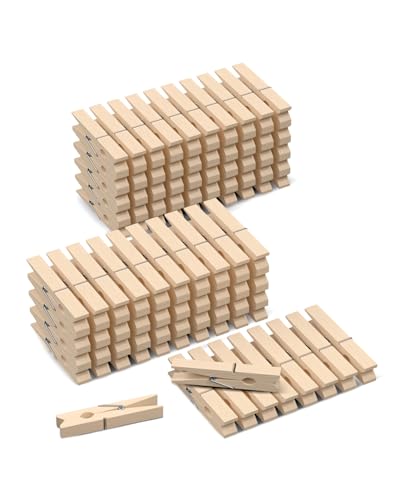
Traditional wooden clothespins use a spring-loaded structure and are more familiar for clotheslines. DUIJINYU, Honey-Can-Do, Mr. Pen, Tecbeauty, and Clorox all document wooden bodies and spring-related construction. These models are suited to shoppers who want a conventional pin that can serve laundry, crafts, photo displays, or household organizing tasks. The wooden choices also provide longer formats than the compact plastic garment clips.
Grip design is one of the important differences between fabric clips. Plastic models with teeth are described as holding fabric or clothing in place, but the supplied evidence does not establish a universal performance level for every material. Toothless or wavy contact, as listed for TKYPZY, may be preferable when avoiding visible marks is more important than using a toothed jaw. HAHIYO also describes wavy teeth and states that the clips are intended not to damage fabric or leave clamp marks.
Wooden models take a different approach. Clorox specifically lists a non-slip grip and names heavier items such as towels, bedding, and jeans. DUIJINYU describes a gentle hold for light fabrics, silk, scarves, and socks. These statements suggest different intended roles, but they should not be treated as test results. For heavy laundry, review the product’s stated use and consider the size and spring design. For delicate or light fabrics, favor listings that explicitly mention those materials and avoid assuming that every wooden pin has the same contact surface.
Match material to your environment
Plastic clips are a logical choice when rust staining is a concern. HAHIYO states that its PP clips will not rust like metal clips, and several other plastic listings describe clear or white construction. Plastic is also lightweight and visually unobtrusive, particularly in transparent versions such as Zorveiio and MEETOOT. The evidence does not establish outdoor weather life for every plastic model, so use the documented applications as the main guide.
Wooden pins offer a different balance. DUIJINYU specifies natural hardwood and rust-resistant springs. Honey-Can-Do describes birch hardwood with moisture and rust resistance, while Mr. Pen lists a rust-resistant galvanized coil. Tecbeauty specifies a stainless steel spring, and Clorox describes rust-resistant metal coils. These details are useful when selecting pins for line drying, but they do not guarantee identical performance under all weather conditions.
Check the size and opening needs
Size affects handling and likely capacity, although the supplied listings do not provide comparable jaw-opening measurements for every product. The plastic choices range from 1.5-inch or 38 mm formats to HONYURIS at 2 inches. These compact clips are centered on garment folding and fabric organization. They may be easier to store in a sewing kit or drawer than longer wooden pins.
The selected wooden pins range from 2.9 inches for DUIJINYU and Mr. Pen to 3 inches for Tecbeauty. Their longer bodies can be easier to grip and are positioned for laundry and broader household work. Clorox and Honey-Can-Do are also presented as laundry-oriented options. Select a longer wooden format when the intended use involves sheets, towels, bedding, or clothesline work; select a smaller plastic format when compact garment clips are the priority.
Pack size matters when clips will be used regularly or across multiple projects. Zorveiio and MEETOOT each list 300 clips, while HAHIYO lists 200. These are useful quantities for sewing rooms, garment sorting, or repeated organization tasks. HONYURIS and the selected 100-count wooden options provide a middle ground.
Mr. Pen and Clorox list 50-pack formats, which may be easier to store when only a modest number of clothespins is needed. Pack quantity should be evaluated alongside the actual product description because one supplied listing has a conflicting unit-count field. For that reason, verify the package details before ordering, especially when quantity is central to the project.
Consider secondary uses
Many of the selected products document uses beyond holding clothing. Plastic clips are described for fabrics, drawings, binders, paper, curtains, and sheets. Wooden models are listed for crafts, photo displays, snack bags, classrooms, wedding cards, and decorations. These extra uses can make one set more practical in a multipurpose household, but they should not replace the primary specification check: material, size, grip, and intended fabric application.
Final recommendation
DUIJINYU 2.9-Inch Hardwood Clothespins, 100 Pack ranks first overall in this specification-based comparison under the published weighted criteria.
DUIJINYU 2.9-Inch Hardwood Clothespins, 100 Pack is the first overall specification-based choice in this comparison.
HAHIYO is a well-rounded choice among the best fabric clothespins because it combines wavy-tooth plastic clips, a compact 1.5-inch format, broad garment and fabric uses, and a 200-count pack. Its specifications are more closely suited to sewing rooms and fabric organization than to heavy outdoor laundry.
For a larger plastic format, HONYURIS is a useful alternative with 2-inch toothed clips. Zorveiio and MEETOOT are suitable when a 300-count transparent set is preferred, while TKYPZY stands out for its documented toothless wavy contact. Among wooden options, DUIJINYU offers a 100-count large format, Tecbeauty offers the longest listed format, and Clorox is specifically positioned for heavier laundry items.
The top fabric clothespins therefore depend on the task: choose plastic U-shaped clips for garment folding and fabric organization, or choose spring-loaded wooden pins for line drying and multipurpose household use. Always confirm the listed size and package quantity before purchase.
Frequently Asked Questions
What are the best fabric clothespins for sewing?
HAHIYO is a strong specification-based sewing-room choice because its listing documents PP plastic, wavy teeth, reuse, and applications for fabrics, garments, curtains, and sheets. Its 200-count pack is also suited to projects requiring many matching clips. TKYPZY is worth considering when a toothless wavy design is preferred.
Are plastic or wooden clothespins better for fabric?
Neither material is universally better. Plastic clips such as HONYURIS, MEETOOT, and TKYPZY are oriented toward garment folding and fabric organization. Wooden pins such as DUIJINYU and Honey-Can-Do are oriented toward laundry, crafts, and household use. Choose based on the documented grip, material, size, and intended application rather than assuming one material fits every fabric.
Which best fabric clothespins have the largest packs?
Zorveiio and MEETOOT each list 300 clips, followed by HAHIYO with 200. These quantities may suit sewing rooms, garment sorting, or repeated organization tasks. Pack descriptions should be checked carefully because listing fields can sometimes conflict with the main product description.
Are wooden clothespins suitable for outdoor laundry?
Several selected wooden listings describe outdoor or line-drying use. Honey-Can-Do mentions indoor and outdoor laundry, DUIJINYU describes outdoor clothesline use, Tecbeauty lists outdoor hanging, and Clorox names line drying. Their listings also mention rust-resistant or stainless components, but the evidence does not establish identical weather performance for every product.
What should I check before buying fabric clothespins?
Check the clip type, material, size, grip description, intended fabric uses, and pack quantity. For garments, compare toothed and toothless plastic designs. For laundry, review the wooden pin’s spring and stated use with heavier items. Also verify the package contents and dimensions on the current listing before ordering.