Buying Guide
The best fine hair drying towels should remove excess moisture without requiring vigorous rubbing or creating unnecessary weight on wet strands. Listing evidence points to three useful design families: soft microfiber wraps, larger rectangular microfiber towels, and a bamboo alternative. The right choice depends on how much coverage you need, whether the towel must stay in place while you get ready, and whether you prefer a turban or a flat towel.
Start with fabric and surface texture
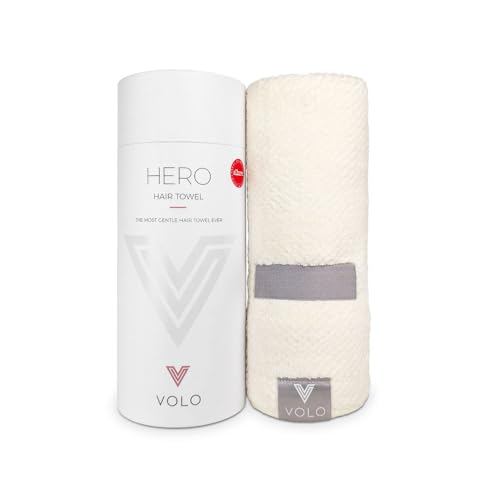
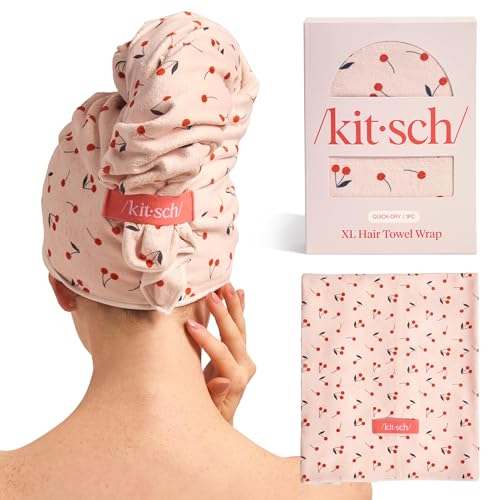
Microfiber is the dominant material in this comparison because many listings describe it as absorbent, soft, lightweight, or lower-friction than conventional towels. For fine hair, the useful specification is not simply the word microfiber; look for additional details about smoothness, lint, texture, or reduced rubbing. VOLO documents an ultra-soft, lint-free Nanoweave construction. The Perfect Haircare describes an untextured surface, while Kitsch uses the phrase friction-free fabric. Those details provide more relevant evidence than a generic material label alone.
Harmony Weave offers a different route with bamboo fabric. Its listing positions bamboo as a soft, absorbent alternative to microfiber and includes a built-in strap. Because the supplied evidence does not establish that bamboo is universally better for fine hair, treat it as a fabric preference rather than a confirmed performance advantage.
Match coverage to hair length
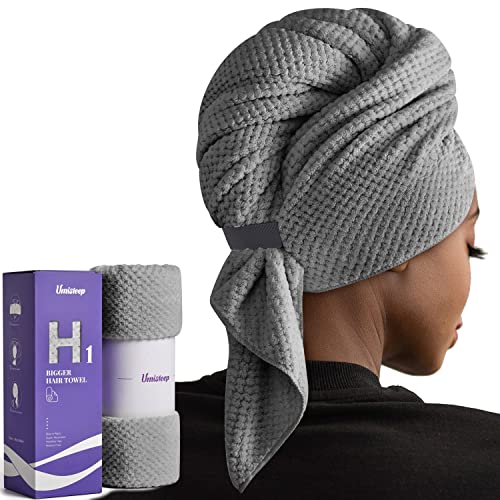
Dimensions matter because fine hair can be long, short, straight, or curly. Larger towels such as the 39.4-by-30.5-inch VOLO, 40-by-27.5-inch Perfect Haircare wrap, 26.3-by-40-inch YFONG, and 40-by-24-inch Kitsch cover more hair and are more adaptable for long or voluminous styles. They may also feel like more fabric than necessary for a short, fine cut.
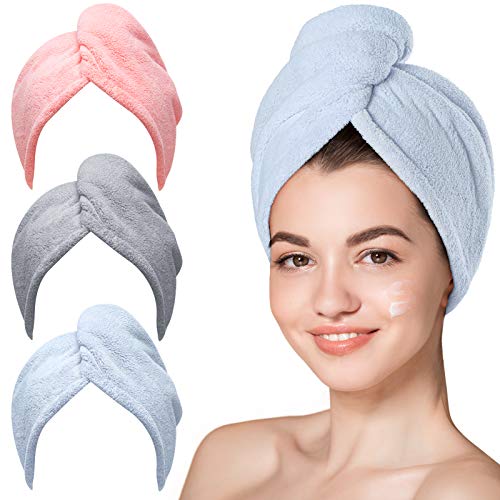
Compact turban-style options can be easier to manage. Slinkko lists a 26-by-10-inch format, and Hicober lists a narrower 24.8-by-9.44-inch profile. These shapes are designed around twisting and securing rather than draping a broad rectangle over the head. Check the listed dimensions against your hair length before choosing a compact wrap.
MICROFI sits between those approaches with a 29-by-16-inch rectangular salon towel. It is a useful format for blotting or manual wrapping, but it does not list a closure system. A rectangular towel can work well when you prefer to control the amount of fabric around your head, though it may require more adjustment than a looped turban.
Consider how the towel stays in place
A secure closure is useful when you want to dress, apply skincare, or move around while hair dries. The Perfect Haircare uses a patented clip; VOLO uses a built-in twist loop; Kitsch and YFONG list elastic closures or straps. Hicober and Slinkko use button-and-loop arrangements. These designs differ in handling, so consider whether you prefer a clip, elastic, or simple loop.
Closures also affect the wrap’s flexibility. An elastic strap can accommodate different amounts of hair, while a compact button loop may be better for a smaller bundle. If the listing does not identify a closure, as with DevaCurl and MICROFI, plan to wrap or scrunch the towel manually rather than expecting a fixed turban fit.
Prioritize low-friction handling
Fine hair can be vulnerable to pulling when wet, but the supplied listings do not establish universal outcomes for any towel. Instead, use the documented design language as a screening tool. DevaCurl specifically instructs users to scrunch rather than rub. Boldify describes microfiber as gentle and suitable for thin and thinning hair. Hicober identifies reduced rubbing and towel weight for fine hair, while Slinkko describes reduced tension for fine or damaged hair.
A practical routine is to place the towel around wet hair, gently press or scrunch to remove excess water, and secure it without twisting tightly. Avoid treating marketing claims such as a stated percentage reduction in drying time as hands-on test results. They are listing claims, not independently verified measurements.
Check care and rotation needs
Care instructions can affect how convenient a towel is over time. Among the selected products, Hicober’s three-piece format supports rotation, and VOLO’s listing describes reusability across 500 or more washes. Those are supplied specifications, not independent durability testing.
For fine hair, keeping a clean towel available may be useful because damp textiles can remain in the bathroom between uses. A multipack such as Hicober can provide more than one wrap for rotation, while a single large towel such as DevaCurl or Kitsch may suit a simpler routine. Follow the product’s own care directions, especially where the listing specifies fabric treatment or closure handling.
Choose the right design for your routine
For curl plopping, VOLO and DevaCurl provide the clearest documented curl-oriented features. For thin or thinning hair, Boldify has the most direct wording, while Hicober and Slinkko explicitly mention fine hair. For extra coverage, YFONG and Kitsch list large dimensions. For a non-microfiber choice, Harmony Weave documents bamboo. For a salon-style rectangular towel, MICROFI provides lint-free construction and a 340 GSM specification.
These distinctions make it easier to compare the best fine hair drying towels without assuming that every user needs the same shape or material. Focus first on fabric evidence, dimensions, and closure design, then narrow the list based on your hair length and routine.
Final Recommendation
VOLO Hero Hair Towel ranks first overall in this specification-based comparison under the published weighted criteria.
The final choice among the best fine hair drying towels depends on the documented features that match your intended use.
VOLO Hero Hair Towel is the highest-scoring returned product and the first overall specification-based choice. Its ultra-soft, lint-free microfiber, large dimensions, twist loop, and documented plopping support cover the most important design considerations for fine hair. The Perfect Haircare wrap is a close alternative if a clip closure matters more, while Boldify is the most directly aligned with thin or thinning hair wording.
Among the top fine hair drying towels, DevaCurl is the most curl-specific rectangular option, Kitsch is a practical large travel wrap, and Hicober is useful when rotating multiple wraps matters. Harmony Weave gives shoppers a documented bamboo alternative, and MICROFI suits users who prefer salon-style rectangles over turban closures. No listing can replace checking the dimensions and wrapping method against your own hair length, so use those specifications as the final filter.
Frequently Asked Questions
What should I look for in the best fine hair drying towels?
Look for a soft or smooth fabric description, evidence of reduced friction or rubbing, a manageable weight, and dimensions suited to your hair length. A secure loop, clip, elastic, or button can also prevent repeated readjustment. Boldify, Hicober, and Slinkko directly mention thin, fine, or delicate hair, while VOLO and Kitsch provide detailed microfiber and closure descriptions.
Is microfiber the only suitable material for fine hair?
No. Most selected products use microfiber, but Harmony Weave documents a bamboo construction with a strap and curl-friendly positioning. The supplied evidence does not prove that one material is universally superior. Compare the fabric description, surface design, dimensions, and closure rather than choosing based on material name alone.
Are larger towels better for fine hair?
Not automatically. Larger towels can cover long, curly, or voluminous hair more easily, as shown by VOLO, YFONG, and Kitsch. However, a large format may be more fabric than needed for short fine hair. Compact options such as Slinkko or Hicober may be easier to manage, but their narrower listed dimensions can limit coverage for very long hair.
Which selected towel is best for plopping curls?
VOLO and DevaCurl have the clearest supplied evidence for plopping or curl-focused use. VOLO documents a tube-style wrap that cradles curls and a twist loop, while DevaCurl gives scrunching guidance and lists a 20-by-39-inch microfiber towel. Choose between them based on whether you prefer a secured wrap or a rectangular towel handled manually.
How should I use a towel without adding unnecessary friction?
Place the towel around wet hair, then gently press or scrunch rather than rubbing aggressively. Secure the wrap comfortably with its listed closure, if provided. DevaCurl specifically describes scrunching wet curls upward, while several other selected products describe smooth or low-friction microfiber. These are usage-oriented specifications, not a guarantee of a particular hair result.