Buying Guide
This comparison of the best fabric decorative fences uses documented privacy and shade coverage, fabric and weather features, edge reinforcement and fastening, installation flexibility, and size and application fit. It is not a hands-on test or a summary of customer opinions.
Fabric fence screens are flexible panels attached to an existing fence, railing, balcony edge, deck, or similar support. They are not freestanding fences, so confirm that the mounting structure can accept regular tie points. A screen can improve privacy and shade while retaining a lighter visual profile than a solid wall, but the result depends on accurate sizing and secure attachment.
Match the screen to the barrier
Measure the supported height and horizontal run separately. A panel that is too tall may fold over the top, drag on the ground, or receive more wind exposure. A panel that is too short can leave a visible gap. For balconies and railings, the SUNLAX 3’ x 13’ White Screen is a focused format. For five-foot fences, the Cisvio and Windscreen4less 5’ x 50’ models are closer matches. Tall boundaries can use the 8-foot TANG or Patio panels if the supporting fence is designed for that height.
Allow for the stated tolerance where applicable. The Patio 8’ x 20’ screen cautions that elasticity can produce slight dimensional differences. Measure the actual fence and plan attachment points before cutting or stretching fabric.
Choose material for the setting
HDPE mesh is common in larger yard screens. TANG, SUNNY GUARD, Cisvio, Windscreen4less, and Patio describe polyethylene or HDPE fabric with breathable or air-permeable construction. That combination may suit projects seeking visual screening without a fully solid surface. The listings also describe UV resistance or shade use for these products.
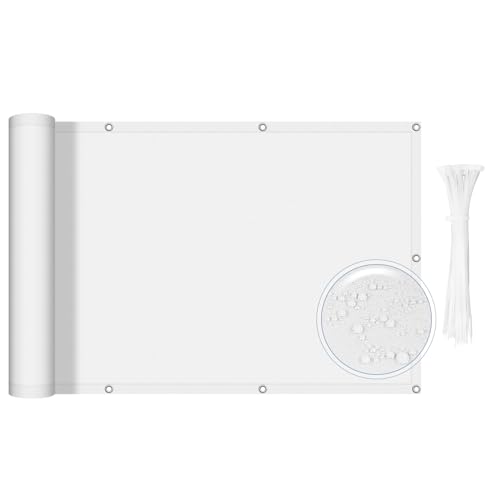
The SUNLAX waterproof balcony screen uses 160g/m² polyester with a PU coating. Its listing specifically states waterproof performance, stain resistance, and 98% UV protection. It may suit a location where rain coverage is important, but the listing says it is not recommended during storms or snowfall. Do not treat a water-resistant specification as approval for severe-weather use.
Fabric density can help compare similar screens, but it is not the only factor. Cisvio supplies a 170 GSM specification, while other products emphasize edge construction, visibility blockage, or UV features instead. A heavier stated fabric does not establish suitability for every fence or climate.
Compare privacy and shade claims carefully
The listings use different terms, including visibility blockage, visibility occlusion, shading rate, and UV protection. These are related but not identical. A stated 90% visibility block is not the same measurement as a 95% shade rate or a 98% UV-protection claim. Use the claim that matches your priority rather than treating all percentages as interchangeable.
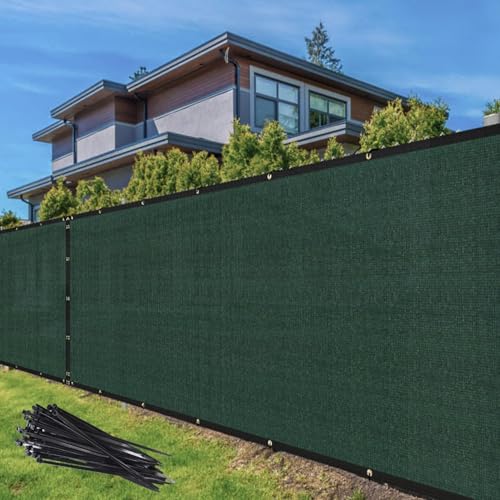
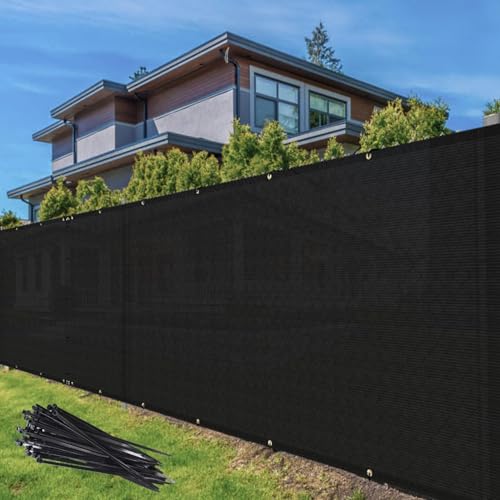
The TANG 6’ x 50’ Green Privacy Fence Screen, TANG 8’ x 20’ Black Privacy Screen, and Windscreen4less 8’ x 50’ Beige Screen document 95% visibility-related coverage. The balcony SUNLAX model documents a 90%-95% shading rate and 98% UV protection. SUNNY GUARD states 90% visibility occlusion. Actual results will also depend on fence gaps, viewing angle, fabric tension, lighting, and mounting height.
Inspect edges, corners, and grommets
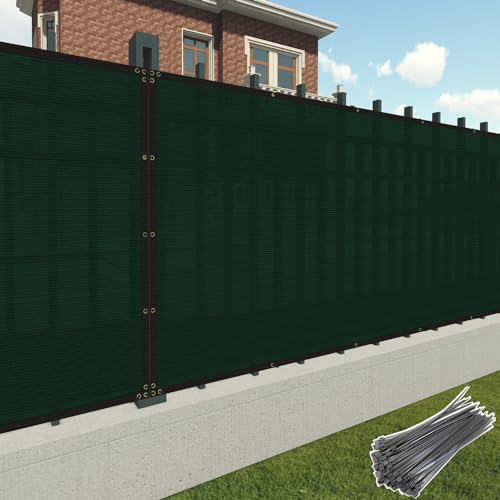
Fastening hardware is a practical distinction among the best fabric decorative fences. Look for reinforced edges, stitched binding, and grommets on all sides. The TANG products and Patio 8’ x 20’ model document three-grommet corner designs. SUNNY GUARD lists reinforced black binding and aluminum grommets with stated spacing. SUNLAX identifies double-line stitching and rust-resistant aluminum grommets.
Grommet spacing affects how closely a panel can be secured to the supporting fence. More attachment points may help keep edges aligned, but the support itself must be suitable for the added load. Use included zip ties where supplied, or follow the manufacturer’s recommended attachment method. Do not assume that a screen can be safely nailed, stapled, or permanently fastened when the listing only documents grommets and ties.
Consider airflow and weather exposure
Many mesh products mention air or water permeability. This may be preferable to a solid barrier, but it does not make a screen suitable for every weather condition. Wind exposure increases with panel height and total area. An 8-by-50-foot screen requires more attention to the fence condition, attachment points, and seasonal removal than a small balcony panel.
Several listings describe outdoor, windscreen, or weather-resistance uses. Those descriptions support general outdoor applications, not performance in every location. SUNLAX specifically excludes storms and snowfall in its notes. Follow the product instructions and local conditions.
Select color and application
Color is primarily a design and visibility consideration. Green TANG, SUNNY GUARD, and Patio screens can coordinate with gardens or landscaping. Black TANG, Patio, and Windscreen4less options provide a darker backdrop. Beige Windscreen4less models and the white SUNLAX screen offer lighter alternatives.
Also consider whether the screen will remain in place. Several products describe temporary garden, construction, greenhouse, pet, pool, or balcony uses. For seasonal storage, choose a manageable length and follow the stated advice to fold and store fabric in a clean, dry place. A 20- or 25-foot panel may be easier to handle for one section than a 50-foot roll.
Final recommendation
TANG 6’ x 50’ Green Privacy Fence Screen ranks first overall in this specification-based comparison under the published weighted criteria.
TANG 6’ x 50’ Green Privacy Fence Screen is the first overall specification-based choice in this comparison.
The best fabric decorative fences depend on the documented features that match the intended use. TANG 6’ x 50’ combines a long format with 95% stated visibility blockage, breathable HDPE construction, UV resistance, reinforced binding, three-grommet corners, included zip ties, customization, and a limited warranty. It is suited to a substantial fence, pool, garden, or yard project rather than a compact balcony.
SUNLAX Waterproof 3’ x 13’ White Screen is an alternative for a balcony or railing because it combines polyester fabric, PU coating, stated waterproof performance, UV protection, and reinforced attachment points. It is the most specification-aligned option here for a smaller installation where rain coverage and a light finish matter, subject to its stated storm and snowfall limitation.
For extra height, the Windscreen4less 8’ x 50’ Beige Screen and TANG 8’ x 20’ Black Privacy Screen are among the top fabric decorative fences to consider. For a shorter project, compare the 4-by-25-foot Windscreen4less screen, the 8-by-20-foot Patio panel, or the 6-by-20-foot Patio mesh against the actual fence dimensions.
Frequently Asked Questions
Are fabric decorative fences freestanding?
No. The products compared here are screens or mesh panels intended to attach to an existing fence, railing, balcony, deck, or similar support. Confirm that the structure has suitable attachment points before ordering.
Which of the best fabric decorative fences is suited to a balcony?
The SUNLAX Waterproof 3’ x 13’ White Screen is specifically oriented to balcony and railing use. Its dimensions, included zip ties, grommets, waterproof construction, and stated shading and UV features are documented for that type of installation.
Does a higher privacy percentage mean complete blockage?
No. Percentages in the listings describe different concepts, such as visibility blockage, visibility occlusion, shading, or UV protection. They should not be read as a guarantee of complete visual isolation. Fence gaps, angle, tension, lighting, and mounting height still affect what can be seen.
Should a mesh fence screen stay up during severe weather?
Use the manufacturer’s instructions and consider local conditions. The SUNLAX listing specifically says its screen is not recommended during storms or snowfall. Larger panels can place more load on the supporting fence, so seasonal removal may be appropriate even when a listing describes outdoor or windscreen use.
The supplied evidence does not establish a universal allowance. Measure the fence or railing, check the product’s stated tolerance, and account for the attachment layout without assuming the listed dimensions will be exact. Flexible fabric may change slightly when stretched or secured.