Buying Guide
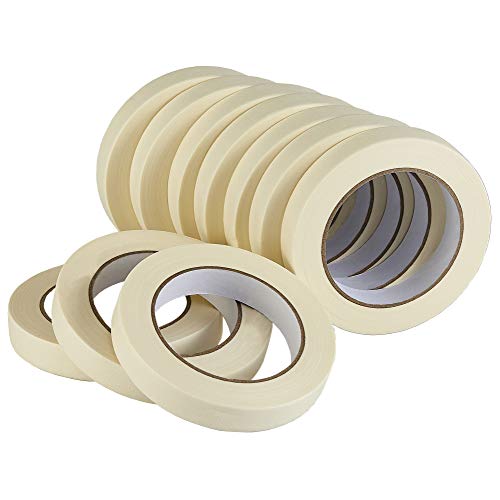
Choosing the best general masking tape starts with the job rather than the brand name. General masking tape can serve as a temporary paint barrier, a writable label, a bundling aid, or a light-duty sealing material. The products above differ substantially in width, roll length, pack size, backing, adhesive description, and surface guidance. Those details matter because a narrow roll that works well for labels is not automatically the most convenient choice for covering a broad edge.
Match the tape to the task
For routine household masking, a single roll such as Scotch General Purpose Masking Tape 2050 provides a straightforward balance of indoor and outdoor use guidance. Its 1-inch format is suitable when you want a middle ground between narrow placement and broad coverage. Amazon Basics Multi-Surface Masking Tape is another flexible option, with documented use for precision painting, crafts, home, and office projects.
If your work is mainly labeling, bundling, or mounting, Duck General Purpose Masking Tape is more explicitly oriented toward those non-painting tasks. The listing also mentions temporary floor marking and woodworking, but it specifically says not to use the tape on hardwood floors. That limitation should be treated as part of the product specification, not overlooked because the tape is described as multipurpose.
For broader strips, Scotch 234 General-Purpose Tape uses a 2-inch width and is documented for masking, bundling, and sealing. XFasten General Purpose Masking Tape also uses a 2-inch width, but its evidence emphasizes a writable surface, classroom crafts, labeling, and touch-up painting. Wider tape can reduce the number of strips needed across an edge, while narrow tape is generally easier to position around small marks or tight areas.
Consider surface and removal guidance
Adhesion claims should always be read together with surface restrictions and removal instructions. Scotch Contractor Grade Tape, 1.41 Inch is documented for vinyl, carpet, metal, and plastic, and its listing specifies use on non-damageable surfaces. Scotch Contractor Grade Masking Tape, 6 Rolls documents indoor and outdoor use but gives fewer named surface examples. These are useful differences when planning a project.
Amazon Basics Multi-Surface Masking Tape advises removal within 24 hours for temporary applications and cautions against high heat or strong sunlight. Scotch General Purpose Masking Tape 2050 and the contractor-grade Scotch options describe lifting the tape slowly and pulling it back on itself at a 45-degree angle. Following those instructions may help reduce the chance of tearing or unwanted residue, but actual results can depend on the surface and conditions.
The Duck listing says the product is not recommended for hardwood floors. That is a meaningful trade-off despite its high-tack positioning. Similarly, the Scotch contractor-grade 1.41-inch option is framed for non-damageable surfaces. When working on painted walls, trim, flooring, glass, or other finished materials, check the specific listing guidance and consider a small test area before covering a larger section.
Choose the right backing and handling style
Crepe paper backing appears across several selections and is useful when the tape needs to conform to curves or irregular surfaces. The 3M Highland Economy Masking Tape listing specifically documents this behavior, along with a rubber adhesive and clean removal. Lichamp General Purpose Masking Tape also identifies crepe backing, hand tearability, controlled unwind, and resistance to slivering.
Writable white tape is more useful for organization than for visual paint separation. XFasten documents a smooth writable surface that accepts ink or marker, while SWRT describes white tape for bins, boxes, shelves, classroom supplies, warehouse operations, and moving preparation. If labels are central to your workflow, these products provide more relevant evidence than a standard tan roll.
Hand tearing can speed up temporary labeling and craft work, but the listing should support that claim. XFasten describes clean hand tearing and a 6-mil thickness, while Lichamp describes easy tearing and controlled unwind. These features may make application more convenient, though this comparison does not independently test dispensing or tearing performance.
Pick a supply level that fits your use
Pack size is one of the clearest differences in this category. A single roll is appropriate when you need a small amount or want to avoid storing extra material. Two- and six-roll formats provide a reserve for recurring household or project work. The 3M Highland option supplies 24 rolls, SWRT supplies 48, and XFasten supplies 12, making those choices more appropriate for classrooms, offices, workshops, studios, or other settings where tape is used regularly.
Large packs can reduce interruptions, but they also take more storage space and may be excessive for occasional use. Roll dimensions matter too: a 60-yard roll offers a different supply profile from a 165-foot roll, even when the width appears similar. Compare both width and length rather than judging the pack only by its roll count.
How this comparison was scored
This is a specification-based comparison using public listing data, not a hands-on test and not a summary of customer opinions. The editorial criteria assess documented adhesion and surface range, removal guidance, handling and conformability, format utility, and application range. Each product received a score from 0.0 to 10.0 on every criterion. Price and marketplace activity were not used as published product claims or editorial criteria. Because the listings vary in detail, a product may rank well for a specific use even when it is not the most broadly documented option.
Final Recommendation
SWRT Writable Masking Tape, 48-Roll Pack ranks first overall in this specification-based comparison under the published weighted criteria.
The final choice among the best general masking tape depends on the documented features that match your intended use.
Scotch General Purpose Masking Tape 2050 is the highest-scoring returned product and the first overall specification-based choice. It offers a balanced 1-inch format, documented indoor and outdoor use, sustainability details, and clear removal instructions. For a top general masking tape focused on labels and organization, SWRT Writable Masking Tape provides the largest documented supply and a writable surface. For broad coverage, Scotch Contractor Grade Tape, 1.41 Inch is a strong fit because its listing combines a wider strip, six-roll format, named surfaces, and removal windows. XFasten is the more specialized pick for writable studio or classroom work, while the 3M Highland option is suited to repeated light-duty tasks involving curves or irregular surfaces.
Frequently Asked Questions
What should I look for in the best general masking tape?
Start with the intended surface and task. Compare documented adhesion, removal timing, backing material, width, roll length, and pack size. For paint masking, surface and removal guidance are especially important. For labeling, a writable white surface may matter more than indoor/outdoor positioning.
Is wider masking tape always better?
No. Wider tape can cover more area per strip, which is useful for broad edges and larger masking jobs. Narrower tape can be easier to place around small areas, labels, or detailed craft work. The 3/4-inch 3M Highland option and the 2-inch Scotch 234 and XFasten options illustrate this trade-off.
Can general masking tape be used outdoors?
Some selected products document indoor and outdoor use, including Scotch General Purpose Masking Tape 2050 and the Scotch contractor-grade options. That does not mean every masking tape is suitable for every outdoor condition. Follow the product’s stated timing and surface guidance, and account for heat, sunlight, moisture, and the condition of the surface.
Which tape is best for labeling boxes and storage bins?
Writable products are the most directly documented choices. XFasten describes labeling lunch boxes, storage bins, meal preparations, and gear, while SWRT lists bins, boxes, shelves, classroom supplies, warehouses, and moving preparation. Either may be more appropriate than a standard tan tape when writing legible labels is the main purpose.
How should masking tape be removed?
Several selected listings recommend lifting slowly and pulling the tape back on itself at about a 45-degree angle. Removal timing also varies: Amazon Basics advises taking its tape off within 24 hours for temporary applications, while the Scotch contractor-grade listings provide their own interior and exterior windows. Always follow the specific product instructions and use caution on finished surfaces.