Buying Guide
Glass self-watering stakes work on a simple principle: a reservoir slowly releases water into the soil through a narrow neck, mimicking the steady moisture that healthy roots prefer. The best glass self-watering stakes combine generous capacity with a controlled release mechanism and a refill-friendly design. Below is a practical walkthrough of what separates a strong pick from a frustrating one.
Reservoir Capacity and Run Time
Larger reservoirs generally mean longer intervals between refills. In the current selection, run times range from roughly 2-3 days for the smaller 100 ml bulb sets to about two weeks for the 13 oz borosilicate globes. Match the reservoir to the size of your pot and the thirstiness of the plant. A thirsty floor plant benefits from a 13 oz stake, while a small succulent is better served by a compact 100 ml bulb.
Glass Construction and Durability
Most stakes in this category use hand-blown glass, but not all glass is the same. Listings that call out high borosilicate glass, such as the ULTRNICC 13 oz globes, document higher heat resistance and sturdier construction. Always handle the stake with care, pre-dig a small hole with a pencil or screwdriver, and avoid forcing the neck into compacted soil to prevent cracking.
Flow Control and Release Mechanism
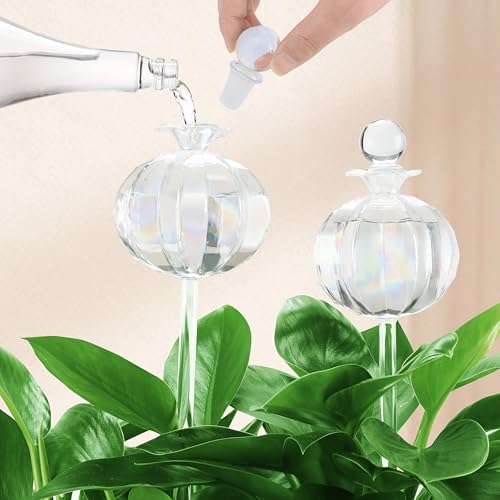
Traditional stakes rely on gravity and capillary action through a narrow neck, and the user controls the flow by adjusting the insertion angle. Newer designs add a wick-equipped silicone plug, which steadies the release and reduces soil clogging. If consistent slow watering matters more than visual simplicity, a wick-equipped model will likely be a better fit.
Fill Design and Refilling Ease
Pulling a stake out of the soil to refill can disturb roots and compact the neck. Top-fill openings and wide 1 cm mouths remove that hassle. Several Soilagua and ULTRNICC stakes document top-fill or wide-mouth openings, while classic fill-and-flip globes remain a lower-maintenance option for users who do not mind the extra step.
Size and Pot Compatibility
Stake length matters more than diameter in most cases. Tall stakes like the Cotswold Homeware Co 11.8 inch model reach deep into floor-plant containers, while compact 5-6 inch stakes suit tabletop pots. Confirm the stake clears the pot rim comfortably and that the bulb diameter is appropriate for the opening of the planter.
Indoor and Outdoor Versatility
Several listings warn against direct sunlight, which can warm the glass and evaporate water faster than the soil can absorb it. For patio or greenhouse use, prioritize stakes documented for outdoor settings or position them in partial shade. The selection includes both iridescent decorative globes suited to indoor displays and rugged multicolored sets designed for outdoor placement.
Final Recommendation
Soilagua 13 oz XL Iridescent Watering Globes (2-Pack) ranks first overall in this specification-based comparison under the published weighted criteria.
The final choice among the best glass self-watering stakes depends on the documented features that match your intended use.
The ULTRNICC 13 oz Iridescent Large Self Watering Globes lead the comparison as the first overall specification-based choice, combining the largest documented reservoir, a wick-equipped rubber stopper, and a refill-friendly wide opening. For users who would rather not pull the stake out at all, the Soilagua 13 oz XL Iridescent Watering Globes offer a top-fill design with a silicone wick in a slightly smaller two-pack. Together, these top glass self-watering stakes illustrate the two most specification-aligned design directions in the category: maximum capacity with controlled release and maximum convenience at refill time. Smaller pots are well served by the Besti 380-400 ml four-pack or the Mission Gallery 100 ml six-pack, while decorative-led buyers may prefer the JFLLAJNF mushroom top-fill globes or the novelty ChezMax frog shape.
Frequently Asked Questions
How long do glass self-watering stakes typically last between refills?
Run time depends on reservoir size, soil type, plant thirstiness, and ambient temperature. In this comparison, documented run times range from roughly 2-3 days for the smallest 100 ml bulbs to about two weeks for the 13 oz stakes. Always test the release speed at home before relying on any stake for an extended absence.
Are glass self-watering stakes safe for all plant types?
Glass stakes work for most potted houseplants, herbs, and patio plants. Succulents and cacti benefit from shorter, slower release, which is why dedicated cactus-shaped stakes such as the Soilagua 10 oz model exist. For very large outdoor trees or deep landscape beds, a stake is usually insufficient and a drip irrigation system is a better fit.
Can the best glass self-watering stakes be used outdoors?
Several manufacturers caution against prolonged direct sunlight, which can heat the glass and accelerate evaporation, so partial shade is the safer placement outdoors.
What is the best way to refill a glass self-watering stake?
For traditional stakes, fill to about 80 percent, cover the spout with a finger or damp cloth, flip the globe, and insert it into a pre-made hole at 75 to 85 degrees. Top-fill stakes such as the Soilagua 13 oz XL or the JFLLAJNF mushroom globes let you add water directly without removing the stake, which is gentler on roots and reduces spills.
How do I prevent clogging in a glass self-watering stake?
Pre-dig the hole with a pencil or thin screwdriver so soil is not pressed into the neck, and consider a wick-equipped design such as the ULTRNICC 13 oz globes or the Soilagua stakes to keep debris out of the spout. If the neck clogs, a narrow pipe cleaner clears it without scratching the glass.