Buying Guide
Choosing the best glass sugar bowls for your home or coffee bar is largely a question of matching form to function. The right pick will keep sugar dry, sit comfortably on your countertop, and look at home next to your mugs, kettle, or espresso machine. Because every option here is built around a glass body, the differences come down to capacity, lid type, pouring style, and whether a serving spoon is included.
Glass Material and Clarity
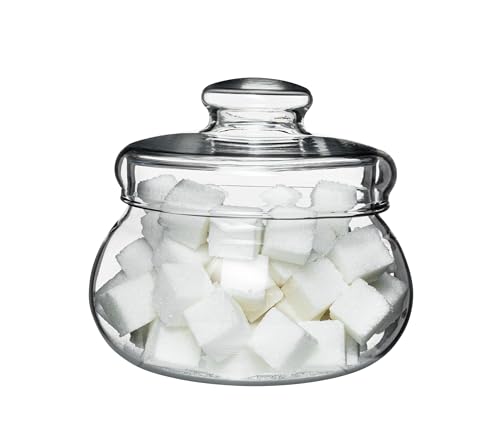
Glass is the common thread across every product in this guide, but the specific formulation matters. Laboratory-grade borosilicate glass, like the SIMAX 16 oz bowl, is engineered for thermal shock resistance and dishwasher durability. Pressed glass, like the Okllen 10 oz cellars, tends to feel weightier and more stable on the table. Lead-free crystal, like the WOLFF pearl bowl, prioritizes decorative clarity. If you run bowls through a dishwasher or place them near heat, borosilicate is a safe bet. For purely tabletop service, pressed glass and crystal focus more on presence and weight.
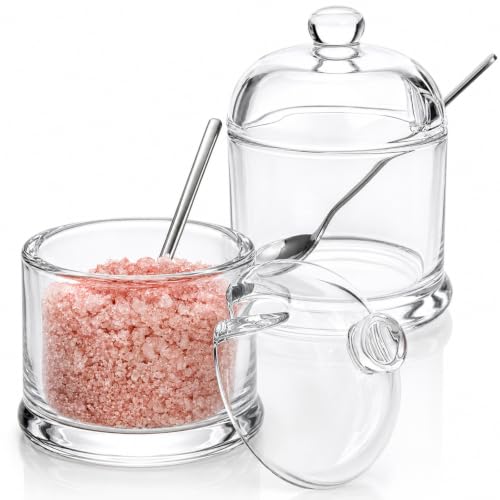
Capacity ranges from compact 6 oz jars to roomy 16 oz canisters. Smaller bowls, like the Frcctre 6 oz pair and the BNYD shaker, suit single users or espresso bars where counter space is tight. Mid-range 8 to 10 oz options, such as the 123Arts 10 oz jar and the Okllen 10 oz cellars, balance refill frequency with footprint. Larger 15 to 16 oz formats, including the Quald 15 oz jar and the SIMAX 16 oz bowl, reduce how often you need to refill but demand more vertical or horizontal space. Always check both the listed capacity and the dimensions: a tall, narrow jar like the holoith 15 oz fits under cabinets, while a wider jar like the Quald 15 oz sits more securely on open counters.
Lid and Sealing Design
Lid design is where glass sugar bowls diverge most. Bamboo lids on the Quald, holoith, and other borosilicate jars create a claimed airtight seal that helps guard against kitchen humidity and clumps, though bamboo typically calls for wipe-clean care. Glass lids, like the ones on the Frcctre bowls, keep the look uniform but usually rely on a snug fit rather than a gasket. Screw-on metal flip-top lids, found on the Aelga, BNYD, and J&M DESIGN dispensers, prioritize controlled pouring over long-term airtight storage, while still closing completely when upright. If your kitchen runs humid or your sugar sits for days between uses, prioritize an airtight lid. If you refill often and pour daily, a flip-top or screw-cap design may serve you better.
Pouring Versus Scooping
The best glass sugar bowls fall into two serving styles. Pour spout models, including the Aelga weighted pourer, BNYD shaker, and J&M DESIGN auto-pour dispenser, let you tilt and dispense directly into mugs and cereals without a spoon. This is convenient for one-handed use but typically omits a serving spoon from the package. Scoop-based designs, like the Quald, holoith, and 123Arts jars, rely on the included spoon for measured portions and pair naturally with bamboo or glass lids. Pick pouring models for speed during coffee routines, and scoop-based jars for entertaining where guests may want a spoon.
Construction and Durability
Glass thickness, base design, and lid attachment drive long-term durability. The Okllen set uses thick pressed glass with a heavy base for table stability, and the SIMAX borosilicate body is built for repeated thermal cycling. Flip-top dispensers with metal lids, like the Aelga and J&M DESIGN, add a metal component that can withstand daily handling. Lighter glass bowls, such as the WOLFF crystal design, emphasize elegance but may require more careful placement away from busy zones.
Style and Countertop Versatility
Glass pairs easily with most kitchen styles, but small accents change the feel. Clear, unadorned glass reads as modern and minimalist, while striped glass, like the Quald and holoith jars, adds a subtle decorative texture. Beaded crystal, like the WOLFF bowl, leans formal and event-ready. Bamboo-lid jars introduce a warmer, natural accent that suits farmhouse and rustic-modern kitchens. Two-pack formats, such as Frcctre and Okllen, support coordinated staging of sugar alongside salt or another condiment.
Sets, Packs, and Multi-Purpose Use
Several options blur the line between sugar bowl and general-purpose jar. The 123Arts 10 oz jar is listed for sugar, pepper, or spice service, which makes it flexible if you like rotating contents. Choosing a two-pack like the Frcctre 6 oz set or the Okllen 10 oz set makes staging both sugar and salt easy on a coffee bar.
Final Recommendation
Quald 15 oz Striped Glass Sugar Jar with Bamboo Lid ranks first overall in this specification-based comparison under the published weighted criteria.
The final choice among the best glass sugar bowls depends on the documented features that match your intended use.
The SIMAX 16 oz Borosilicate Glass Sugar Bowl stands out as the first overall specification-based choice thanks to its laboratory-grade borosilicate body, generous 16 oz capacity, and dishwasher-safe European construction. For pour-first workflows, the J&M DESIGN 7.5 oz Auto-Pour Dispenser and Aelga 7 oz Weighted Pourer lead the field with controlled spouts and sealed lids. For bamboo-lid freshness and decorative style, the Quald 15 oz jar and holoith 15 oz slim jar offer strong airtight claims and matched spoons. Among the top glass sugar bowls for everyday tabletop use, the Okllen 10 oz set, Frcctre 6 oz pair, and 123Arts 10 oz jar round out versatile options for staging multiple condiments or fitting tight counters.
Frequently Asked Questions
Among the best glass sugar bowls, what size glass sugar bowl is best for a daily coffee routine?
For a single or two-person household, 7 to 10 oz is usually enough to avoid constant refills while keeping the jar compact. Larger 15 to 16 oz bowls like the SIMAX 16 oz or Quald 15 oz suit heavier users or entertaining setups.
Are bamboo-lid glass sugar bowls truly airtight?
Many bamboo-lid models, such as the Quald 15 oz and other borosilicate jars, advertise an airtight seal through a silicone ring. Performance can vary, so wipe the bamboo clean rather than running it through a dishwasher to preserve the seal.
What is the difference between a pour spout dispenser and a scoop-style sugar bowl?
Pour spout dispensers, like the Aelga, BNYD, and J&M DESIGN models, let you tilt and dispense directly. Scoop-style bowls, like the Quald, holoith, and 123Arts jars, rely on a spoon for measured portions and typically pair with a bamboo or glass lid.
Is borosilicate glass better than regular glass for sugar bowls?
Borosilicate glass, such as the SIMAX 16 oz bowl, handles thermal stress and dishwasher cycles well, making it a strong choice for daily use. Regular soda-lime or pressed glass, like the Okllen cellars, is perfectly fine for room-temperature sugar but may be less tolerant of temperature swings.
Can a glass sugar bowl double as a salt or spice jar?
Yes. Choosing a two-pack like the Frcctre 6 oz set makes staging both sugar and salt easy on a coffee bar.