Buying Guide
The best insulated teapots should be evaluated as both brewing vessels and serving containers. A pot that retains heat well but makes loose-leaf tea difficult to strain may be less useful than a slightly smaller model with a removable filter. Start by deciding whether you want a traditional tabletop teapot, a thermal carafe for shared service, or a double-walled glass design that keeps the brew visible.
Match capacity to the way you serve
Capacity is one of the clearest differences in this group. The GiNT carafe holds 74 ounces, making it the logical choice for meetings, family gatherings, or any occasion where several cups will be served from one fill. The CGHWBEA and Kefoeuy models sit in a more moderate range at 34 and 35 ounces, respectively. These sizes can work for home service without taking up the space of a large event carafe.
The Bluexbear model documents an 800-milliliter capacity, while the THERMOS pot holds 700 milliliters. Those mid-size formats suit a few servings and can be easier to handle than a large server. Teabloom’s 24-ounce design is explicitly marked for two large servings. VeoHome is smaller at 0.5 liter, or 17 ounces, and is described for one to three people. Capacity figures are not supplied for MDee or TBHAPY, so shoppers who need a precise serving volume should prioritize the models with explicit measurements.
Compare the insulation design
Vacuum insulation and double-wall construction appear throughout the selection, but the listings do not describe them in exactly the same way. GiNT states 12-hour hot and 24-hour cold retention. Kefoeuy and Amestar each state 12-hour hot and cold retention, while the other stainless designs use broader language such as multi-layer insulation or vacuum thermal isolation.
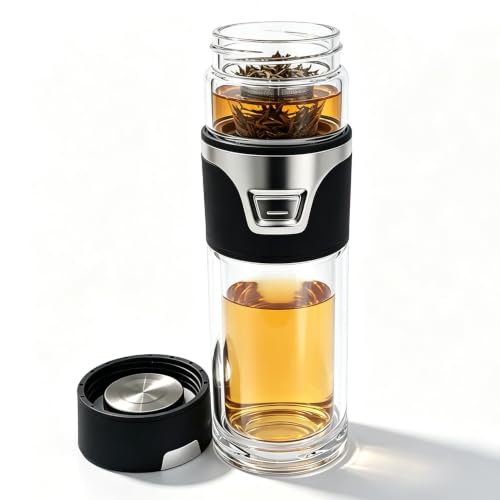
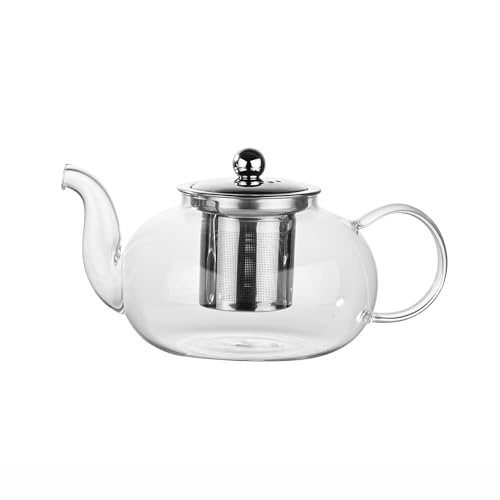
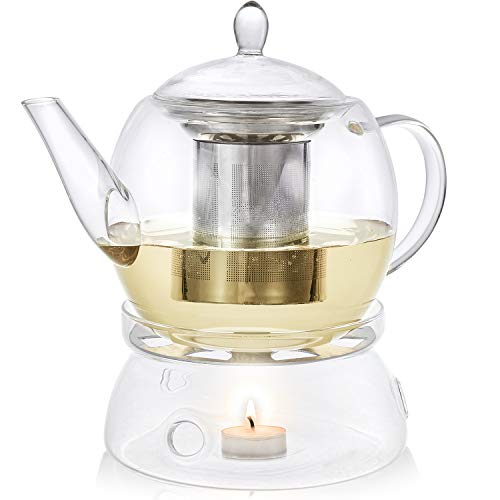
The THERMOS listing is more conservative and specific: it supplies hot and cold retention figures for one hour. That makes it easier to interpret, but it should not be compared directly with models that state longer periods without recognizing the difference in listing detail. Teabloom and MDee use double-walled glass. These designs can provide insulation while allowing the tea to remain visible, but neither should be treated as a stovetop kettle. Teabloom specifically says its double-wall construction cannot be used on a stovetop.
Choose the right infuser arrangement
A removable infuser is useful when you want to stop steeping without decanting the entire pot. GiNT, Kefoeuy, Amestar, and CGHWBEA all document removable filters or infusers. This arrangement is particularly practical for loose-leaf tea because the basket can be taken out after the desired steeping time.
TBHAPY and Bluexbear use built-in fine-mesh filtration. That keeps the brewing mechanism integrated into the pot and may simplify serving, but it can provide less flexibility than a fully removable basket. The MDee design is more specialized: its removable chamber separates tea leaves from water, and its micro-mesh filter is intended to capture fine particles. Teabloom uses a filter lid with a spacious interior, while VeoHome includes a diffuser. The THERMOS model uses a polypropylene strainer rather than a stainless steel mesh basket.
Consider pouring and handling
Pouring controls matter when the pot is full or the contents are hot. GiNT documents a pinch-release stopper and one-hand pouring, while CGHWBEA describes one-click, one-handed pouring and a leak-resistant silicone seal. The Kefoeuy, Amestar, and TBHAPY listings emphasize ergonomic or non-slip handles and spouts intended to reduce drips. Bluexbear also documents a V-shaped spout and pressurized dispensing.
A compact pot may be easier to lift, but a tall carafe can be more efficient for serving many people. The GiNT model weighs the current price according to its listing and measures 11.6 by 6.5 inches in the product description, so it needs more counter and storage space than the smaller pots. The THERMOS model weighs about 14.1 ounces, making its compact format easier to manage. Always leave room for the handle, lid, and pouring path rather than measuring only the body.
Review materials and cleaning details
Stainless steel is the dominant material in the thermal designs. Kefoeuy and TBHAPY specify 316 stainless steel interiors, while GiNT and VeoHome document stainless steel construction without relying on a glass body. Stainless steel generally avoids the breakage concern associated with glass, but the supplied listings vary in their cleaning instructions.
GiNT documents dishwasher-safe components and a wide mouth. Teabloom uses non-porous borosilicate glass and a stainless steel filter lid. MDee states that the filter rinses clean and that components are dishwasher safe. VeoHome says it is easy to clean but does not provide a detailed dishwasher recommendation. If maintenance is your priority, removable filters, wide openings, and explicit dishwasher guidance are more useful evidence than general claims about convenience.
Final Recommendation
GiNT 74oz Thermal Coffee Carafe with Infuser ranks first overall in this specification-based comparison under the published weighted criteria.
GiNT 74oz Thermal Coffee Carafe with Infuser is the first overall specification-based choice among the best insulated teapots for large-volume service. Its combination of 2.2-liter capacity, stated hot and cold retention, removable filter, wide mouth, and controlled stopper gives it the broadest documented utility. It is a thermal carafe rather than a small traditional pot, so smaller households may prefer Kefoeuy or Amestar.
For a decorative stainless steel option, Kefoeuy offers a 35-ounce capacity, 316 stainless steel construction, a removable infuser, and a complete accessory set. Amestar provides a similar capacity and insulation profile with a floral design, while TBHAPY and Bluexbear focus more strongly on press-button dispensing. MDee and Teabloom are the better choices for shoppers who want double-walled glass and visible brewing. The top insulated teapots therefore divide into clear use cases: large carafes for group service, stainless pots for durable everyday use, and glass designs for visual brewing control.
Frequently Asked Questions
What should I look for in the best insulated teapots?
Prioritize the insulation construction, stated retention information, capacity, infuser type, pouring controls, and cleaning instructions. A removable infuser is useful when you want to stop steeping, while a built-in filter keeps the design integrated. Also check whether the listing provides a precise volume and whether the pot is intended for stovetop use. Double-walled glass models should not automatically be treated as stovetop-safe; Teabloom specifically states that its model cannot be used on a stovetop.
Are thermal carafes suitable for tea?
Yes, when the product documents tea brewing or includes a tea filter. GiNT, CGHWBEA, and the other selected carafe-style products are designed to hold hot beverages, and the first two specifically document removable tea filters. A carafe can be preferable for serving several people, but its taller shape may be less convenient for a small tea ritual at the table.
Is stainless steel or double-walled glass better?
The answer depends on handling and visibility. Stainless steel models such as Kefoeuy, Amestar, and THERMOS emphasize durable thermal construction, while Teabloom and MDee let you see the brew through borosilicate glass. Glass may require more careful handling, whereas stainless steel hides the tea and may be easier to use in busy serving environments. The supplied evidence supports choosing by use case rather than declaring one material universally better.
How important is a removable infuser?
It is important for loose-leaf drinkers who want to control steeping time. Kefoeuy, GiNT, Amestar, CGHWBEA, and MDee document removable filters or chambers, allowing the leaves to be removed after brewing. Built-in filters, as found on TBHAPY and Bluexbear, can still be practical when integrated operation is your priority, but they offer a different cleanup and steeping routine.