Buying Guide
Choosing among the best gluten free dietary fiber supplements starts with matching the supplement’s fiber source, format, and strength to your routine. The products in this comparison cover three main formats: powders that mix into drinks, capsules that travel easily, and gummies that double as a chewable. The fiber sources vary just as much, with psyllium husk, inulin, wheat dextrin, and blended soluble fibers each behaving differently in the digestive tract.
Fiber Source and Mechanism
It is a soluble, bulk-forming fiber that absorbs water to support regularity. Wheat dextrin, used in Benefiber powder and stick packs, is a plant-based prebiotic fiber designed to dissolve clear and feed beneficial gut bacteria. Each fiber type behaves differently, so check the ingredient list for the source you prefer.
Strength Per Serving and Daily Targets
Health authorities commonly reference a daily fiber intake in the 25-40 gram range, and supplements are formulated to close part of that gap. Capsule products typically deliver lower per-capsule strength but allow multiple capsules per day. Match the documented serving strength to your daily fiber goal rather than relying on capsule count alone.
Documented dissolution claims vary: Benefiber states clear, grit-free dissolution, while whole husks typically require more vigorous mixing.
Dietary Compatibility and Certifications
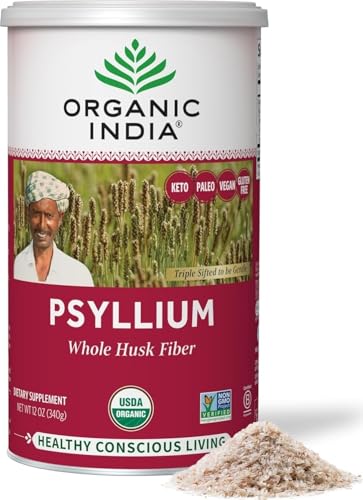
Every product in this comparison documents a gluten-free formulation, but other dietary cues vary. ORGANIC INDIA documents USDA organic certification across both its capsule and powder formats. Konsyl documents USDA organic certification and a single-ingredient psyllium formulation. If you track specific allergens or certifications, scan the listed features before deciding.
Ingredient Transparency
Single-ingredient psyllium powders such as Konsyl and ORGANIC INDIA whole husk list one fiber source, which makes strength per serving easy to evaluate. Capsule listings such as Metamucil 300-count state only two ingredients, supporting a simpler ingredient profile. Look for products that list each fiber source, filler, and capsule material so you can verify the formulation before adding it to your routine.
Container Yield and Supply
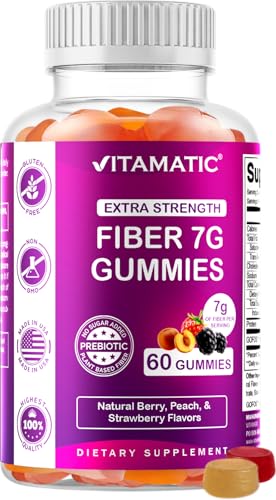
Powder yields range from 60 servings in Konsyl 12-ounce, to 90 servings in Konsyl 19-ounce, to roughly 180 teaspoons in Metamucil 2.3-pound, to 250 teaspoons in Benefiber 17.6-ounce. Gummies ship in 60, 90, or 120 count bottles. Larger containers lower how often you reorder, while smaller containers fit tighter storage spaces or trial periods.
How to Compare Specs Side by Side
A simple comparison method is to build a small table for yourself: list each candidate’s fiber source, grams of fiber per documented serving, format, dietary certifications, and total container yield. Most of those fields appear in the product copy above. Once the table is filled, narrow to the format you prefer, then select the fiber source that aligns with your goal: psyllium for regularity, dextrin or inulin for prebiotic support, or a blend for broader soluble fiber coverage.
Final Recommendation
Metamucil Psyllium Husk Capsules, 300 Capsules ranks first overall in this specification-based comparison under the published weighted criteria.
The final choice among the best gluten free dietary fiber supplements depends on the documented features that match your intended use.
Metamucil 4-in-1 Psyllium Husk Fiber Powder, Orange, 180 tsp is the first overall specification-based choice in this comparison of the top gluten free dietary fiber supplements. It documents the largest psyllium powder container yield, a sugar-free formulation, and explicit 4-in-1 benefit framing around digestive, heart, blood sugar, and appetite support, which together lift it above capsule and gummy alternatives on fiber source quality, fiber strength per serving, and container yield. For capsule users who want an organic profile, ORGANIC INDIA Psyllium Herbal Powder Capsules are the best fit. For readers who prefer a multi-fiber capsule with five fiber types, Yerba Prima Daily Fiber Caps, 180 Capsules are the cleanest documented option. Across these three, the top gluten free dietary fiber supplements cover powder, capsule, and multi-fiber formats without compromising gluten-free formulation.
Frequently Asked Questions
Among the best gluten free dietary fiber supplements, what makes a fiber supplement genuinely gluten free?
A genuinely gluten free fiber supplement is formulated without wheat, barley, rye, or cross-contaminated ingredients and is labeled gluten free on the packaging.
How do psyllium husk and wheat dextrin differ as fiber sources?
Psyllium husk is a soluble, bulk-forming fiber that absorbs water and supports regularity, while wheat dextrin is a plant-based prebiotic fiber that dissolves clear and is positioned to nourish beneficial gut bacteria.
Are gluten free fiber gummies as effective as powders or capsules?
The format works well for users who dislike mixing or swallowing capsules, though per-serving strength and added sweeteners vary by product.
How many grams of fiber per serving should I look for?
Health authorities commonly reference 25-40 grams of daily fiber, so a supplement delivering 4-7 grams per documented serving helps close part of that gap.
Capsules and stick packs travel most easily because they are pre-measured.