Buying Guide
Choosing among the best organic dietary fiber supplements means weighing fiber source, format, and how each product fits your daily routine. The list above concentrates on USDA-certified or explicitly organic-labeled options spanning psyllium husk, acacia fiber, inulin (often as FOS or chicory root), baobab fruit, flax meal, chia, and blue agave, all of which appear in the selected products. Below is a practical breakdown to help narrow the field.
Fiber source variety
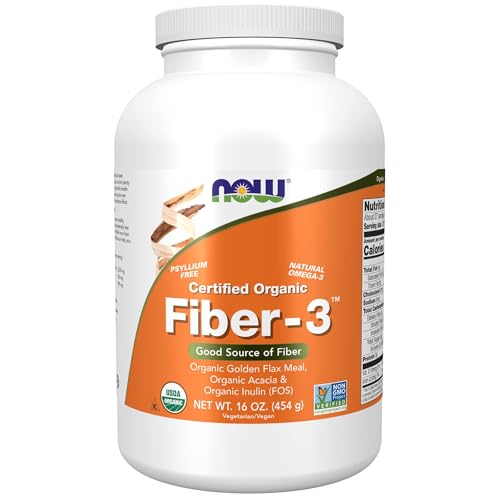
Single-source fibers such as psyllium husk or acacia are easy to understand and gentle on the stomach, but blends widen the spectrum of soluble and insoluble fiber you ingest in one scoop. Multi-source options in this guide include Micro Ingredients Organic Triple Fiber Powder, NOW Foods Fiber-3, Sports Research Organic Fiber Powder, and New Chapter Organic Prebiotic Fiber Gummies, each of which lists at least three plant-based fiber ingredients. If you prefer simplicity, single-ingredient picks like Konsyl USDA Organic Psyllium Husk Powder, NOW Foods Acacia Pure Powder, and Anthony’s Organic Whole Psyllium Husks keep the formula minimal.
Organic certification and labeling
USDA Organic wording is stated on multiple listings, including ORGANIC INDIA Psyllium Herbal Powder Capsules, Konsyl USDA Organic Psyllium Husk Powder, New Chapter Organic Prebiotic Fiber Gummies, Nutricost Organic Acacia Fiber Powder, Sports Research Organic Fiber Powder, and Anthony’s Organic Whole Psyllium Husks. Other products use “Certified Organic” or organic wording without explicitly naming the USDA program, so reviewing the package seal is worthwhile if certification depth matters to you.
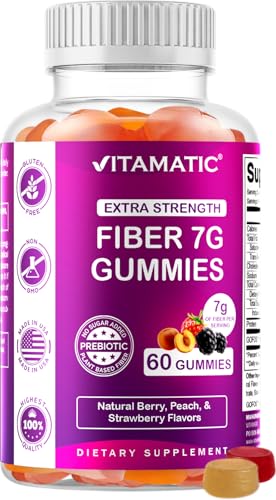
Powders dominate this category because they are easy to blend into smoothies, juice, oatmeal, or baking recipes. Capsules, such as the 180-count ORGANIC INDIA Psyllium Herbal Powder Capsules and the 250-count Zealthy Life Organic Psyllium Husk Capsules listed earlier, suit users who travel or dislike mixing. Gummies, exemplified by New Chapter Organic Prebiotic Fiber Gummies, offer a chewable format aimed at adults and children.
Gentleness and dietary fit
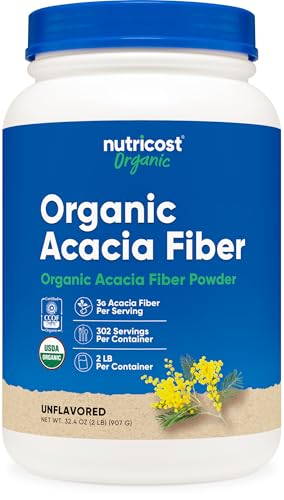
Acacia fiber is widely described as gentle and highly soluble, which is reflected in NOW Foods Acacia Pure Powder and Nutricost Organic Acacia Fiber Powder. Psyllium-based options can be more bulking, and products such as Konsyl and ORGANIC INDIA highlight smooth elimination.
Ingredient purity
Single-ingredient psyllium and acacia products generally score high on purity, while blends offset that with broader fiber coverage. Several listings, including Micro Ingredients and Sports Research, claim third-party lab testing, and NOW Foods adds GMP quality assurance across its fiber line.
Label transparency
Clear per-serving fiber amounts, scoop inclusion, and package dimensions are present in many listings. Konsyl states 5g of fiber per scoop and 60 servings, Micro Ingredients Whole Psyllium Husks lists 7g of fiber per serving, and Nutricost Acacia Fiber Powder specifies 4g per serving in its 1-pound variant.
Final recommendation
Sports Research Organic Fiber Powder ranks first overall in this specification-based comparison under the published weighted criteria.
If you want the top organic dietary fiber supplements that combine a clear organic seal, multiple fiber sources, and flexible everyday use, Sports Research Organic Fiber Powder stands out as the first overall specification-based choice thanks to its USDA Organic tri-fiber blend, Informed Sport certification, and unflavored mixing profile. For users prioritizing a gentle, single-fiber routine, NOW Foods Acacia Pure Powder and Nutricost Organic Acacia Fiber Powder are strong acacia-based picks, while ORGANIC INDIA Psyllium Herbal Powder Capsules lead the capsule format. Those favoring gummies can turn to New Chapter Organic Prebiotic Fiber Gummies, and bakers may prefer Anthony’s Organic Whole Psyllium Husks for batch-tested gluten-free assurance. Across all of these, the best organic dietary fiber supplements are the ones whose fiber source, format, and dietary fit align with the way you actually eat and drink each day.
Frequently Asked Questions
What is the difference between soluble and insoluble fiber in organic dietary fiber supplements?
Soluble fiber, found in psyllium husk, acacia, and inulin, dissolves in water and forms a gel that supports regularity and satiety. Insoluble fiber adds bulk and helps move material through the digestive tract. Blends such as Sports Research Organic Fiber Powder and Micro Ingredients Organic Triple Fiber Powder combine both types.
Powders offer the most flexibility for smoothies, oatmeal, and baking, capsules suit travel and office routines, and gummies like New Chapter Organic Prebiotic Fiber Gummies are convenient for users who avoid mixing or swallowing pills. Your routine and preferred drink or recipe usually dictates the best format.
Are organic certifications consistent across the best organic dietary fiber supplements?
Not always. Some listings explicitly state USDA Organic, such as Konsyl USDA Organic Psyllium Husk Powder and Anthony’s Organic Whole Psyllium Husks, while others use “Certified Organic” or organic wording without naming the agency. Reviewing the seal on the package provides the most reliable confirmation.
Can organic fiber supplements fit low-FODMAP or sensitive diets?
Yes. Choosing a single-source, unflavored powder can help users monitor tolerance.
How do I choose among the best organic dietary fiber supplements for baking?
Fine-ground psyllium works well in gluten-free baking for binding, while whole husks add texture. Anthony’s Organic Whole Psyllium Husks offers a 1.5-pound batch-tested gluten-free pack, and Konsyl USDA Organic Psyllium Husk Powder is designed for blending and baking with a single ingredient.