Buying Guide
The best camping headlamps should be judged by more than the largest lumen number in a listing. A useful comparison starts with how the light will be used: reading in a tent, preparing food, walking a trail, locating equipment, or keeping as an emergency backup. The selections above include compact trail lights, wide-area rechargeable designs, and battery-powered multipacks, so the right choice depends on the balance of beam control, runtime, durability, comfort, and power access.
Match the beam to the campsite
A focused beam is useful when you need to look down a trail or identify something at a distance. A flood or wide-area beam is more practical for cooking, organizing gear, or moving around a tent because it illuminates more of the nearby scene. The TDC documents both a 145-degree floodlight and a 25-degree spotlight, while KIDECCE combines a COB strip with an XPE spotlight and lists a 230-degree field of view. Those designs address different tasks rather than simply competing on brightness.
The Lumitrek Orion Pro Headlamp also documents spot and wide-area lighting, giving it a flexible layout for campsite chores and trail movement. The BLACK DIAMOND Storm 500-R lists proximity and distance settings, which can help adapt the beam to close work or forward visibility. If your camping routine changes from reading to walking after dark, multiple beam types or settings are more useful than a single high-output mode.
Consider output claims alongside control
Lumen figures can help distinguish the models, but they do not describe every part of the lighting experience. A high listed output may be useful in open terrain, while a lower setting can be more comfortable inside a tent. Red light is valuable when you want a less disruptive mode for nighttime tasks, and strobe or SOS modes can serve signaling purposes when those functions are documented.
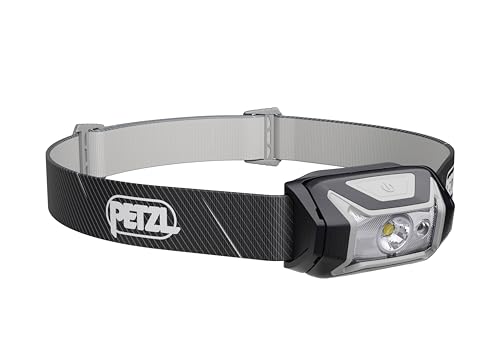
The Nitecore NU20 Classic lists 360 lumens, a 119-yard beam distance, three brightness levels, a reading light, SOS, beacon, and auxiliary red light. Petzl Tikka provides three white levels, continuous red lighting, and strobe. The Energizer PRO-315 adds wide, green, red, and flashing red modes. These examples show why control variety deserves its own consideration in a camping comparison.
Compare runtime realistically
Runtime information is most useful when the listed mode is clear. The Nitecore specification gives up to 97 hours on low mode, while Lepro lists up to 30 hours of continuous lighting and Foxelli lists up to 45 hours. KIDECCE lists three to eight hours, and TDC lists up to 10 hours per charge. These figures should not be treated as directly interchangeable because the operating mode, brightness, and testing method may differ.
Rechargeable models reduce the need to carry spare disposable batteries and can be convenient when a USB port is available. The Lumitrek uses a listed 3000mAh rechargeable battery, BLACK DIAMOND lists a 2400mAh lithium-ion battery, and the Nitecore uses USB-C charging. Battery-powered models have a different advantage: they can be restored quickly by swapping cells. Foxelli, Energizer, and Eirnvop use AAA batteries, making them practical for kits where replaceable power is already stocked.
Check weather and impact protection
Camping exposes equipment to more than occasional moisture, but an IP rating is still only one part of a product specification. The Lumitrek lists IP67 protection, Nitecore lists IP66, and Foxelli, KIDECCE, and Eirnvop list IPX5. Higher listed protection can be useful for wet conditions, while impact information helps when a lamp may be dropped.
The Energizer PRO-315 lists one-meter impact resistance, and Eirnvop lists a one-meter drop test and shatterproof lens. Nitecore documents one-meter impact resistance as well. These details are more decision-useful than general claims about ruggedness because they identify the type of protection supplied by the listing.
Prioritize fit and aiming adjustment
A headlamp needs to stay directed where you need light. Adjustable headbands help with fit, while a tilting or rotating lamp body helps aim the beam toward the ground, a cooking surface, or a nearby object. Nitecore is particularly attractive for weight-sensitive trips because its listed weight is 1.34 ounces. KIDECCE lists the current price, while Foxelli lists 3.2 ounces with batteries and Lepro lists 2.86 ounces.
The TDC includes a 90-degree rotatable mount, Foxelli documents a 45-degree tilt, and Eirnvop lists a 60-degree tiltable feature. Petzl uses a tilting plate and a removable, washable headband. Those features may matter as much as output for campers who wear a lamp for extended chores or walking.
Decide whether a multipack is useful
Several selected products are supplied in multipacks. KIDECCE documents a three-pack, while Eirnvop is a two-pack. Multipacks can be practical for couples, children, vehicle kits, or keeping a spare in a tent, but they also mean you should consider how many lamps you actually need. A single higher-specification lamp may be preferable for a solo backpacker, while multiple lower-weight lights can be convenient for a family campsite.
Final Recommendation
Lumitrek Orion Pro Headlamp ranks first overall in this specification-based comparison under the published weighted criteria.
Lumitrek Orion Pro Headlamp is the first overall specification-based choice among these best camping headlamps. Its listed 1200-lumen output, spot and wide-area modes, red and green night lighting, 3000mAh rechargeable battery, IP67 rating, and cold-temperature information give it the broadest documented capability. It is not the lightest option, so backpackers may prefer Nitecore NU20 Classic, while campers prioritizing replaceable power can consider Foxelli MX20 or Eirnvop.
The BLACK DIAMOND Storm 500-R is a strong alternative for rechargeable outdoor use, especially when dimming, proximity lighting, distance settings, and red night vision are important. TDC is a practical choice for users who want separate flood and spotlight modes. For a compact, general-purpose option, Lepro offers a balanced set of modes, runtime, adjustment, and charging features. These top camping headlamps are not interchangeable in every setting; the best fit depends on whether your priority is beam coverage, weight, power access, or weather protection.
Frequently Asked Questions
What should I look for in the best camping headlamps?
Start with a beam pattern that matches your activities, then compare documented runtime, power type, weather protection, weight, and aiming adjustment. Red light can be useful for nighttime tasks, while multiple white-light levels help manage close work and trail visibility. A battery indicator or clearly stated runtime can also make planning easier.
Are rechargeable or AAA-battery headlamps better for camping?
Neither power type is universally better. Rechargeable models such as the Lumitrek Orion Pro Headlamp, BLACK DIAMOND Storm 500-R, and Nitecore NU20 Classic reduce the need for spare cells and can be convenient around USB power. AAA models such as Foxelli MX20, Energizer PRO-315, and Eirnvop can be restored by swapping batteries when charging access is limited.
Is a higher IP rating important for a camping headlamp?
It can be useful when rain, splashes, dust, or changing outdoor conditions are likely. The supplied models range from IPX4 to IP67. Treat the rating as documented protection rather than a guarantee for every situation, and also consider whether the headlamp lists impact resistance or a drop specification.
Which selected model is best for backpacking?
Nitecore NU20 Classic is the clearest backpacking choice based on its listed 1.34-ounce weight, USB-C charging, red auxiliary light, IP66 protection, and up to 97 hours on low mode. Its maximum listed output is lower than several larger models, so choose a more powerful design if long-distance illumination is the main requirement.
Do wide-beam headlamps help around camp?
They can. A wide beam spreads light across nearby surroundings, which may be helpful for cooking, sorting gear, and moving around a campsite. TDC documents a 145-degree floodlight, while KIDECCE documents a 230-degree wide beam alongside a spotlight. A focused beam remains more suitable for looking down a trail or identifying distant objects.