Buying Guide
The best waterproof camping headlamps should be chosen by matching the specifications to your campsite, weather exposure, and power plan. A high lumen number is not the only consideration. Water protection, beam control, battery logistics, fit, and durability all affect whether a headlamp is useful after dark.
Start with the water-resistance rating
Look for the documented IP rating rather than relying on a generic waterproof claim. In this selection, IPX4 models such as the Lepro Rechargeable LED Headlamp 2-Pack and Energizer PRO-260 are designed around splashing or rain exposure. IPX5 and IPX6 models offer a higher documented level of water protection, while the Nitecore NU25 MCT UL lists IP66, adding dust protection. The OLIGHT Perun 3 lists IP68 waterproof and dustproof protection.
An IP rating does not automatically mean a lamp should be submerged. Check the specific listing language and keep charging ports closed when applicable. For ordinary tent setup and light rain, lower ratings may be adequate. For exposed sites, sustained wet weather, or trips where dust is also a concern, a higher documented rating provides a more appropriate specification starting point.
Match output and beam control to the campsite
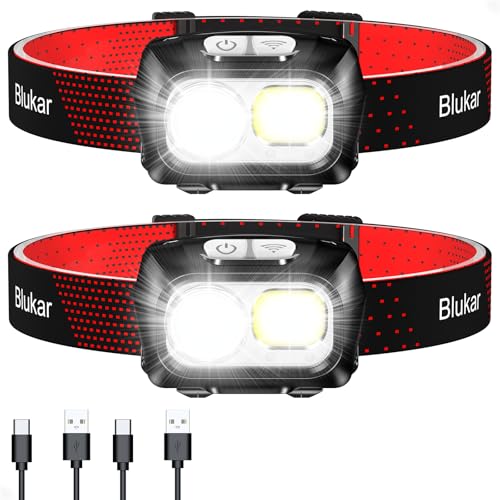
Lumens describe listed light output, but campsite usefulness also depends on how the light is distributed. Spot modes help with trail direction or finding items at a distance. Flood modes are more suitable for cooking, organizing gear, or moving around a tent. The Lepro and Energizer options document both spot and wider lighting modes, while the Blukar K9125 combines white, COB, and red outputs.
High-output choices such as the OLIGHT Perun 3, NJ FOREVER 3000-Lumen Headlamp 2-Pack, and Sogdeco Rechargeable Headlamp 3-Pack may appeal to campers who want to illuminate a larger area. However, maximum output generally is not the best setting for every task. Dimming, low modes, and adjustable angles can help avoid shining excessive light into another camper’s eyes.
Red light is useful when you want a lower-disruption option around camp. It appears on the OLIGHT Perun 3, Foxelli MX20, Nitecore NU25 MCT UL, SLONIK 1000-Lumen Rechargeable Headlamp, and several other selected models. The Nitecore adds warm, natural, and cool white color temperatures, giving it detailed control for a compact headlamp.
Decide between rechargeable and replaceable batteries
Rechargeable headlamps reduce the need to carry spare disposable cells and can be convenient when a USB power source is available. The Nitecore NU25 MCT UL uses USB-C and lists a charge time of just over one hour. The Blukar K9125 also uses USB-C, while the Lepro rechargeable model includes a Micro USB cable. The SLONIK uses a built-in 2200mAh battery.
Battery-powered models remain useful for remote trips because spare AAA batteries can be packed separately. The Foxelli MX20 includes three AAA batteries and lists up to 45 hours of runtime. The BLACK DIAMOND Astro 300 runs on three AAA batteries and can accept an optional rechargeable battery and charger. The Energizer PRO-260 also includes AAA batteries.
Treat runtime figures as mode-dependent listing information. A stated maximum or low-mode runtime does not tell you how long the lamp will operate at its highest setting. For longer trips, consider whether you can recharge, carry spare batteries, or bring a second headlamp. Multi-packs such as the NJ FOREVER, Blukar, Lepro, and Sogdeco models can provide a spare or equip more than one person.
Check fit, angle, and carrying weight
A comfortable headlamp should stay positioned without requiring constant tightening. Adjustable elastic headbands are documented across many selected models. Angle adjustment is also important because a downward tilt can light a cooking surface or nearby ground without forcing you to lower your head.
The Nitecore NU25 MCT UL has the lowest listed weight in this comparison and is aimed at backpacking. Foxelli lists a 45-degree tilting body, while the NJ FOREVER model lists 90-degree adjustment and the Sogdeco model lists 60-degree adjustment. The OLIGHT Perun 3 lists a breathable headband with an anti-sweat rubber strip, but its 0.33-pound listed weight is higher than several compact choices.
For work-oriented camping, the SLONIK offers additional mounting flexibility: its listing describes handheld use, hard-hat mounting, and a magnet for metal surfaces. That makes it more adaptable for repairs or campsite maintenance than a headlamp designed only for forehead wear.
Consider durability beyond the IP rating
Impact protection, construction materials, and the mounting system can matter at camp. The Energizer PRO-260 lists impact resistance up to one meter, while the Nitecore NU25 MCT UL lists impact resistance up to one meter as well.
The OLIGHT Perun 3 lists a stainless steel mount, and the SLONIK describes an aluminum body. These details may appeal to users who expect more demanding handling. Still, material claims do not replace careful storage. Keep the lamp protected from crushing inside a pack, and follow the manufacturer’s charging and care instructions.
How this comparison was scored
This is a specification-based comparison using public listing data, not a hands-on test and not a summary of customer opinions. Products were evaluated on water resistance, illumination and controls, power and runtime design, comfort and adjustability, and durability or camping utility. The weighting favors water protection and lighting control because those are central to a waterproof camping headlamp. Price, ratings, review activity, and marketplace labels were not used as public editorial criteria.
Final Recommendation
OLIGHT Perun 3 Headlamp ranks first overall in this specification-based comparison under the published weighted criteria.
OLIGHT Perun 3 Headlamp is the first overall specification-based choice in this comparison.
The OLIGHT Perun 3 is the first overall specification-based choice among these best waterproof camping headlamps because it combines IP68 protection, strong listed output, red light, proximity sensing, and detachable flashlight utility. For ultralight trips, the Nitecore NU25 MCT UL is the more packable alternative. The Foxelli MX20 is a practical AAA-powered pick with a long stated runtime, while the NJ FOREVER, Blukar, Lepro, and Sogdeco packs make sense when multiple campers need lights.
Among the top waterproof camping headlamps, the right choice depends on your power access and weather exposure. Choose a higher IP rating for more demanding conditions, rechargeable power when USB charging is convenient, or AAA operation when replaceable cells are easier to manage. Red light, flood modes, and angle adjustment can be more useful at camp than maximum output alone.
Frequently Asked Questions
What IP rating should the best waterproof camping headlamps have?
There is no single rating for every trip. IPX4 can address splash and rain exposure, while IPX5 and IPX6 provide higher documented water protection. The Nitecore NU25 MCT UL lists IP66, and the OLIGHT Perun 3 lists IP68. These ratings should be interpreted according to the manufacturer’s instructions; they do not mean every headlamp is intended for unrestricted underwater use.
Are rechargeable or AAA headlamps better for camping?
Rechargeable models are convenient when you have access to USB power and want to avoid carrying replacement cells. AAA models are useful when you want to pack spare batteries for remote trips. The Foxelli MX20, BLACK DIAMOND Astro 300, and Energizer PRO-260 use or include AAA batteries, while the Nitecore NU25 MCT UL and SLONIK use rechargeable designs.
Is red light useful at a campsite?
Yes. Red modes can provide an alternative to white light for low-disruption tasks around camp. They are documented on the OLIGHT Perun 3, Foxelli MX20, Nitecore NU25 MCT UL, SLONIK, and several multi-pack models. The exact brightness and flashing options vary, so check the individual specification before choosing one for navigation or signaling.
Do higher lumens always mean a better camping headlamp?
No. Higher listed output may help with area lighting, but brightness is only one specification. Beam pattern, dimming, runtime, water protection, fit, and angle adjustment also influence campsite usefulness. A compact lamp with flood and low modes may be more practical for cooking or organizing gear than a high-output lamp used only at maximum brightness.