Buying Guide
This guide compares the best heavy stretch sewing elastic bands using documented stretch recovery & elastic behavior, width range & project fit, length yield per spool, material composition & construction, dimensional stability when stretched, application versatility, and wash & care tolerance.
What Defines a Heavy Stretch Sewing Elastic Band
Heavy stretch sewing elastic bands are knit or woven bands engineered to recover their original length after significant tension. The picks in this guide focus on products labeled as heavy stretch or heavy knit, with documented two-direction stretch behavior in most cases. Knit constructions tend to feel softer against the skin, while woven faces such as twill add grip and durability. Width typically ranges from 3/4 inch for narrow casings up to 4 inches for wide waistbands and skirt bands.
Width Selection for Different Garment Areas
Width is the single biggest factor in how the best heavy stretch sewing elastic bands behave in a project. Narrow widths around 3/4 inch suit sleeve cuffs, necklines, and lightweight undergarments where the band must move easily through a casing. Mid widths between 1 and 2 inches cover most adult waistbands, jacket waistbands, and sweatbands. Wide bands from 3 to 4 inches support structured waistbands, skirts, and craft applications where the band itself may be visible.
Length Yield and Project Planning
Spool length determines how many garments you can complete from a single roll. Short spools around 1-1/4 yard work for repairs and small detail work, while 5 to 6 yard spools cover a small bundle of garments. For larger production runs, 20 yard or 50 yard formats reduce the number of joins. The picks here include options from 1-1/4 yard up to 20 yards on a single continuous piece, which lets you match yield to project size.
Material Composition and Stretch Behavior
Most heavy stretch sewing elastic bands combine polyester fiber with natural latex rubber or spandex cores. Polyester provides surface stability and color hold, while rubber or spandex supplies the recovery. Higher rubber percentages often correlate with firmer rebound, which suits waistbands that must hold shape under repeated wear. Listings that note the band does not narrow when stretched indicate a knit structure designed to maintain width under tension, an important behavior for exposed casings.
A heavy stretch elastic should sit flat inside a casing without twisting or curling. Curling resistance is explicitly listed on some products, while others rely on twill or woven faces for stability. For waistbands that will be stitched directly to fabric without a full casing, a wavy or non-slip surface adds grip and keeps the band from shifting during wear.
Wash and Care Considerations
Wash and care tolerance matters when elastic will be used in garments that see frequent laundering. Products that document machine wash and dry tolerance up to 200 degrees Fahrenheit give clearer guidance for long-term use. Knit elastics without specified drying temperatures may still perform well, but they require more cautious care to preserve recovery.
Matching Elastic to Application
The best heavy stretch sewing elastic bands earn their place by matching width, length, and construction to the intended use. For waistbands and jacket bands, mid to wide widths with documented non-narrowing stretch and curling resistance are the most suitable specification match. For cuffs, necklines, and undergarments, narrower widths with soft hand and breathable knit construction are easier to work with. For wigs, headbands, and crafts, wider bands with firmer rubber content hold shape across decorative applications.
Final Recommendation
JESEP YONG 3 Inch x 5 Yard Heavy Stretch Elastic Spool ranks first overall in this specification-based comparison under the published weighted criteria.
The final choice among the best heavy stretch sewing elastic bands depends on the documented features that match your intended use.
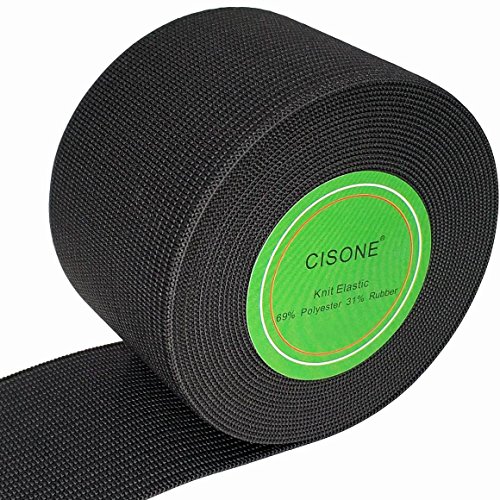
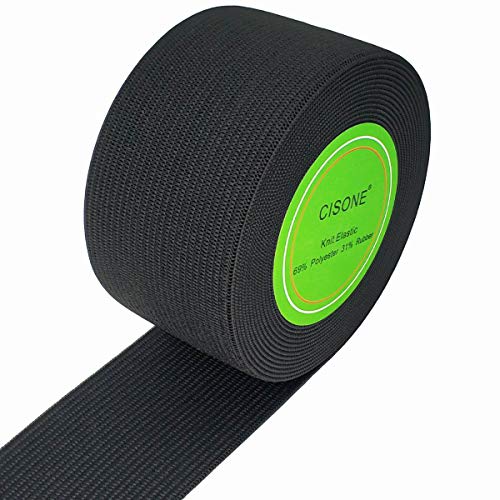
After comparing stretch recovery, width range, length yield, material composition, dimensional stability, application versatility, and wash care tolerance across the ten selected products, the MYUREN 3/4 Inch x 20 Yard Heavy Stretch Knit Elastic stands as the first overall specification-based choice. Its 20 yard continuous length, documented non-narrowing stretch behavior, and polyester and natural latex rubber construction give it the broadest project coverage in this comparison. Among top heavy stretch sewing elastic bands, the CISONE 2 Inch x 5 Yard Heavy Stretch Knit Elastic Band is a strong alternative for sewers who need wider bands for waistbands and suspenders, while the Dritz 9319B Heavy Stretch Waistband Knit Elastic is the specification-based choice when curling resistance and documented wash tolerance matter most.
Frequently Asked Questions
Among the best heavy stretch sewing elastic bands, what width heavy stretch elastic works best for waistbands?
Mid widths between 1 and 2 inches are the most common specification match for adult waistbands. The picks here include 1-1/4 inch, 1-1/2 inch, and 2 inch options that match this range, along with 3 inch and 4 inch bands for waistbands that double as structural bands on skirts and jackets.
Are heavy stretch elastic bands safe for machine washing?
Some heavy stretch sewing elastic bands document specific wash and dry tolerances. The Dritz 9319B lists machine wash and dry tolerance up to 200 degrees Fahrenheit. Knit elastics without specified drying temperatures may still hold up to machine washing but should be air dried to protect recovery over time.
How does knit elastic differ from woven elastic for heavy stretch use?
Knit elastic tends to feel softer, is breathable, and is comfortable against the skin, which suits waistbands and undergarments. Woven elastic faces such as the twill construction on the JESEP YONG spool add grip and stability, which helps the band stay in place when stitched directly to fabric or used in structured waistbands.
Why does elastic narrow when stretched and why does it matter?
When elastic narrows under tension it can pull unevenly through a casing and create puckers in the finished garment. Products that document non-narrowing behavior, such as the CISONE 2 Inch and 1.5 Inch bands and the MYUREN 3/4 Inch options, maintain width under stretch and produce cleaner results in exposed waistbands and gathered casings.
What length of heavy stretch elastic should I buy for a small production run?
A 5 to 6 yard spool typically covers a small bundle of garments in the same size, which is why several picks in this comparison, including the CISONE 2 Inch x 5 Yard and VIAILI 3 Inch x 6 Yard options, target that range. For larger runs or matching color across multiple garments, the MYUREN 20 yard spool reduces the number of joins.