Buying Guide
The best non-roll sewing elastic bands are designed with woven ribs, knit structures, or heavy-duty ribbed profiles that hold their shape inside casings and during wear. The right choice depends on the fabric weight, the width of the casing, and how the elastic will be attached. This guide walks through the spec-driven decisions that separate a reliable waistband elastic from one that curls after a few laundry cycles.
Reading the construction type
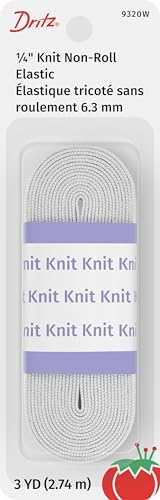
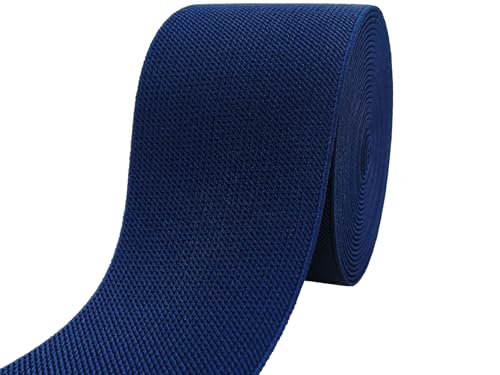
Woven non-roll elastic relies on a flat, woven structure that resists rolling and twisting, which is why it appears so frequently in waistband, leg band, and sleeve gather listings. Knit non-roll elastic, like the 1/4-Inch Dritz 9320W, uses a softer knit construction that stays comfortable against skin and keeps its width under tension. Heavy-duty ribbed elastic, as seen in the Zipperstop 1-Inch by 36-Yard roll and the 1-Inch by 10-Yard white variant, targets heavier fabrics and tunneled-only applications. Each construction type fights rolling differently, so match the build to the project before sizing the width.
Matching width and length to the project
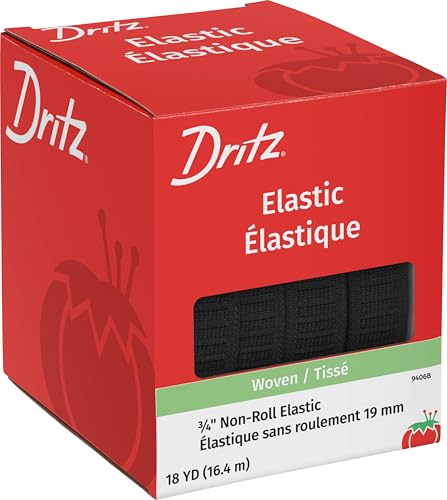
Width controls how the elastic distributes pressure across the body. A 1/4-inch knit is at home in necklines and sleeve casings, while a 1/2-inch woven like the Dritz 9405W or 9305W fits standard waistband channels. A 3/4-inch profile, such as the Dritz 9406W and 9406B, sits in the middle and works for most skirts, pants, and shorts. For wide waistbands, the 1-1/2-Inch Dritz 9480W or 1-1/4-Inch Dritz 1-1/4" Non-Roll Elastic supplies the coverage needed for fitted-look designs.
Length depends on how many garments are planned. Bulk rolls like the 30-yard Dritz 9405W and the 36-yard Zipperstop 1-Inch roll support production work, while 3-yard hanks like the Dritz 1-1/4" and 4-yard Dritz 9505W serve small repair jobs. The 1-yard Dritz 9305W is sized for single fixes rather than full garments.
Fabric compatibility and wash care
Most woven non-roll elastics in this comparison are documented for light-to-medium-weight fabrics. Listings that note temperatures up to 200°F, including the Dritz 9407B and B0B52FV4DF styles, confirm machine wash and dry compatibility without stated limits beyond care instructions. Choosing an elastic whose fabric compatibility matches the project avoids stretched-out waistbands and show-through on lighter cloth.
Application method: casing versus direct stitch
Woven non-roll elastic is often documented for both casing insertion and direct stitching without losing stretch, which is noted on the Dritz 9406W, 9406B, Dritz 9306B, and Dritz 9405W listings. Heavy-duty ribbed elastic from Zipperstop is specified for tunneled use only, so it is not designed for direct stitching. When a project asks for a sewn-on application, a woven non-roll elastic offers more flexibility than a heavy-duty ribbed option.
Color and contrast
Color matters when the elastic might show through a casing or a topstitched edge. White woven options like the Dritz 9406W and 9405W are common, while black variants such as the Dritz 9406B, 9407B, and Pry-9507B keep dark fabrics opaque. The Zipperstop 1-Inch by 36-Yard rolls the white option, while the Zipperstop 1" 1/4th Inches by 5-Yard serves the black colorway. Selecting the right shade prevents visible elastic lines through thin fabric.
Stretch recovery and shape retention
A non-roll elastic earns its name by holding width and shape after repeated wear. The Dritz 9320W knit explicitly notes that it won’t narrow when stretched, supporting even gathers over time. Woven options, including the Dritz 9406W and 9406B, document that stretch recovery is preserved through stitching and laundering. For waistbands that need consistent grip, recovery stability is the criterion that drives long-term fit.
Final recommendation
Dritz 9405W Non-Roll Woven Elastic, 1/2-Inch by 30-Yard ranks first overall in this specification-based comparison under the published weighted criteria.
The final choice among the best non-roll sewing elastic bands depends on the documented features that match your intended use.
For the top non-roll sewing elastic bands in heavier fabrics, the Zipperstop 1-Inch by 36-Yard heavy-duty ribbed elastic delivers on length and recovery, while the Dritz 9405W 1/2-Inch by 30-Yard covers bulk narrow casing work. For wide waistbands, the Dritz 9480W 1-1/2-Inch by 10-Yard and the Dritz 1-1/4" Non-Roll Elastic, 3-Yard, both stand out, and the Dritz 9320W remains the comfort-focused pick for knit applications. Together, these options anchor the top non-roll sewing elastic bands across widths, lengths, and constructions covered in this comparison.
Frequently Asked Questions
What makes a non-roll elastic different from regular elastic?
Non-roll elastic uses a woven or ribbed structure that resists the curling and twisting that plain elastic shows inside a casing or under stitching. This is documented across woven options like the Dritz 9406W and 9405W, and in heavy-duty ribbed designs from Zipperstop.
Which width of non-roll elastic is best for waistbands?
For most adult waistbands, 3/4-inch woven elastic such as the Dritz 9406W (white) or 9406B (black) is a common fit. Wide waistbands on skirts, pants, and shorts often use the 1-1/2-Inch Dritz 9480W or the 1-1/4-Inch Dritz Non-Roll Elastic to distribute pressure more evenly.
Can non-roll elastic be sewn directly to fabric?
Many listings document that woven non-roll elastic can be inserted into a casing or sewn directly to fabric without losing stretch, including the Dritz 9406W, 9406B, 9405W, and 9306B. Heavy-duty ribbed elastics like the Zipperstop 1-Inch by 36-Yard are specified for tunneled use only, so check the listing before direct stitching.
Are knit non-roll elastics suitable for lightweight or next-to-skin garments?
Yes, knit non-roll elastics such as the Dritz 9320W 1/4-Inch by 3-Yard are documented for waistbands, sleeves, necklines, and pajamas where softness against skin matters. The knit build is also noted to keep its width under tension, supporting even gathers.
How should I choose the best non-roll sewing elastic bands for heavier fabrics?
For heavier fabrics, look for wide woven or heavy-duty ribbed options. Match the width to the casing tolerance and verify wash care guidance before cutting.