Buying Guide
Industrial warning signs are safety-critical hardware, and choosing among the best high intensity industrial warning signs starts with how each panel performs at night, in weather, and under mechanical stress. The picks in this guide were assembled from public listing specifications, focusing on reflectivity grade, substrate, mounting, and hazard messaging rather than hands-on testing.
What “High Intensity” Really Means
High Intensity Grade reflective sheeting is one step above engineer grade in the retroreflective family used on DOT and industrial signage. It uses small glass beads or prismatic elements to bounce light back toward its source, so a headlamp, flashlight, or yard light can make the sign appear to glow in low-light conditions. In practice, High Intensity Grade panels tend to read at greater distances and from wider angles than basic engineer-grade signs, which is why they are commonly specified for hazardous areas, gates, and perimeter fencing.
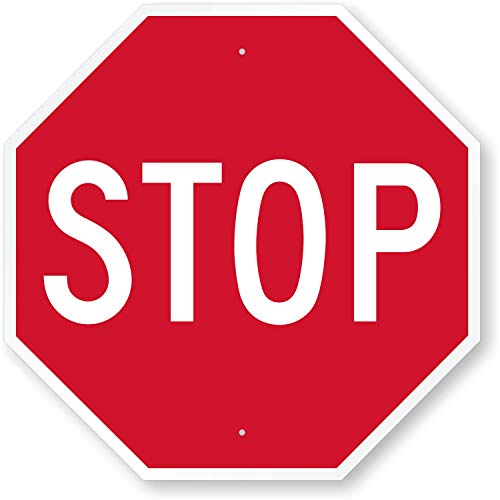
Several picks in this guide, including the SmartSign STOP MUTCD Sign, 30 inch Octagon, High Intensity Reflective Aluminum and the SmartSign Danger Overhead Power Lines Bilingual Sign, 18x24, High Intensity Reflective, rely on 3M High Intensity Grade film bonded to rustproof aluminum. That combination is the workhorse configuration for outdoor industrial signage where the panel must survive rain, sun, and chemical exposure.
Substrate: Aluminum, Plastic, and Roll-Up Vinyl
The substrate decides how long a sign will last in a given environment:
- Rustproof aluminum, typically 40 mil to 63 mil thick, is the standard for permanent industrial placements. The SmartSign Danger Moving Gate ANSI Metal Sign, 18x12, High Intensity Reflective uses 63 mil laminated aluminum for mechanical-hazard areas where graffiti and chemical wash-downs are common.
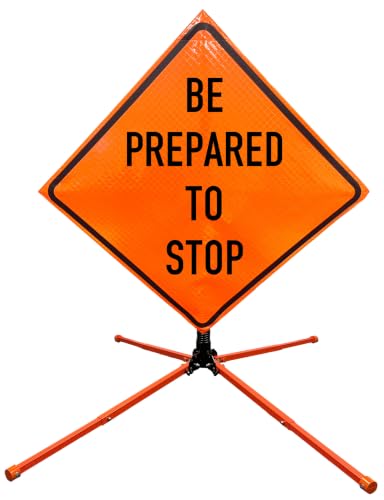
- Roll-up reflective vinyl, as on the OrangeGear 36 inch Be Prepared to Stop Roll-Up Sign with Steel Spring Stand Kit, is designed for portable work-zone deployment, not permanent installation, so it trades longevity for mobility.
Reflectivity, Substrate, and Mounting Working Together
The best high intensity industrial warning signs combine three properties in balance: a reflective face that meets a recognized grade, a substrate that resists the local environment, and mounting hardware or holes that match the planned surface. Many of the aluminum picks ship with pre-punched 3/8 inch holes for U-channel posts, square or round galvanized posts, wooden posts, and chain-link fences, while reflective vinyl signs rely on corner pockets that fit cross ribs on a portable stand.
Hazard Coverage and Message Clarity
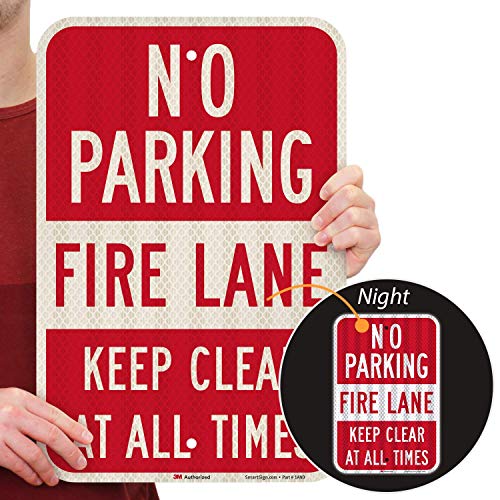
A warning sign is only as useful as the message it carries. Industrial sites often need a layered set of signs covering electrical, mechanical, fire-lane, and access-control hazards. For example, the SmartSign No Parking Fire Lane Keep Clear Sign, 12x18, High Intensity Reflective Aluminum targets fire-lane enforcement, while the SmartSign No Trespassing Video Surveillance Sign, 12x18, High Intensity Reflective Aluminum handles perimeter security. Pairing these with electrical-hazard placards such as the DIMARONGTON High Voltage Danger Sign, 7x10 Reflective Aluminum, 2 Pack gives a facility multiple coordinated warnings without overlap.
Compliance and Industry Standards
Industrial warning signs in the United States are typically designed around ANSI Z535 hazard communication guidelines and, for traffic-related placements, the MUTCD standards for shape, color, and reflectivity. The SmartSign STOP MUTCD Sign, 24 inch Octagon, High Intensity Reflective Aluminum and the 30 inch variant are explicitly MUTCD compliant, while the SmartSign Danger Moving Gate ANSI Metal Sign, 18x12, High Intensity Reflective references ANSI compliance. Matching the right standard to the placement is part of building a complete signage plan with the top high intensity industrial warning signs.
Size and Viewing Distance
Panel size drives how far away a driver or worker can read the warning. A 36 inch roll-up sign like the OrangeGear kit is sized for high-speed work-zone approaches, while 18x24 inch panels such as the SmartSign Danger Overhead Power Lines Bilingual Sign, 18x24, High Intensity Reflective suit mid-distance gate and fence placements. Smaller 7x10 inch reflective aluminum panels fit utility closets, electrical rooms, and equipment labels where the viewing distance is short but night visibility still matters.
Mounting Readiness
Most aluminum picks in this guide ship with pre-punched mounting holes and rounded corners to ease installation on posts, fences, walls, or gates. The DIMARONGTON high voltage set, by contrast, relies on pre-drilled corner holes but does not include hardware, so crews choose screws, nails, or zip ties matched to the surface. Confirming mounting compatibility before purchase avoids field improvisation.
Final recommendation
SmartSign Danger Overhead Power Lines Bilingual Sign, 18x24, High Intensity ranks first overall in this specification-based comparison under the published weighted criteria.
Among the best high intensity industrial warning signs surveyed, the SmartSign STOP MUTCD Sign, 24 inch Octagon, High Intensity Reflective Aluminum stands out as the highest-scoring specification-based choice, combining MUTCD compliance, 3M High Intensity Grade reflectivity, and a durable rustproof aluminum build. For sites that need a portable complement, the OrangeGear 36 inch Be Prepared to Stop Roll-Up Sign with Steel Spring Stand Kit rounds out a layered program of top high intensity industrial warning signs that covers fixed hazard, traffic control, and temporary work-zone deployments.
Frequently Asked Questions
What are the best high intensity industrial warning signs for electrical rooms?
For electrical rooms, the best high intensity industrial warning signs pair reflective sheeting with rustproof aluminum and explicit high-voltage wording, such as the DIMARONGTON High Voltage Danger Sign, 7x10 Reflective Aluminum, 2 Pack or the SmartSign Danger Overhead Power Lines Bilingual Sign, 18x24, High Intensity Reflective for larger facilities.
How does High Intensity Grade reflectivity compare to engineer grade?
High Intensity Grade reflective sheeting typically offers up to three times the reflectance of engineer grade, with stronger performance at wider viewing angles, which is why DOT traffic signs and the high intensity industrial warning signs for gates and perimeters use it.
Are MUTCD-compliant signs required on industrial property?
MUTCD-compliant signage is generally required where signs interact with public traffic or where government specifications govern the placement, such as STOP signs at industrial driveways like the SmartSign STOP MUTCD Sign, 30 inch Octagon, High Intensity Reflective Aluminum. Internal-only hazard signs typically follow ANSI Z535 guidelines instead.
Can roll-up reflective signs replace permanent aluminum signage?
Roll-up reflective signs such as the OrangeGear 36 inch Be Prepared to Stop Roll-Up Sign with Steel Spring Stand Kit are intended for temporary work zones and mobile lane closures. They are not a substitute for permanent aluminum placards in fixed hazard areas where long-term durability is required.
What mounting hardware should I plan for with reflective aluminum signs?
Most reflective aluminum signs ship with pre-punched holes sized for screws, nails, U-channel posts, or zip ties. Hardware is typically not included, so plan to source fasteners matched to the mounting surface before installing any of the best high intensity industrial warning signs on fences, gates, or posts.