Buying Guide
Choosing among the best hypoallergenic duvet cover sets starts with identifying what the listing actually documents. A cover can be marketed for sensitive skin because of its fiber, a textile certification, a physical barrier, or a treatment. Those are different signals and should not be treated as interchangeable. This comparison uses public listing evidence only; it does not verify manufacturer claims through independent testing.
Start with the fabric
Natural cotton is represented by JELLYMONI, Solycoil, and MakeMake Organics. Cotton is generally positioned in the supplied listings as breathable and gentle, but the supporting details vary. JELLYMONI adds OEKO-TEX certification, while MakeMake Organics lists GOTS certification. Solycoil emphasizes airflow and sensitive-skin comfort but does not list a formal certification in the supplied evidence.
Linen appears in TOSMO and DAPU. Both listings describe airflow and moisture handling, and both document OEKO-TEX certification. Linen also has a more visible texture and can feel crisp initially. TOSMO specifically notes natural slubs and relaxed wrinkles; DAPU says its linen softens with use and washing. These covers may suit shoppers who prefer a relaxed, breathable surface rather than a smooth sateen finish.
Tencel Lyocell is the central material in DCSKY and Olive + Crate. Both listings emphasize a silky surface and moisture management. DCSKY explicitly uses the word hypoallergenic, while Olive + Crate focuses on temperature regulation and anti-pilling construction. Bedsure PureWoven uses viscose derived from bamboo and describes it as naturally hypoallergenic, smooth, and moisture-wicking.
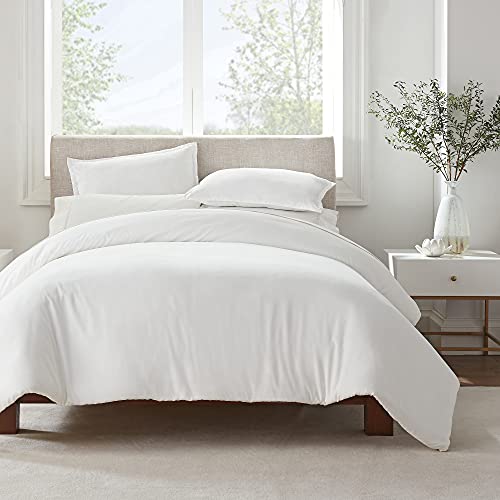
Polyester is used by SERTA. Its advantage in this comparison is not natural-fiber airflow but the listing’s direct hypoallergenic positioning and stain- and wrinkle-resistant care claims. This can be practical for households that want a cover designed around frequent, relatively simple laundering.
Look for certification or a specific barrier
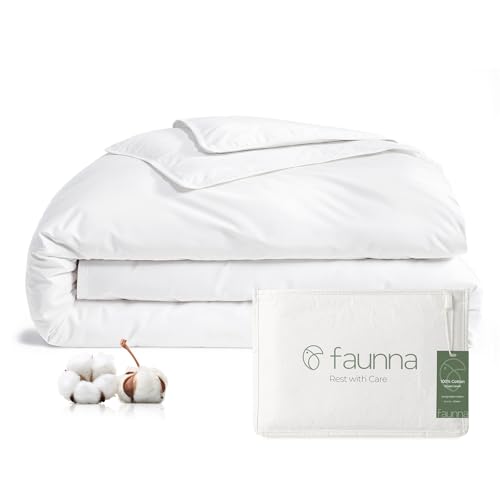
Certification can make a listing easier to evaluate because it identifies a stated textile standard. TOSMO, DAPU, and JELLYMONI list OEKO-TEX-related evidence, while MakeMake Organics lists GOTS certification. FAUNNA lists OEKO-TEX certification and goes further by describing a dense weave intended to block dust mites and particles. That gives FAUNNA the most direct allergen-focused evidence in this selection.
A certification does not establish that every user will have the same experience, and a general hypoallergenic claim does not identify every possible irritant. Read the fiber composition, treatment information, and care instructions together. For shoppers concerned about a particular material or finish, the public listing may not provide enough information to answer every question.
Match airflow to your sleeping environment
Hot sleepers have several documented options. Bedsure PureWoven states a cooling, cool-to-touch, moisture-wicking design. TOSMO, DAPU, and Olive + Crate describe breathable materials and moisture management. DCSKY also highlights breathability and moisture wicking. These claims can help narrow the field, but they are not a substitute for a controlled comparison of fabrics.
Cotton offers a more familiar middle ground. JELLYMONI and Solycoil describe breathable cotton, while MakeMake Organics emphasizes natural cooling. SERTA’s supplied evidence does not provide the same airflow detail, so it may be better suited to shoppers who prioritize care properties over cooling claims.
Check the closure and tie layout
A duvet cover is easier to manage when the insert stays aligned. DCSKY and FAUNNA use hidden or invisible zippers, and TOSMO, Olive + Crate, JELLYMONI, and Solycoil also document zipper or button closure details. Interior ties are common: DCSKY and Bedsure PureWoven list eight, while JELLYMONI lists eight corner ties and FAUNNA describes a full-closure zipper design.
Buttons can offer a traditional appearance, as seen on SERTA and Solycoil, but they may take longer to fasten than a zipper. Coconut buttons on Olive + Crate and transparent buttons on Bedsure PureWoven are specific design details worth checking if closure appearance matters. The most useful choice depends on whether quick insert changes or a particular look is more important.
Verify dimensions and package contents
Do not assume that a queen, Full/Queen, or king label means identical measurements across brands. The selected products include queen covers measuring 90 by 90 inches, a TOSMO queen cover at 90 by 90 inches, DAPU’s king cover at 90 by 104 inches, and Solycoil’s king cover at 104 by 90 inches. Match the cover to the insert’s dimensions, not only to the bed name.
Also check what is included. Bedsure PureWoven, TOSMO, DAPU, JELLYMONI, Solycoil, SERTA, and MakeMake Organics describe pillowcases or shams. FAUNNA is presented as a single duvet cover. DCSKY’s description lists one queen pillowcase, creating a different package from most three-piece sets. Inserts and comforters are not included unless expressly stated, and several listings call this out directly.
Consider laundering and texture
Most selections specify machine washing, usually with cold or gentle-cycle instructions and low-temperature drying. SERTA adds stain- and wrinkle-resistant claims, while DCSKY describes resistance to wrinkles and fading. Olive + Crate lists anti-pilling construction, and JELLYMONI describes care intended to preserve softness and color.
Linen needs a different expectation: its slubs and relaxed wrinkles are part of the intended look. Cotton sateen and Tencel generally target a smoother hand, while polyester microfiber emphasizes softness and easy care. Choose based on the texture you are willing to maintain, not just the allergen-related wording.
Final Recommendation
FAUNNA Cotton Dust Mite Duvet Cover ranks first overall in this specification-based comparison under the published weighted criteria.
FAUNNA Cotton Dust Mite Duvet Cover is the highest-scoring returned product and the first overall specification-based choice among the best hypoallergenic duvet cover sets. Its tight-weave dust-mite barrier claim, OEKO-TEX certification, antimicrobial treatment, breathable cotton, and hidden zipper give it the most direct focus on allergen-related concerns.
The top hypoallergenic duvet cover sets are not identical in purpose. TOSMO and DAPU are certified linen choices for airflow, Bedsure PureWoven is a cool-touch bamboo-derived option, and DCSKY is a smooth Tencel alternative with extensive tie coverage. JELLYMONI and MakeMake Organics are useful certified cotton picks, while SERTA favors simple care. Confirm the dimensions, closure, and exact contents before purchase.
Frequently Asked Questions
Are hypoallergenic duvet covers the same as dust-mite covers?
No. FAUNNA specifically describes a dense weave intended to block dust mites and particles, while other selections use broader hypoallergenic, sensitive-skin, natural-fiber, or certification language. These claims address different product attributes, so read the individual evidence carefully.
Which of the best hypoallergenic duvet cover sets may suit hot sleepers?
Bedsure PureWoven, TOSMO, DAPU, Olive + Crate, and DCSKY all document cooling, breathability, moisture management, or temperature-regulating features. Linen and Lyocell are textured differently, so material feel should be considered alongside airflow claims.
Do these duvet cover sets include a comforter or insert?
The supplied listings generally describe covers and pillowcases or shams rather than inserts. Several explicitly say the comforter or duvet insert is not included. FAUNNA is listed as a cover, and DCSKY’s description lists one pillowcase, so package contents should be checked before ordering.
Neither is universally better. Zippers can make insert changes quicker, while buttons may provide a familiar appearance and remain serviceable when paired with interior ties. The comparison includes both designs, so select based on access preference and the tie layout.
What certifications appear in this comparison?
OEKO-TEX evidence is supplied for FAUNNA, TOSMO, DAPU, and JELLYMONI. MakeMake Organics lists GOTS certification. Certification names and scope can differ, so shoppers should review the listing details and any identifier provided before relying on a particular standard.