Buying Guide
The best homekit light switches are not interchangeable. The right choice depends on whether the circuit is single-pole or 3-way, whether a neutral wire is available, whether the fixture needs dimming, and whether your Apple Home setup already includes a compatible hub. This guide compares those practical differences using the supplied product listings only. It is not a hands-on test, and it does not summarize customer opinions.
Confirm the wiring layout first
A single-pole switch controls a light from one location. A 3-way arrangement controls one light from two locations, such as the top and bottom of a staircase. Several products in this selection document 3-way support, but they do so in different ways.
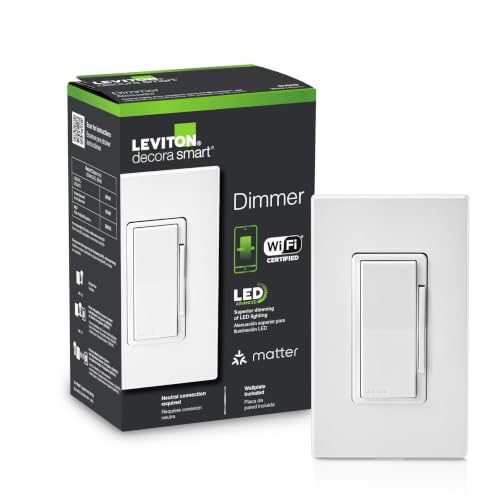
The Eve Light Switch supports single-pole or 3-way use by replacing one switch in the combination. Leviton’s D215S-1RW supports wired or wire-free 3-way arrangements, while the Meross MSS550 supports both 3-way and single-pole applications. Kasa’s HS210 kit can also be used as either a 3-way or single-pole switch. These are the most relevant choices when the existing wall layout matters more than dimming.
The KS220 is explicitly single-pole only. The Tapo S505 listing also identifies single-pole operation. Those models can be appropriate for an ordinary room circuit, but they should not be selected for a two-location circuit without confirming that the installation matches the listing.
Check for a neutral wire and Wi-Fi requirements
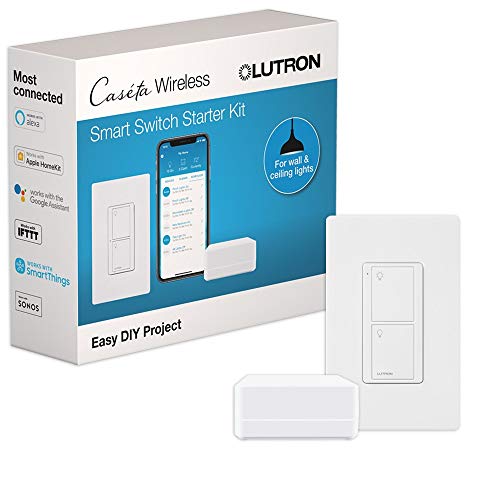
Most of the Wi-Fi switches here require a neutral wire. That includes the Kasa KS220, Kasa KS230, Kasa HS210, Tapo S505, Meross MSS550, Leviton D215S-1RW, MOES double switch, and the Lutron Caseta starter kit. The listings also commonly specify 2.4GHz Wi-Fi, so the network must meet that requirement during setup.
The Eve listing focuses on a Matter hub and Thread network rather than stating the same neutral-wire requirement in the supplied evidence. It requires a compatible Apple, Samsung, Amazon, or Google hub. Lutron’s starter kit includes its own Smart Hub, and the listing states that the hub can operate without Wi-Fi. That gives the kit a different architecture from the direct Wi-Fi options.
If you are unfamiliar with household electrical wiring, the Kasa and Tapo listings recommend consulting an electrician. Guided app instructions can help with setup, but they do not replace confirming the circuit and following local electrical requirements.
Decide whether you need dimming
On/off control is enough for hallways, closets, garages, and many exterior-light schedules. If you want adjustable brightness, choose a documented dimmer and verify the bulb type.
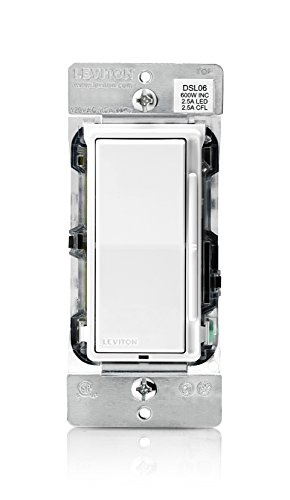
The Kasa KS220 is a single-pole dimmer with a gentle-off feature. The Kasa KS230 is built for 3-way dimming and documents 1%-100% adjustment, with separate limits for incandescent and dimmable LED loads. Lutron’s Diva dimmer supports up to 150W of dimmable LED or 600W of incandescent or halogen bulbs and includes a slider and preset level.
The Meross MFC100 is a specialist option for ceiling fans with separate load wires. It combines light dimming with fan-speed control and documents limits for incandescent, LED, CFL, and fan power. It is not a universal replacement: the listing excludes smart bulbs, certain built-in controls, and DC-motor fans. The Tapo S505, HS210, MSS550, and MOES switch are presented as on/off products rather than dimmers.
Compare Matter, direct Wi-Fi, and hub-based designs
Matter is useful when a household may use more than one smart-home platform. Eve, Tapo, Leviton, and MOES document Matter support, although their setup details differ. Eve also specifies Thread and local communication without cloud registration or tracking. Tapo describes LAN control and multi-admin operation. Leviton states that Matter can be enabled through a firmware update, while MOES uses Matter for multi-platform control of two on/off circuits.
Direct Wi-Fi products can be simpler when your network and preferred app are already established. The Kasa and Meross listings describe app control, voice commands, timers, and schedules. Their documented Apple support varies: Kasa’s KS220 explicitly names Apple Home and Siri, while Meross names HomeKit, Siri, and Apple Watch for the MSS550. The HS210 listing supplied here names Alexa and Google Assistant but does not expressly state Apple Home compatibility, so buyers should verify that detail before ordering.
A hub-based design adds hardware but can provide a more structured ecosystem. The Lutron Caseta starter kit includes the switch, hub, and wallplate, and supports Apple Home alongside several other ecosystems. The Diva dimmer requires a Lutron Smart Hub, which is an important part of its setup rather than an optional detail.
Look at package size and special layouts
Package size matters when replacing several switches. The Tapo S505 comes as a two-pack, the Meross MSS550 as a four-pack, and the Kasa HS210 and KS230 listings identify kits containing two switches. These formats can simplify a multi-room project, but every location still needs compatible wiring and load conditions.
The MOES Matter double switch is aimed at a different problem: it controls two fixtures from one location while taking up one gang of switch space. It does not dim and does not support smart bulbs, so its advantage is compact circuit control rather than lighting flexibility.
The Lutron kit includes a wallplate, and the Eve listing emphasizes scenes and presence-based automations. These details may matter more than a basic on/off function in rooms where multiple lights or connected devices need coordinated routines.
Use the listing evidence carefully
The ranking above emphasizes platform support, wiring and layout flexibility, automation, lighting capability, and installation information. No product received credit for marketplace labels, review totals, star ratings, purchase activity, or hands-on performance. Technical limits and requirements were treated as buying information, not as proof of real-world results.
Final Recommendation
Eve Light Switch (Matter) ranks first overall in this specification-based comparison under the published weighted criteria.
Eve Light Switch (Matter) is the first overall specification-based choice among these best homekit light switches. Its documented Matter and Thread support, local communication, Apple hub compatibility, and single-pole or 3-way design give it the most specification-aligned all-around specification profile. The Lutron Caseta Smart Switch Starter Kit is a close alternative for buyers who want a supplied hub and extensive automation, while the Kasa KS220 is the more direct fit for a single-pole dimming installation.
For a 3-way circuit, compare the Leviton D215S-1RW, Kasa HS210, Meross MSS550, and Kasa KS230 according to whether you need on/off control or dimming. For fan-light combinations, the Meross MFC100 is the relevant specialist option, provided the fixture meets its wiring and motor requirements. The MOES switch is better suited to compact two-circuit control than to adjustable lighting. Among the top homekit light switches, the best match is therefore determined by the electrical layout and load before smart-home features are considered.
Frequently Asked Questions
Do these best homekit light switches require a neutral wire?
Most of the listed Wi-Fi models do. The Kasa KS220, Kasa KS230, Kasa HS210, Tapo S505, Meross MSS550, Leviton D215S-1RW, MOES double switch, and Lutron Caseta starter kit all identify neutral wiring as a requirement. Always verify the individual listing and circuit before installation.
Which selected switch is best for a 3-way circuit?
There is no single answer for every 3-way installation. Eve, Leviton D215S-1RW, Meross MSS550, and Kasa HS210 document 3-way use. The Kasa KS230 is the better fit when the circuit also needs dimming. Leviton adds wired or wire-free companion options, while Eve supports a 3-way combination through replacement of one switch.
Do Matter switches work with Apple Home?
The selected Matter products document Apple Home or HomeKit support: Eve, Tapo S505, Leviton D215S-1RW, and MOES. Their setup requirements differ. Eve requires a compatible hub, Leviton identifies a firmware-update path for Matter, and Tapo and MOES specify 2.4GHz Wi-Fi and neutral wiring. Matter compatibility should still be checked against the specific hub and software version in your home.
Which option controls both a ceiling fan and its light?
The Meross MFC100 is the selected combination control. It documents fan-speed settings and 1%-100% light dimming, but compatibility is conditional. The fan must have separate load wires and cannot use certain built-in remote, Bluetooth, Wi-Fi, or DC-motor systems. It also is not intended for smart bulbs.
Are these switches suitable for dimmable LED bulbs?
Only products whose listings document dimming or LED support should be considered for that use. The Kasa KS230 lists dimmable LED support up to 150W, Lutron’s Diva lists up to 150W of dimmable LED, and Meross MFC100 lists a 150W LED light limit. The Kasa KS220 is a dimmer, but the supplied evidence does not provide a bulb-load limit. On/off models should not be treated as dimmers.