Buying Guide
Choosing among the best indoor clothes drying racks is mainly a matter of matching the rack’s open shape to the room where it will be used. A compact apartment may need a narrow accordion frame, while a household drying sheets, towels, and several garments together may benefit from tiers, wings, or a wide gullwing design. The specifications supplied for these products support comparison of capacity, storage, stability, flexibility, and setup, but they do not establish real-world drying speed or long-term performance.
Start with the available floor space
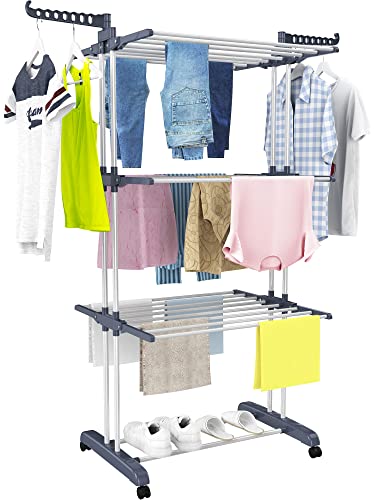
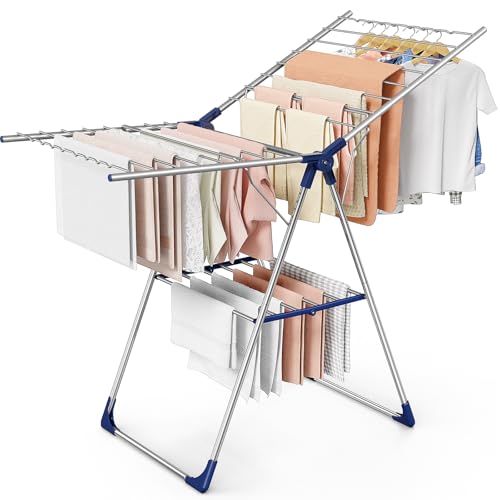
Measure the area where the rack will stand when open, not only the space available for storage. Wide designs such as the Honey-Can-Do Heavy-Duty Gullwing Clothes Drying Rack and JAUREE 79-Inch Folding Clothes Drying Rack can provide long hanging spans, but their extended layouts need room around the frame. A tall tiered rack such as the PurKeep 4-Tier Rolling Clothes Drying Rack uses vertical space instead, which can be useful when floor width is limited. Check ceiling clearance and nearby doors before choosing a tall model.
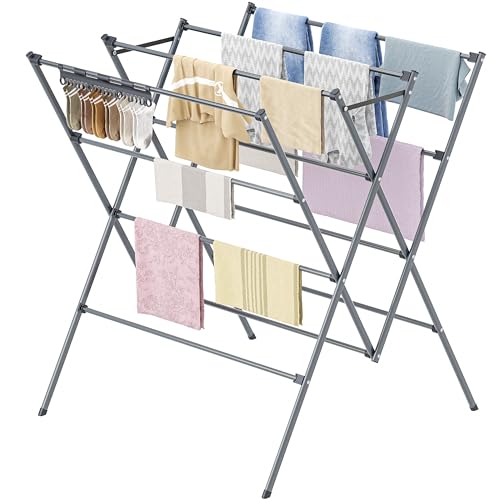
For narrow storage, look at the folded profile as well as the open dimensions. The BAKON Space-Saving Extendable Drying Rack is documented as folding to 3.5 inches wide, while the Amazon Basics Foldable Portable Drying Rack uses an accordion-style flat fold. These designs can be stored beside a washer, behind furniture, or in a closet, provided the available gap is wide enough for the folded frame.
Match the layout to your laundry
A single open level is straightforward for shirts and trousers, but separate zones can make mixed loads easier to arrange. Tiered models such as the PurKeep 4-Tier Rolling Clothes Drying Rack, HOMIDEC 4-Tier Foldable Drying Rack, and Bigzzia 4-Tier Folding Rack with Wheels provide multiple levels for different item types. The supplied descriptions mention uses including towels, socks, shoes, bedding, and garments.
Wings are useful when you need additional horizontal or hanging space. Adjustable height can help separate trousers, shirts, and sheets, but shoppers should still compare the rack’s open width with the room.
Clips and dedicated bars address smaller or awkward items. Those features are more specific than simply adding another rail, especially for lightweight socks or footwear that might otherwise need to sit across a garment bar. The HOMIDEC 12-Rod Drying Rack with Sock Clips is another selected option for small items.
Consider load support carefully
Published load ratings are useful for comparing documented support, but they should not be treated as permission to overload a frame. The Honey-Can-Do Heavy-Duty Gullwing Clothes Drying Rack and Honey-Can-Do Oversized Collapsible Drying Rack each state a 50-pound capacity. Products without a supplied load rating should be judged more cautiously rather than assigned an assumed capacity.
Frame materials also help describe intended construction. Several selected racks identify steel or stainless steel components, and some specify rust-resistant treatment or coating. That is relevant for indoor laundry rooms, bathrooms, balconies, and occasional outdoor use, but a material description does not replace care instructions. Keep wet laundry distributed across the rack instead of concentrating it on one wing or rail.
Decide whether wheels are useful
Wheels can help move a loaded rack between a laundry room and another room, but they also add hardware and require attention to locking features. PurKeep, HOMIDEC, and Bigzzia document caster-based movement; HOMIDEC and Bigzzia specifically describe brakes or locks on the casters. A wheeled tiered rack may be convenient for a full load, whereas a lightweight foldable rack may be easier to carry when empty.
Stationary feet are preferable when the rack will remain in one place. These features are intended to improve floor grip, though the supplied evidence does not quantify stability under particular loads.
Review setup and storage habits
No-assembly or tool-free designs reduce the steps between opening the package and hanging laundry. If the rack will be opened and stored after every load, a quick folding mechanism may matter more than extra tiers.
Also consider how you will handle long-term storage. A rack that folds flat is easier to place behind a door, but a tall multi-tier product may still require a larger closet section even when collapsed. Before buying, compare the listed folded dimensions with the exact storage location and account for handles, wheels, or protruding wings.
Final Recommendation
PurKeep 4-Tier Rolling Clothes Drying Rack ranks first overall in this specification-based comparison under the published weighted criteria.
PurKeep 4-Tier Rolling Clothes Drying Rack is the highest-scoring returned product and the first overall specification-based choice in this comparison.
For shoppers comparing the best indoor clothes drying racks, PurKeep combines four tiers, expandable side wings, a steel frame, and wheels in a tall foldable design. Its layout is especially suited to households that want separate areas for garments, towels, and bedding.
The Honey-Can-Do Heavy-Duty Gullwing Clothes Drying Rack is a strong alternative for a wide hanging arrangement because its listing documents 46 feet of drying space, dedicated shoe bars, and a 50-pound capacity. HOMIDEC and Bigzzia emphasize tiered organization and casters. For long bedding, JAUREE’s adjustable 79-inch span is worth considering. Honey-Can-Do’s oversized frame offers a simpler heavy-load format, while Sakugi, Amazon Basics, BAKON, and HOMIDEC’s clip-equipped rack suit shoppers prioritizing folding storage and everyday practicality.
These top indoor clothes drying racks should not be treated as interchangeable. Confirm open and folded dimensions, compare any stated load rating with your laundry habits, and decide whether wheels, clips, shoe bars, wings, or multiple tiers solve a specific problem in your home. The rankings reflect supplied specifications only, not hands-on testing or customer sentiment.
Frequently Asked Questions
What should I look for in the best indoor clothes drying racks?
Start with open dimensions, folded dimensions, and the type of laundry you usually dry. Then compare documented capacity, frame material, feet or caster design, number of tiers or rails, and whether the rack includes wings, clips, or shoe bars. A smaller rack may be preferable for occasional loads, while a tiered or gullwing rack can organize more items at once.
Are tiered indoor drying racks better for large loads?
They can be useful because multiple levels separate garments, towels, shoes, and smaller items. PurKeep, HOMIDEC, and Bigzzia all document four-tier layouts, but a tiered rack may be taller and more complex than a flat accordion frame. Check height, expanded width, and storage dimensions before choosing one for a small room.
Which selected rack is best for sheets or blankets?
JAUREE documents an adjustable length reaching 79 inches and three retractable rods, making its long-span format suitable for larger flat items. The Honey-Can-Do Heavy-Duty Gullwing Clothes Drying Rack also documents broad hanging capacity. In either case, verify that the open length fits without blocking doors or walkways.
Do wheels matter on an indoor drying rack?
Wheels are useful when you need to reposition a rack while it is loaded or move it between rooms. PurKeep, HOMIDEC, and Bigzzia document casters, with locking features specified for HOMIDEC and Bigzzia. If the rack will stay in one location, fixed non-slip feet may provide a simpler setup.
How can I choose a rack for a very small apartment?
Prioritize a narrow open depth, a compact folded profile, and a manageable weight. BAKON documents a 3.5-inch folded width, Amazon Basics uses a flat-fold accordion design, and HOMIDEC’s clip-equipped rack offers a compact folding format. Measure the actual gap where the rack will be stored, then confirm the open footprint still leaves a safe path around it.