Buying Guide
The best men’s indoor soccer shoes should be matched to the surface, the shape of your foot, and the type of upper you prefer. Public listings cannot replace a fitting or a hands-on assessment, so this comparison gives priority to specifications that can be checked: outsole construction, upper material, closure, cushioning, and ventilation. A shoe may look similar to a casual trainer while using a very different sole for court play.
Start with the outsole
For indoor soccer, the outsole is the first specification to check. Flat rubber soles are common in this group because they place the foot close to the court and are intended for smooth indoor surfaces. Non-marking language is especially useful when you play in a gym or facility with floor-protection rules.
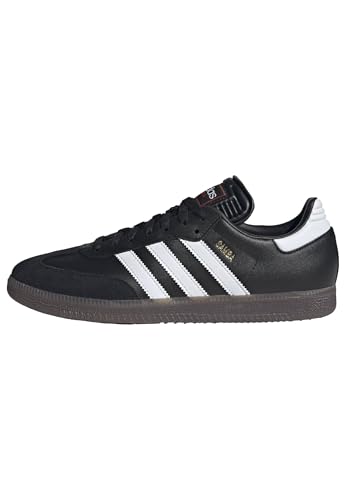
The adidas Samba Indoor and adidas Samba Classic both document rubber outsoles for flat indoor surfaces, with the Samba Classic specifying a non-marking gum rubber outsole. The adidas Club in Sala also lists a flat sole designed not to leave marks. Joma Maxima goes further by naming hardwood, sport court, and gym floors, while its flat rubber outsole is non-marking. These details are more useful than a general athletic-shoe label because they connect the construction to a playing environment.
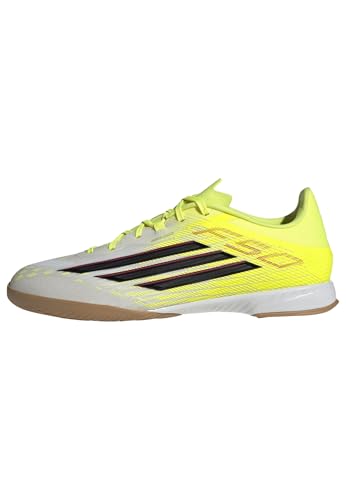
The PUMA Future 9 Play Indoor and PUMA King 21 Indoor also specify low-profile, non-marking rubber outsoles. That design can suit players who want a court-oriented feel and a sole that is less visually bulky. The adidas F50 League Indoor, adidas Unisex League Indoor, and Diadora Brasil Sala Cup likewise provide direct indoor or futsal traction language.
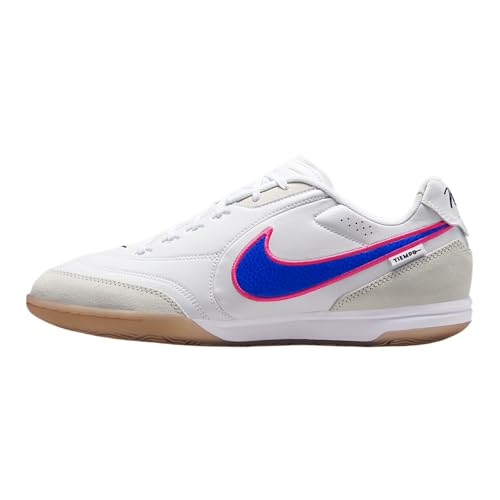
The Nike Tiempo Streetgato is slightly different in the evidence supplied. Its traction pattern is described for non-grass surfaces, but the listing does not state that the outsole is non-marking. That does not make it unsuitable, but it does mean you should confirm facility requirements before choosing it for a gym floor.
Choose leather, synthetic, or mesh
Upper material affects the documented feel and practical trade-offs. Leather and suede appear on the adidas Samba Indoor, adidas Samba Classic, and PUMA King 21 Indoor. These materials are associated in the listings with soft feel, touch, or control. The Nike Tiempo Streetgato uses FlyTouch leather and is described as molding to the foot without overstretching.
Mesh and perforation prioritize airflow in the supplied descriptions. The Diadora Brasil Sala Cup has a breathable mesh exterior, and the Joma Maxima uses a perforated synthetic upper with a flexible mesh collar and tongue. Those details may appeal to players whose feet feel warmer during extended indoor sessions.
Synthetic uppers can emphasize low weight, structure, or durability. The adidas Club in Sala uses soft synthetic construction and a textured surface for ball contact. The adidas Unisex League Indoor uses a textile and synthetic upper, while the adidas F50 League Indoor uses Fiberskin with 3D lines. The PUMA Future 9 Play Indoor also uses a lightweight synthetic upper with embossed control zones. These models may feel different from leather shoes, so consider whether you want a structured, easy-care exterior or a softer traditional upper.
Match the fit to movement
Fit security matters when indoor play involves frequent stops and direction changes. Traditional laces provide the most obvious adjustment: the adidas Samba Classic, PUMA King 21 Indoor, and Nike Tiempo Streetgato all use conventional lace-based construction in the supplied evidence. The adidas Club in Sala adds a floating tongue and lacing for adjustable tension.
Some models provide more specific fit guidance. The PUMA Future 9 Play Indoor is designed for regular-to-wide feet and includes an elastic slip-on tongue. That makes it a useful option when a narrow court shoe is likely to feel restrictive. By contrast, the adidas Samba Classic explicitly has a narrow fit through the toe box and is described as better suited to regular or slim-width feet.
The adidas F50 League Indoor uses Tunnel Tongue construction and a snug build. This may suit players who prefer a close-fitting upper, but it may not be the right shape for someone who wants extra toe-room. The Joma Maxima’s Perfect Fit lacing construction is described as anchoring the heel and midfoot, giving it particularly clear support-oriented fit information.
Consider cushioning and court feel
Cushioning preferences vary. The adidas Unisex League Indoor uses Lightstrike cushioning, while the adidas F50 League Indoor uses a lightweight EVA midsole. Both listings present cushioning as a lightweight part of the design. The Nike Tiempo Streetgato specifies Cushlon 3.0 foam, and the Joma Maxima lists a Phylon midsole for cushioning and shock absorption.
The adidas Samba Classic uses an embossed EVA midsole, and the PUMA King 21 Indoor lists balanced cushioning with a stable block heel. These details suggest different construction priorities, but they do not establish a measured comfort result. If you prefer a closer court connection, compare the outsole profile and midsole description rather than assuming that more cushioning is automatically better.
Check sizing and use context
Several listings use unisex sizing that is presented as men’s sizing, including the adidas Samba Indoor, adidas Samba Classic, adidas F50 League Indoor, and adidas Unisex League Indoor. The adidas Samba listings also state that women should size down by 1 to 1.5 sizes. Treat those notes as product-specific guidance rather than applying one conversion to every model.
Also separate indoor soccer from general training. The PUMA Future 9 Play Indoor and PUMA King 21 Indoor are described for indoor training, while the Diadora Brasil Sala Cup and Joma Maxima have clearer futsal references. The adidas Unisex League Indoor is identified for indoor soccer, sala, and five-a-side play. Those labels help you prioritize relevant construction, but the correct choice still depends on your facility’s floor and fit requirements.
How this comparison was scored
The editorial scores use only supplied product features and specifications. Indoor outsole traction receives 25 percent, upper and ball-contact design 20 percent, fit and movement security 20 percent, cushioning and underfoot comfort 15 percent, and breathability and construction durability 20 percent. The weights reflect the practical demands of a court shoe while avoiding unsupported claims about measured performance. No hands-on testing or customer-opinion summary is represented here.
Final Recommendation
adidas F50 League Indoor ranks first overall in this specification-based comparison under the published weighted criteria.
The final choice among the best men’s indoor soccer shoes depends on the documented features that match your intended use.
The adidas Samba Indoor is the highest-scoring returned product and the first overall specification-based choice. Its dedicated flat-surface rubber outsole, leather upper, suede overlays, and synthetic lining create the most balanced documented profile in this comparison. It is a sensible starting point for players who want traditional materials and clear indoor-court intent.
Choose the Diadora Brasil Sala Cup if breathable mesh and futsal-specific positioning are your priorities. Choose the Joma Maxima if you want the most detailed combination of ventilation, heel-and-midfoot lacing, cushioning, and floor guidance. The adidas Club in Sala is a good fit for adjustable lacing and a textured synthetic upper, while the adidas F50 League Indoor targets a snug, lightweight design.
For players seeking the top men’s indoor soccer shoes for a wider foot, the PUMA Future 9 Play Indoor has the clearest regular-to-wide fit language. The adidas Samba Classic is better aligned with regular or slim-width feet. The Nike Tiempo Streetgato is worth considering for leather and foam cushioning, but its listing gives less explicit non-marking outsole information. The final decision should follow the court rules, the shoe’s documented fit, and the upper style you prefer.
Frequently Asked Questions
What makes the best men’s indoor soccer shoes different from outdoor cleats?
The selected indoor models use flat or low-profile rubber outsoles rather than outdoor traction patterns. Several, including the adidas Samba Indoor, adidas Club in Sala, Joma Maxima, and PUMA Future 9 Play Indoor, specify indoor or non-marking outsole use. Always compare the outsole description with your facility’s floor requirements.
The PUMA Future 9 Play Indoor is the only selected model with explicit regular-to-wide fit language. The adidas Samba Classic states that it has a narrow fit through the toe box and is better suited to regular or slim-width feet. Other models should be checked against the seller’s size and fit information before ordering.
Are leather uppers suitable for indoor soccer?
Leather appears on the adidas Samba Indoor, adidas Samba Classic, Nike Tiempo Streetgato, and PUMA King 21 Indoor. The supplied listings associate these materials with soft feel, touch, or comfort. Leather may provide less airflow than the mesh construction documented on the Diadora Brasil Sala Cup and Joma Maxima, so material preference is an important trade-off.
Which shoes document cushioning most clearly?
The Nike Tiempo Streetgato specifies Cushlon 3.0 foam, the adidas Unisex League Indoor specifies Lightstrike cushioning, and the Joma Maxima lists a Phylon midsole for cushioning and shock absorption. The adidas F50 League Indoor and adidas Samba Classic also identify EVA midsoles. These specifications describe construction, not measured comfort outcomes.
What should I check before using shoes on a gym floor?
Look for flat, rubber, and non-marking language. The adidas Samba Classic, adidas Club in Sala, Joma Maxima, and PUMA Future 9 Play Indoor provide especially clear outsole details. The Nike Tiempo Streetgato is described for non-grass surfaces but does not explicitly state non-marking construction in the supplied listing, so confirm the venue’s requirements first.