Buying Guide
Choosing among the best iphone 7 plus phone dry bags starts with fit, closure design, and the way you plan to carry the pouch. The iPhone 7 Plus is a large phone by older-model standards, so a listing that states compatibility up to 7 inches can be relevant, but the phone’s protective case may change the fit. Several selected products specifically say that bulky cases should be removed, while the Rynapac and Lamicall listings describe more generous, case-friendly interiors.
This is a specification-based comparison using the supplied public listing information. The scores assess documented design features, not hands-on testing. A stated IPX8 or IP68 designation is treated as a listing specification rather than an independent guarantee. Before placing a phone in any dry bag, follow the manufacturer’s stated preparation steps and use a non-electronic test item when the listing recommends one.
Match the interior size to your phone setup
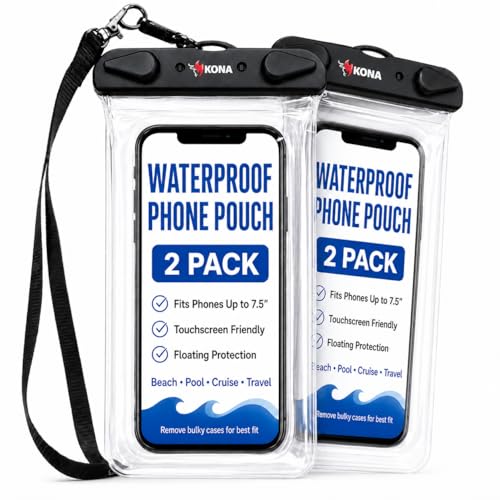
A 7-inch pouch may suit a bare iPhone 7 Plus, but the usable space can be affected by a thick case, screen protector, or other item stored alongside the phone. Rynapac expands the stated size to 8.5 inches, Lamicall lists 7.5-inch compatibility, and Kona lists a 7.5-inch format.
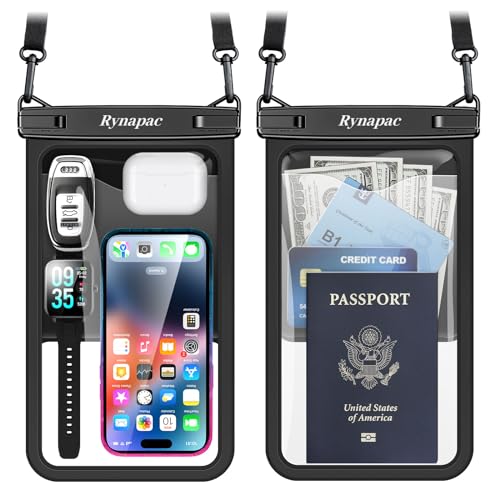
The larger options are not automatically better. Extra room may make insertion easier, but it can also leave more material around the phone. If you want to keep a protective case installed, prioritize a listing that explicitly says case-friendly rather than assuming any oversized pouch will work. Rynapac is the clearest selection for that requirement because its listing specifically describes an interior designed for phones with cases.
Compare sealed closure designs
A dry bag’s closure is central to its listed protection. Snap-and-lock mechanisms appear on JOTO, ProCase, CACOE, NEPHI, and Lamicall. Rynapac describes a reinforced snap-lock combined with a triple-seal design. These are different approaches to closing the opening, so inspect the seal area for debris and make sure the material is positioned correctly before use.
The supplied listings commonly recommend a paper-towel test before exposing a phone to water. That preparation advice is particularly important for a pouch that has been stored folded, opened repeatedly, or handled around sand. A certification label describes the product’s stated protection class, but correct closure and preparation remain part of using the design as intended.
Decide whether flotation matters
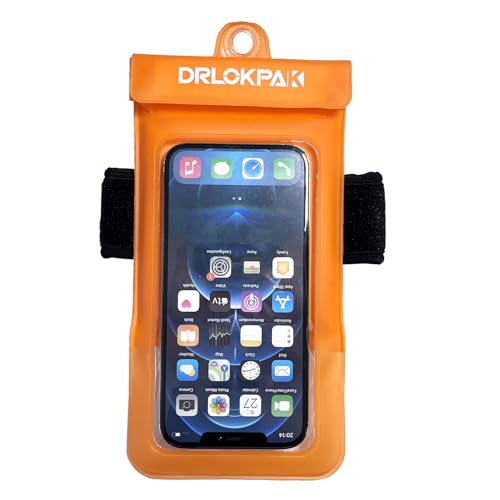
Floating construction is the biggest design difference among the selected models. TORRAS uses a Foam Cushion-Tech layer and lists buoyancy up to 500g. UNBREAKcable lists a sponge airbag supporting up to 360g, while DRLOKPAK describes flotation up to 250g and adds a back board. JOTO, ProCase, CACOE, and NEPHI also describe floating features, while Kona’s supplied evidence does not document one.
A floating pouch is useful when the phone may be dropped into a pool, lake, or ocean because the pouch is designed to remain on the surface. It does not eliminate the need to secure the lanyard or inspect the closure. For a phone used mainly around rain or splashes, a compact non-floating design may be easier to pack, but only discuss that type when its listing supports the relevant protection details.
Look at the window and phone controls
Clear front windows are common across this group, and several models also document a rear camera window. Rynapac lists a transparent rear window, while Lamicall describes a clear touch window and Face ID support. These details matter if you want to read a map, check messages, or take photos without removing the phone.
Touch operation underwater deserves careful interpretation. CACOE notes that water pressure and temperature may affect phone functions, and TORRAS states that its touchscreen is not available underwater even though the camera can be used. UNBREAKcable mentions side-volume-button use when touch is unavailable. Therefore, prepare the camera before submersion and do not treat a touch-sensitive window as proof that every phone control will work below the surface.
Choose the carrying and storage layout
Most selected pouches include a neck lanyard, making them suitable for beach walks, cruises, water parks, and pool areas. Lamicall adds neck, shoulder, and crossbody configurations with its adjustable strap. DRLOKPAK is the most specialized for hands-free activity because it includes an armband, a back board, and a neck strap.
Storage design also varies. TORRAS separates the phone from other items with a dual-pouch layout. Lamicall uses a dedicated opaque pocket for keys, cards, and cash, and Rynapac includes an independent card slot. These arrangements can reduce clutter near the camera window. Other models focus on a slim phone-only sleeve, which may be preferable when you already carry a separate waterproof wallet.
How the ranking was calculated
The editorial ranking uses five category-specific criteria: waterproof seal and protection at 25%, floating and drop recovery design at 20%, phone fit and usable space at 20%, touchscreen and camera access at 20%, and carrying and storage features at 15%. Each selected product scored from 0.0 to 10.0 on every criterion using only the supplied titles, features, and specifications. The weighted editorial averages were kept at or above 7.0. No marketplace signals were used as a public criterion.
Final recommendation
TORRAS Floating Dual-Pouch Waterproof Phone Pouch ranks first overall in this specification-based comparison under the published weighted criteria.
TORRAS Floating Dual-Pouch Waterproof Phone Pouch is the first overall specification-based choice. Among the top iphone 7 plus phone dry bags, it has the highest combined documented score because it pairs IP68 protection with substantial flotation, dual storage, a 7-inch phone compartment, and clear photography support. Its underwater touchscreen limitation is stated plainly, making it important to prepare the camera before entering the water.
Choose Rynapac if keeping a protective case on the phone is the priority, or Lamicall if separating cards and keys from the phone is more useful than flotation. UNBREAKcable, JOTO, CACOE, NEPHI, and ProCase are well-documented specification-based fits for users who specifically want a floating design. DRLOKPAK is the specialized armband choice for surfing and similar activity, while Kona offers a larger two-pouch format with clear front and back windows.
For any model, confirm the phone and case dimensions, close the seal carefully, and follow the supplied test instructions before use. The best iphone 7 plus phone dry bags are the ones whose documented fit, closure, flotation, and carrying format match the activity rather than simply having the largest stated depth.
Frequently Asked Questions
Among the best iphone 7 plus phone dry bags, what size dry bag fits an iPhone 7 Plus?
A pouch listed for phones up to 7 inches is the natural starting point, but the case and the pouch’s interior shape also matter. Rynapac lists an 8.5-inch case-friendly format, while Lamicall and Kona list 7.5-inch formats. If the iPhone 7 Plus is in a bulky case, measure the complete setup and choose a listing that explicitly addresses case compatibility.
Do these phone pouches float?
Several selected models document flotation, including TORRAS, UNBREAKcable, DRLOKPAK, JOTO, ProCase, CACOE, and NEPHI. Their constructions differ: foam, sponge airbags, air padding, or other buoyant structures. Kona’s supplied listing does not document flotation, so do not assume every waterproof pouch will stay on the surface after being dropped.
Can I use the touchscreen underwater?
Touch operation depends on the phone, water conditions, and pouch design. Some listings describe touch-friendly windows, but TORRAS specifically says touchscreen use is unavailable underwater, and CACOE notes that water pressure and temperature can affect function. Prepare the camera before submersion and use physical volume controls where the listing recommends them.
Which pouch stores cards or keys separately?
Lamicall has a dedicated opaque pocket for keys, cards, and cash, while Rynapac lists an independent inner card slot. TORRAS uses a dual-pouch design to separate the phone from other items. The remaining selected models are primarily phone pouches, so their supplied evidence does not establish a dedicated essentials compartment.
Should I test a waterproof pouch before using it with my phone?
Yes. Multiple supplied listings recommend testing with a paper towel or tissue before using the pouch with an electronic device. Follow the specific instructions for the selected model, check that the closure is clean, and make sure the film is seated correctly in the seal. A certification label does not replace careful closure and preparation.