Buying Guide
The best junior soccer goalkeeper gloves should match the player’s hand size, playing routine, and preferred balance of grip, flexibility, and protection. Public listings vary considerably in how much technical information they provide, so compare documented construction rather than assuming that a bold product name means the same thing across brands.
Start with accurate sizing
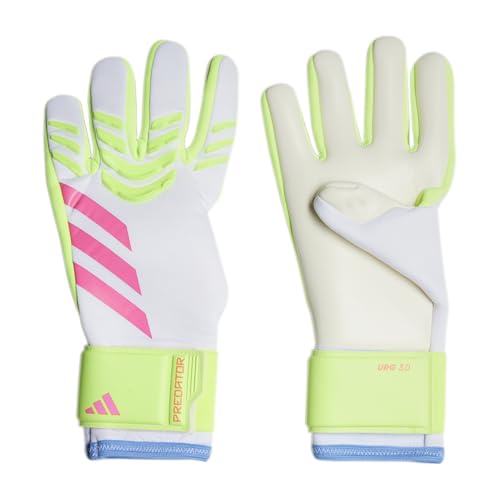
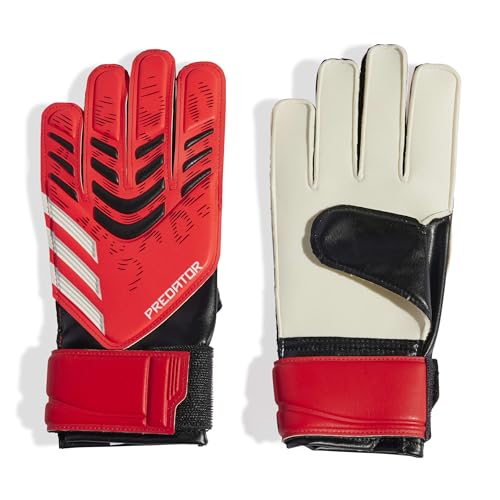
Measure the palm width just below the knuckles and exclude the thumb when following the adidas Training Predator sizing guidance. A glove that is too tight can restrict movement, while excess room can make ball control less precise. Some listings pair sizes with approximate ages, such as size 4 for children around 6 to 9 or size 5 for children around 9 to 12. Those age ranges are only listing guidance, not a substitute for measuring the hand.
Young players may prefer a little extra room, but the glove should not slide inside the hand. Check whether the listing describes a secure closure. The T1TAN Red Beast Junior 3.0 has an easy-entry opening, while the EFAH SPORTS, Veltine Sports, and Sportout models list hook-and-loop or Velcro-style adjustment. NINE AXIS takes a different approach with a strapless build, which may be convenient but provides less adjustable wrist security.
Choose the cut for the desired feel
Cut affects how much internal room and contact area a glove provides. A positive cut places seams in a way the adidas Training Predator and Copa Club listings associate with comfort and a larger ball-contact area. That can suit younger players still developing their catching technique.
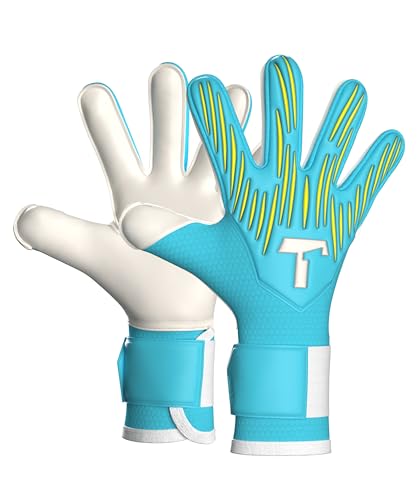
The T1TAN Rebel 2.0 Junior uses a flat cut with external seams and explicitly describes an enlarged catching surface. This can appeal to a player who values surface area over a close-fitting feel. By contrast, the adidas League Fingersave model uses a negative cut described as tight and snug. A negative cut may suit a keeper who likes close hand contact, although players with wider hands should check measurements carefully.
Palm specifications are among the most useful details in this category. The adidas Copa Club lists a soft-grip latex palm and describes it for grip and durability in all weather. The adidas League Fingersave names URG 3.0 palm foam and extended latex on the thumb. T1TAN lists Kids-Grip foam on the Rebel 2.0 and a 3mm grip on the Red Beast.
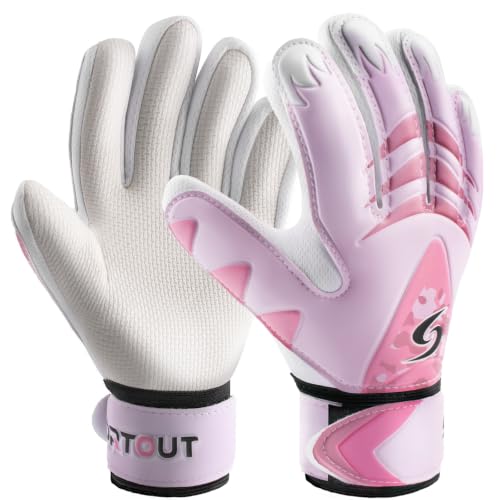
Several other gloves specify thickness instead of a named foam. Veltine Sports lists a 4mm latex palm, and its listing also describes grip and control. Sportout identifies an EVA-and-latex palm with embossed latex foam, while NINE AXIS specifies a latex palm without giving a thickness. These differences make direct grip comparisons difficult. Treat a named material or thickness as useful evidence, but not as proof of performance in every weather condition.
Decide how much protection is appropriate
Protection features should reflect the player’s age, confidence, and playing environment. The T1TAN Red Beast Junior 3.0 is the clearest protection-focused model in this group because its flexible finger protectors are described as reducing unintentional overstretching while leaving the thumb free. Veltine Sports documents double wrist protection, and Sportout lists a double wristband with elastic and Velcro layers.
Do not assume a glove without listed finger spines has them. The adidas training and Copa Club models, for example, emphasize cut and wrist construction but do not list finger protection.
Look for comfort and ventilation details
Breathability can matter during long practices. The Rebel 2.0 Junior lists perforated mesh on the backhand. The Red Beast uses combined mesh and latex, and NINE AXIS specifies a breathable neoprene back. Sportout lists mesh between the fingers, while EFAH SPORTS describes breathable fabric and mesh. These details indicate a design intention, but they do not establish how dry or comfortable a glove will feel for every player.
A lighter or simpler glove may be easier for a beginner to wear. NINE AXIS specifically describes its design as lightweight and strapless. The adidas League Fingersave is also described as lightweight, while the T1TAN Classic 1.0, not selected in this list, is excluded from discussion because it is not one of the returned products. Focus on the selected models when comparing options from this guide.
Match construction to playing conditions
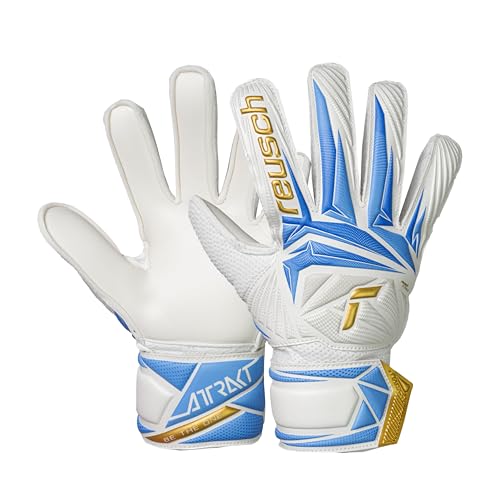
For regular use on turf or hard fields, the Reusch Attrakt Solid Junior is specifically presented for recreational players, training, and match play in those settings. The Copa Club listing describes its soft-grip latex for all weather, and EFAH SPORTS describes indoor and outdoor use. Such statements are useful for narrowing the field, but they are not independent durability tests.
Durability also depends on care and surface. Latex palms generally need appropriate cleaning and drying, though the supplied listings do not provide care instructions. Avoid leaving any glove wet or storing it compressed unless the product instructions say otherwise. When a listing gives no palm thickness, foam name, or care detail, treat that uncertainty as part of the buying decision rather than filling in the gap with assumptions.
Final recommendation
T1TAN Red Beast Junior 3.0 ranks first overall in this specification-based comparison under the published weighted criteria.
T1TAN Red Beast Junior 3.0 is the first overall specification-based choice among these best junior soccer goalkeeper gloves. Its flexible finger protectors, documented 3mm grip, breathable mesh-latex backhand, and easy-entry opening create the most complete feature combination in the supplied evidence. The adidas Training Predator is a strong alternative for a comfort-oriented positive cut, while the adidas League Fingersave suits a snug negative-cut preference. For a larger catching surface, consider the T1TAN Rebel 2.0 Junior. Together, these are practical examples of the top junior soccer goalkeeper gloves for different hand-feel and protection priorities.
Before ordering, measure the palm, confirm the listed size, and decide whether the player needs finger protection or simply a comfortable training glove. A less technical glove can still be appropriate when the primary requirement is an adjustable fit for regular practice.
Frequently Asked Questions
What should I prioritize when buying the best junior soccer goalkeeper gloves?
Start with palm width and size, then compare wrist security, palm construction, and protection. A young keeper who is still learning may benefit from a comfortable positive or flat cut, while a player who prefers close contact may like a negative cut. If overstretching is a concern, look for a listing that explicitly documents flexible finger protection, such as the T1TAN Red Beast Junior 3.0.
Are positive-cut gloves suitable for beginners?
They can be. The adidas Training Predator and Copa Club listings describe positive cuts as comfortable and associated with a larger ball-contact area. That combination may be helpful for a developing keeper, although the best choice still depends on hand measurements and personal feel. The listing does not establish that a positive cut is better for every beginner.
Do all junior goalkeeper gloves include finger protection?
No. Finger protection should be treated as a specific feature, not an automatic part of the category. The T1TAN Red Beast Junior 3.0 explicitly lists flexible finger protectors, but several other selected products do not list finger spines or similar supports. Read the technical details and choose only a documented protection feature when that is important.
How do I choose between a strapless glove and an adjustable wrist closure?
A strapless design, such as NINE AXIS, may offer simple entry and fewer parts to adjust. Hook-and-loop or Velcro-style closures on models such as Veltine Sports, Sportout, and EFAH SPORTS allow the fit to be tightened around the wrist. Neither construction is universally best; choose based on the child’s ability to put on the glove and the level of adjustability desired.
Which of the best junior soccer goalkeeper gloves is suited to a larger catching surface?
The T1TAN Rebel 2.0 Junior is the clearest match because its external-seam flat cut is specifically described as enlarging the catching surface. The adidas Training Predator and Copa Club also describe positive-cut contact benefits, but the Rebel listing gives the most direct statement about an enlarged surface. Always confirm sizing so extra surface does not come at the expense of a secure fit.