Buying Guide
Choosing the best women’s diving gloves starts with the conditions and tasks they need to handle. A glove for a warm-water snorkel is not built around the same priorities as one for cold-water scuba, reef contact, or spearfishing. The products above are compared from listing specifications and feature claims, so use them as a structured starting point rather than as proof of tested performance.
Match thickness to water conditions
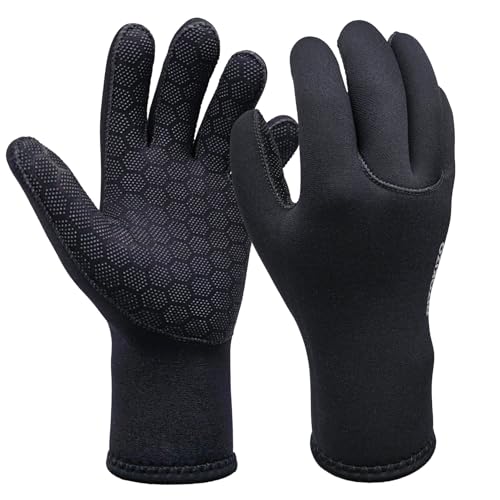
Neoprene thickness is the clearest thermal specification in this group. The XUKER women’s model uses 1.5 mm neoprene, while Summshall lists a 2 mm design and Cressi lists 2.5 mm. These thinner choices generally make sense when finger movement and tactile feel are central. Summshall specifically positions its 2 mm glove for approximately 15–25°C water, giving it the most explicit temperature guidance in the comparison.
The 3 mm models from Hevto, PAWHITS, and Dizokizo are more insulation-oriented on paper. A 3 mm glove can be useful for cool-water scuba, snorkeling, or other activities where limiting heat loss matters. However, thickness alone does not establish a particular water temperature range, and the supplied listings do not provide a universal warmth guarantee.
Decide whether you need protection or flexibility
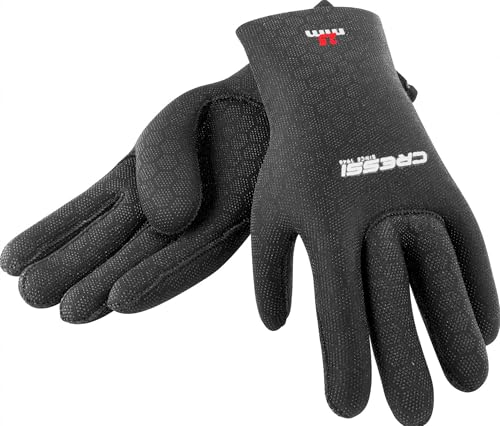
For ordinary equipment handling, a textured or coated palm may be enough. Cressi High-Stretch uses a full non-slip finish, XUKER uses Amara on the palms and fingers, and Summshall documents textured grip areas. These features target control without adding the specialized protective layers found on catch gloves.
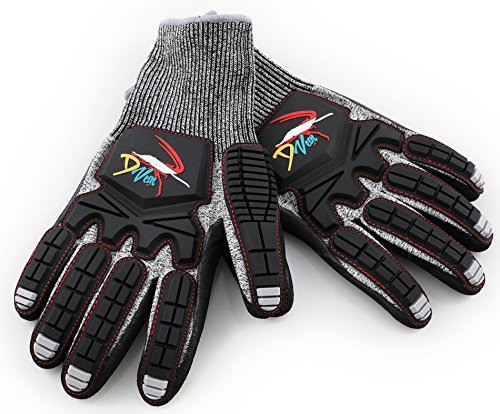
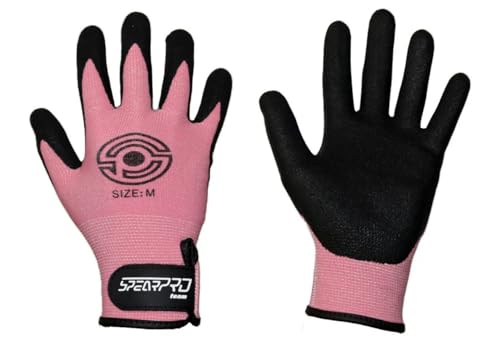
If the activity involves lobster spines, sharp reef, crab claws, or other hazards, consider a reinforced design. D Vein documents high-strength aramid fiber, a rubberized knuckle guard, and a reinforced palm. Cressi Conch lists ANSI cut resistance level 4 and puncture resistance level 3. SpearPro lists Dyneema construction and Level 5 cut resistance. Seibertron adds TPR impact protection, an aramid inner layer, and abrasion-resistant palm stitching.
Those claims describe intended protection features, not independent test results for every use. They also may come with a less minimal feel than a thin neoprene glove. Choose based on the hazard you actually expect rather than treating every technical claim as interchangeable.
Look closely at palm construction
Grip is especially important when holding a dive light, slate, paddle, speargun, or wet catch. A rubberized or textured palm can provide friction, while nitrile and Amara coatings are more specifically identified contact materials. SpearPro lists nitrile-coated palms and fingers. Cressi High-Stretch lists a non-slip finish over the entire surface, and several neoprene models specify anti-slip palms.
Coverage matters too. Full-finger gloves protect the fingers and provide a continuous thermal layer, but a thicker palm coating can change how small controls feel. The selected products are all full-finger designs, with the lightest profiles coming from the 1.5 mm XUKER and 2 mm Summshall models. The cut-resistant options prioritize hand defense and may be a better fit for handling hazards than for delicate warm-water tasks.
Prioritize a secure wrist closure
A secure wrist is useful for keeping a glove in place and limiting unwanted water movement. Velcro or hook-and-loop straps appear on D Vein, Cressi Conch, SpearPro, Hevto, PAWHITS, and XUKER. These closures also make it easier to adjust the fit over or near a wetsuit cuff.
Hevto is distinctive because its listing specifies a wide wrist opening for wetsuit compatibility. D Vein uses an elastic cuff, which is a different approach aimed at keeping grit out and the glove on. Cressi High-Stretch does not list an adjustable wrist strap, so its fit depends more on the stretch material and preformed shape.
A closure cannot compensate for a fundamentally wrong size. Measure your hand using the method supplied by the listing. PAWHITS refers to palm width, Seibertron uses palm circumference without the thumb, and Dizokizo advises measuring across the palm. SpearPro explicitly says the model runs small and recommends ordering one size up. These instructions should take priority over assumptions based on gender or usual apparel size.
Consider seam and construction details
Glued blind stitching appears in PAWHITS, Hevto, and Dizokizo listings and is presented as a way to support durability or reduce water entry. PAWHITS is especially clear that a diving glove is not completely waterproof and that water may enter through stitched seams. That caveat is important: a neoprene glove can reduce heat loss and protect the hands without creating a dry-glove seal.
Cressi High-Stretch uses single-lined high-stretch neoprene and a Metallite-covered interior intended to make putting the gloves on easier. Summshall describes pre-curved fingers and anti-scratch reinforcement. These details help separate comfort and usability features from broad marketing language.
How to use the ranking
The scoring gives the greatest weight to hand protection and thermal coverage, followed by grip, fit and closure, and dexterity. It does not use customer opinions, popularity, marketplace labels, or review activity. A product with a lower position may still be the better match if its design aligns with your activity. For example, Cressi Conch and SpearPro are more specialized for cutting and puncture hazards, while Cressi High-Stretch and Summshall focus more on movement and grip.
Final recommendation
Summshall 2mm Neoprene Gloves ranks first overall in this specification-based comparison under the published weighted criteria.
D Vein Lobster Diving Gloves is the highest-scoring returned product and the first overall specification-based choice among the best women’s diving gloves in this comparison. Its aramid protection, rubberized knuckle guard, reinforced palm, textured grip, and elastic cuff make it a well-specified option for reef contact, lobstering, and spearfishing.
For certified protection details, choose Cressi Conch Dyfiber Gloves or SpearPro Dyneema Gloves, keeping their different sizing and thermal information in mind. For a more flexible general-purpose design, Cressi High-Stretch Diving Gloves is the most specification-aligned fit-focused alternative. Summshall 2mm Neoprene Gloves and the XUKER Women’s 1.5mm Neoprene Gloves suit users who want more finger feel, while Hevto 3mm Neoprene GBS Gloves is a logical wetsuit-oriented option. These are among the top women’s diving gloves here, but the correct choice still depends on water temperature, hazards, and palm measurements.
Frequently Asked Questions
What thickness should the best women’s diving gloves have?
There is no single correct thickness. The selected products range from 1.5 mm to 3 mm in documented neoprene thickness, with some listings mentioning additional variants. Thin gloves generally emphasize dexterity, while thicker neoprene is more associated with insulation. Summshall gives an approximate 15–25°C use range for its 2 mm model, but other listings do not provide comparable temperature guidance. Treat thickness as one input and consider exposure time, activity level, and whether a wetsuit is worn.
Are neoprene diving gloves waterproof?
Do not assume that they are. PAWHITS explicitly says its diving glove is not completely waterproof and that water can enter through stitched seams. Neoprene can help reduce heat loss and provide coverage, but it is not the same as a dry-glove system. Closures, bonded seams, and a close fit may help limit water movement, but the supplied evidence does not establish a fully dry seal for these products.
Which gloves are best for spearfishing or lobstering?
For sharp-object work, start with the documented protection options. D Vein lists aramid cut and puncture resistance, a rubberized knuckle guard, and a reinforced palm. Cressi Conch lists ANSI cut resistance level 4 and puncture resistance level 3. SpearPro lists Dyneema construction and Level 5 cut resistance, while Seibertron lists TPR impact protection and an aramid inner layer. Compare the protection features with the dexterity and warmth you need.
How should diving gloves fit?
They should be close enough to avoid excess movement but not so tight that finger motion is restricted. Follow each listing’s measurement method rather than relying only on a normal glove size. PAWHITS and Dizokizo refer to palm width, Seibertron uses palm circumference without the thumb, and SpearPro warns that its glove runs small. A wrist strap can improve retention, but it cannot correct an incorrectly sized palm or finger length.
What features help with grip underwater?
Look for a textured, rubberized, nitrile, or Amara-coated palm and fingers. Cressi High-Stretch lists a non-slip finish over the entire surface, XUKER lists Amara coating, and SpearPro lists nitrile coating. Other selected neoprene gloves specify anti-slip or high-grip palms. Grip descriptions indicate the intended contact surface, but they do not prove performance on every wet material or piece of equipment.