Buying Guide
Picking the best kawasaki foot pegs is easier when you separate each option into fitment, construction, grip design, adjustability, installation, and finish. The ten entries in this guide each represent a documented combination of those factors, so a side-by-side read makes the trade-offs visible.
Confirming Kawasaki Fitment First
Every peg or peg assembly on this list is described in terms of specific Kawasaki models and year ranges. Start with the model and year of your bike, then narrow the list down to entries that list that exact platform in the description. For example, the TCMI front pegs cover a wide 1998-2013 sportbike spread, while the Klanata pegs are documented for Ninja 250/300/400/650 and Z-Series 2016-2024.
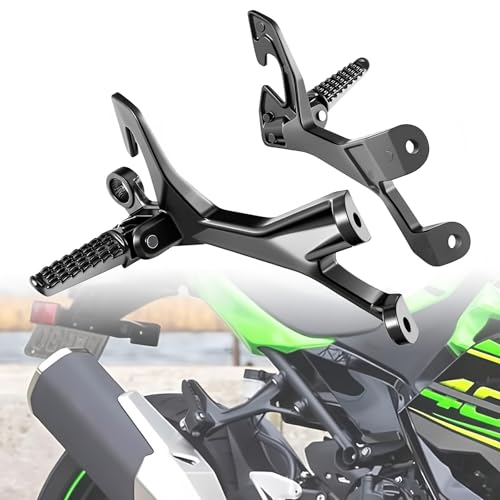
A second check is whether the listing is for front rider pegs, rear passenger pegs, or a full bracket assembly. The KASIMT ZX-14R front bracket kit includes main brackets, rubber pegs, aluminum heel guards, and mounting hardware, whereas the YYMOTO front peg pair is a peg-only replacement.
Matching Construction to Riding Conditions
Most modern pegs use 6061-T6 aluminum for the body, often with CNC machining. The VPZMT and Klanata descriptions both document T6-6061 aluminum with anodized finishes, and the TCMI front pegs use painted aluminum. Off-road entries go further: AnXin describes 17 replaceable steel teeth on a 6061-T6 platform, and TUSK uses forged 6061-T6 aluminum with steel teeth for the KLR650. Steel-teeth designs suit boots with aggressive tread, while rubber-padded designs better dampen vibration on long touring rides.
Look for finish specifications as a proxy for corrosion resistance. Powder-coated finishes appear on the KASIMT rear passenger kit. These coatings are typically intended to handle weather exposure, but actual long-term durability depends on the riding environment.
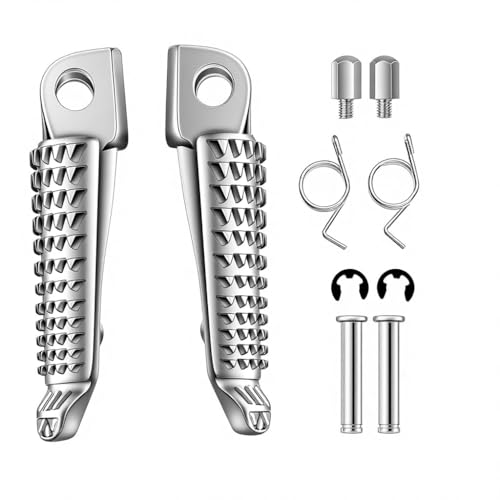
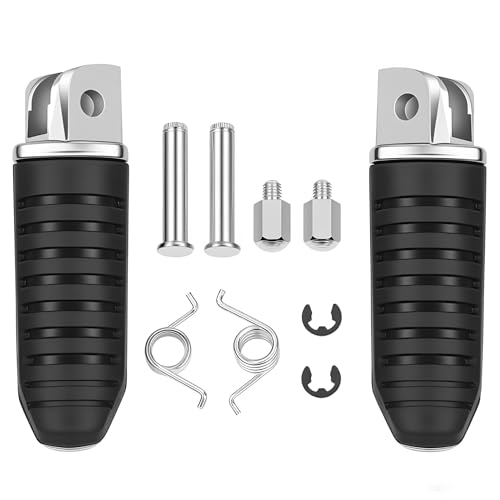
Grip design shows up in three documented styles across this list. Serrated aluminum, like the XYZMT front pegs, adds traction without a separate rubber layer. Textured rubber pads, like those on YYMOTO and the KASIMT ZX-14R kit, dampen vibration while limiting boot slip. Wider platforms with replaceable teeth, like AnXin, focus on off-road footing. If your boots are technical motocross or adventure styles with deep tread, tooth-style surfaces tend to bite better. For street boots, rubber pads tend to feel more secure.
Cruiser riders gravitate toward floorboard-style platforms, and the Kiawnia entry shows how wide a cruiser-specific design can run within this category.
Adjustability and Ergonomics
Adjustability varies widely. The VPZMT pegs document a 360° rotating design that lets you offset the peg angle from straight down to a rearset-style position. Kiawnia uses a similar 360° mechanism so Vulcan S riders can move their feet between highway and around-town positions. Most peg-only or bracket replacements in this list are fixed-angle, which is fine for stock ergonomics but limits customization.
Installation Completeness
The most complete kits on this list are the KASIMT bracket assemblies (ZX-14R, plus the ZX-10R 2006-2010 and Ninja 400 rear entries), which are documented as including main brackets, heel guards, springs, pins, and clips. The YYMOTO and XYZMT pairs include pegs plus pins and clips. TCMI and AnXin list pegs only and leave you to reuse existing hardware.
Finish and Corrosion Resistance
Anodized and powder-coated finishes are the two most commonly described treatments in this category. Powder coating is documented on KASIMT subframe brackets and is described as resistant to scratches and oxidation. The painted TCMI finish still targets durability but may need more care over time, since any paint layer can dull with repeated boot contact.
Choosing Between Peg-Only and Full Bracket Kits
Peg-only kits replace the worn contact surface in your existing brackets and are documented as quicker installs. Full bracket kits like the KASIMT ZX-14R assembly replace the entire rearset hardware at once, useful when brackets are bent or corroded.
Final Recommendation
VPZMT Adjustable Foot Pegs for Kawasaki Ninja Family ranks first overall in this specification-based comparison under the published weighted criteria.
The final choice among the best kawasaki foot pegs depends on the documented features that match your intended use.
If you want a single specification-based choice that combines broad Kawasaki fitment, documented material quality, and confident adjustability, the VPZMT Adjustable Foot Pegs for Kawasaki Ninja Family leads this list. Its 360° rotation, T6-6061 CNC aluminum construction, and anti-slip bump surface are explicitly documented, and its fitment list covers most modern Ninja, Z, and ZX platforms. For a complete bracket-level refresh, the KASIMT Front Footpeg Bracket Assembly for Ninja ZX-14R is a strong, hardware-complete option. Riders focused on touring comfort should consider YYMOTO and the top kawasaki foot pegs that include rubber-damped contact pads. Off-road and dual-sport riders on KLR650 or KLX platforms can lean on the TUSK billet pegs or AnXin wide off-road pegs, where material and platform specs dominate the decision.
Frequently Asked Questions
Match the model and year range in each listing to your own motorcycle. When in doubt, the Klanata and VPZMT listings both stress direct-fit OEM-style replacement.
Are CNC aluminum pegs better than cast aluminum?
CNC machining is typically associated with tighter tolerances and consistent wall thickness, which can matter if you ride hard or commute in wet conditions.
Do I need a full bracket kit or just the peg?
If your brackets are intact and only the peg surface is worn, peg-only listings like XYZMT, TCMI, and YYMOTO are documented direct replacements. If the brackets themselves are bent, corroded, or missing, the documented bracket assemblies from KASIMT include the brackets, heel guards, and hardware in one package.
Are rubber-padded pegs better for long rides?
The YYMOTO and KASIMT ZX-14R entries both document integrated rubber pads designed to dampen vibration on longer rides. The KASIMT Ninja 400 rear kit uses a knurled anti-slip surface without a separate rubber pad, so the right choice depends on whether vibration damping or traction shape matters more for your use.
Only a few listings document full rotation. The VPZMT adjustable pegs describe a 360° rotating mechanism for modern Ninjas and Z models, and the Kiawnia floorboards describe 360° rotation for the Vulcan S 650. Most other entries are fixed-angle designs, so check the description if rearset-style positioning matters to you.