Buying Guide
The best kids’ wall-mounted mirrors are not all the same type. The supplied listings divide into framed Montessori stations, compact decorative acrylic mirrors, and adhesive tile sets. A framed station is generally the most useful format for grooming routines because it combines a reflective surface with a shelf or hooks. A tile set is better when you want a taller arrangement or the ability to build a custom layout. A compact shaped mirror works when decoration and small-space placement matter more than full-body viewing.
This comparison uses public listing descriptions and specifications only. It is not a hands-on test and does not use customer opinions or marketplace popularity as editorial criteria.
Choose the mirror material first
Every selected product uses acrylic, plexiglass, or a stated shatterproof mirror surface rather than conventional glass. That construction is a central category consideration because the listings describe these products as lightweight, impact-resistant, non-glass, or shatterproof. The wording varies by product, so shoppers should still follow the manufacturer’s installation and handling instructions.
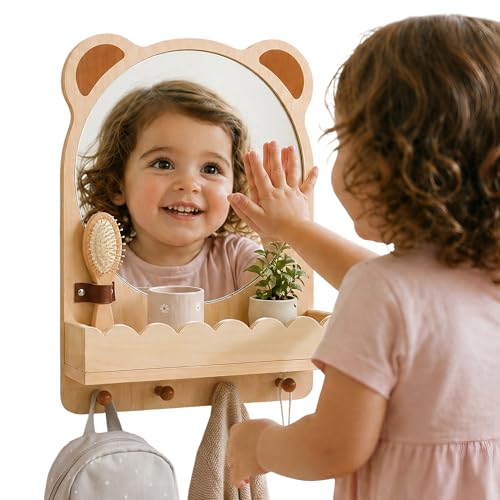
Adena Montessori describes a shatterproof surface, smooth wooden framing, and carefully finished edges. STEPLAY specifies lightweight, impact-resistant acrylic with rounded edges and smooth finishes. Montessori & Me describes an impact- and shatter-resistant acrylic mirror. These details make the framed stations relevant for nurseries, bathrooms, and playrooms.
The tile sets also emphasize non-glass construction, but their viewing behavior can differ from glass. Treat those statements as important specification limits rather than assuming every acrylic mirror will look identical at every distance.
Compare framed stations with mirror tiles
A framed station gives a child one defined place for brushing hair, dressing, or storing small items. Adena Montessori includes a shelf and three hooks, while STEPLAY includes a shelf and hooks. Montessori & Me adds a shelf and four pegs. These features can reduce the need for a separate organizer, but they also make the product deeper and more task-specific than a flat tile.
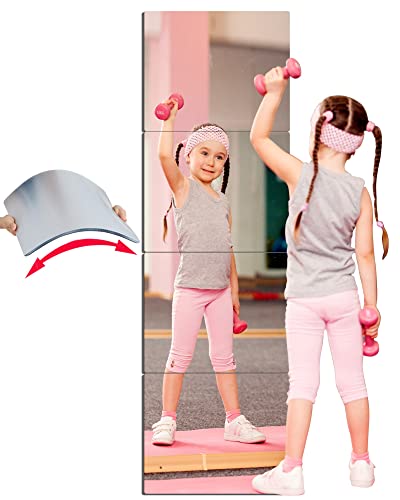
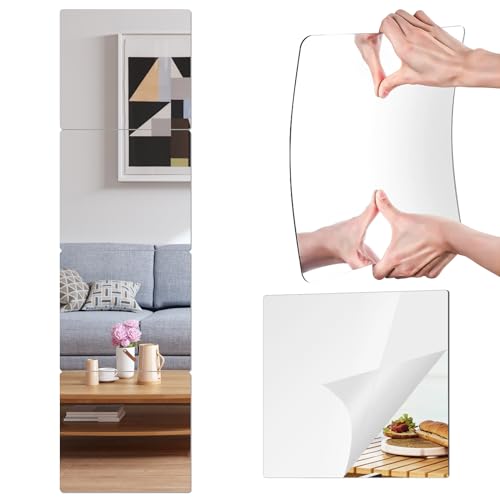
Tile sets provide a different kind of utility. The BQRIS, SHATTER MIRROS, and UNBREAKABL MIRO selections use four 12-by-12-inch pieces to create arrangements about 48 inches tall and 12 inches wide. That layout can be useful for seeing clothing or body position. The 10-inch BQRIS set creates a smaller arrangement, and the NKJVE set uses four 8-inch squares for compact or decorative layouts.
Before selecting tiles, decide whether you want one vertical column, a wider grid, or separate mirrors. Check the dimensions of the intended wall and keep the tiles aligned if the mirror is being used for dressing. Adhesive tile sets do not offer the same built-in storage as the Montessori stations.
Check installation and wall compatibility
Installation is a major distinction in this category. STEPLAY documents two methods: screw mounting for a more permanent setup or adhesive strips for compatible surfaces. Montessori & Me lists screws and anchors along with a drill-free Command Strip option. Adena Montessori states that the appropriate mounting method should be used for the wall, but the supplied listing does not identify the hardware.
Most tile sets use double-sided tape or foam tape. BQRIS, SHATTER MIRROS, UNBREAKABL MIRO, MTIROI, and NKJVE describe installation on clean, dry, smooth, or otherwise compatible surfaces. Several listings caution against wallpaper, damp walls, blistered surfaces, dust-prone walls, or uneven areas.
Prepare the wall according to the listing before attaching any adhesive product. Measure first, clean and dry the surface, and do not assume that a renter-friendly method is suitable for every finish. A screw-mounted station may be preferable when the wall and household setup allow it, while adhesive can be convenient for a lightweight mirror on a compatible surface.
Match size to the child’s routine
A 15- or 16-inch framed mirror is a practical size for a dedicated self-care area, especially when installed at the child’s height. Adena Montessori measures 15 by 11.6 inches, Montessori & Me measures about 15.8 by 11.8 inches, and STEPLAY measures 16 by 12 inches. These are compact enough for a bathroom, nursery, bedroom, entryway, or playroom.
The MYRO Mirror is smaller and narrower at 11.4 by 6.7 inches. Its Cute Dino artwork makes it a decorative choice for a bedroom, locker, or play area, but it is not the most suitable option for full-body viewing. The 8-inch NKJVE tiles are similarly better suited to compact layouts than to a single tall mirror.
For a taller view, four 12-inch tiles offer the most height among the selected products. The B0B15BDVPY, B09XQ321B5, and B09HY4V3W2 listings each describe approximately 48-by-12-inch arrangements. Remember that the final usable viewing result depends on alignment, wall flatness, adhesive placement, and the acrylic’s stated viewing characteristics.
Look for useful integrated features
If the mirror is intended to support independence, storage features may matter as much as reflection. Adena Montessori’s shelf and three hooks can hold grooming items, towels, clothing, or accessories. STEPLAY also combines a shelf with hooks. Montessori & Me offers four pegs, making it a particularly storage-oriented framed station in this selection.
Flat tile mirrors have fewer integrated features, but they are easier to configure around furniture, doors, closets, or a playroom wall. BQRIS and NKJVE support free arrangement, while MTIROI describes DIY splicing. Decorative flexibility is useful when the mirror needs to serve as room decor as well as a practical item.
Final Recommendation
STEPLAY Montessori Mirror with Hooks and Shelf ranks first overall in this specification-based comparison under the published weighted criteria.
STEPLAY Montessori Mirror with Hooks and Shelf is the first overall specification-based choice.
For shoppers comparing the best kids’ wall-mounted mirrors, STEPLAY combines shatterproof acrylic, a shelf, hooks, rounded edges, and two stated installation approaches. Montessori & Me is a close alternative when four pegs and included screws and anchors are priorities. Adena Montessori is another strong self-care station, though its listing does not identify the mounting hardware.
For a taller reflective area, choose the extra-thick 12-inch B0B15BDVPY tiles or the 0.12-inch B09XQ321B5 set, provided the wall is suitable for adhesive mounting. The SHATTER MIRROS set offers a similar 12-inch layout with rounded corners. For smaller or more decorative placements, MYRO is a useful themed option, while NKJVE is the compact tile format.
These top kids’ wall-mounted mirrors should be compared by material, dimensions, installation method, and documented use rather than by volatile marketplace claims. Measure the wall, select a compatible mounting approach, and install the mirror at a height that fits the child’s routine.
Frequently Asked Questions
Are acrylic mirrors appropriate for children’s rooms?
The selected listings describe their mirrors as acrylic, plexiglass, non-glass, impact-resistant, or shatterproof. That construction avoids the glass format described in the listings, but installation still matters. Follow the product instructions, use a compatible wall surface, and secure a framed station or tile set appropriately.
Which best kids’ wall-mounted mirrors are suitable for a full-length arrangement?
The B0B15BDVPY, B09XQ321B5, and B09HY4V3W2 products each document four 12-by-12-inch tiles and an approximately 48-by-12-inch arrangement. The 10-inch BQRIS set offers a smaller layout, while 8-inch NKJVE pieces are more compact. Acrylic reflections may be clearest at the distance specified by the individual listing.
Are adhesive mirror tiles suitable for painted walls?
Some selected listings identify painted or smooth walls as compatible, but others caution against powdery, uneven, damp, or damaged surfaces. Check the wall condition and the product instructions before installation, especially in a rental.
Do Montessori mirror stations include storage?
Yes. Adena Montessori documents a shelf and three hooks, STEPLAY documents a shelf and hooks, and Montessori & Me documents a shelf and four pegs. These features make the stations useful for grooming supplies, towels, clothes, or accessories, but they also make them less flat than adhesive tile mirrors.
What should I check before buying a wall-mounted mirror for a child?
Confirm the mirror material, dimensions, mounting method, wall compatibility, and any stated viewing limits. Also decide whether the child needs a small grooming mirror, a storage station, or a taller tile arrangement. The best kids’ wall-mounted mirrors should fit both the available wall and the intended routine.