Buying Guide
Large baking cups vary substantially even when product titles use the same words. Some are shallow paper liners for oversized muffins, while others are tall tulip wrappers or reusable silicone molds. The best large baking cups are the ones whose documented dimensions, material, and use instructions match your pan and recipe.
Check the bottom diameter first
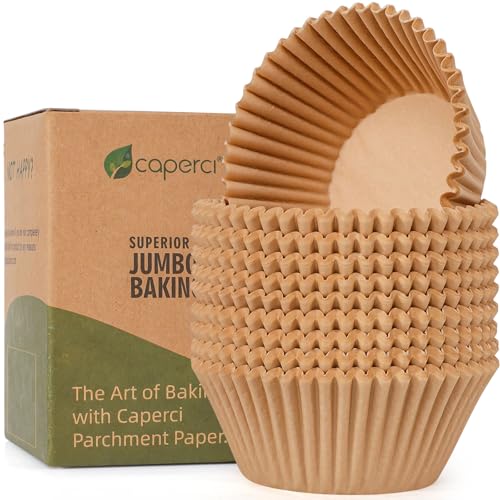
The bottom diameter is usually the most useful fit measurement because it corresponds more closely to the cavity base of a muffin or cupcake pan. Bake Choice’s jumbo parchment liners list a 2.56-inch bottom, while its extra-large tulip version lists a 2.4-inch bottom. Caperci lists a 2.55-inch bottom, and Norpro lists a larger 2.75-inch bottom. These differences are enough to affect whether a cup sits neatly in a cavity or leaves excess space.
Do not rely on the word jumbo alone. The Neyimqr and Bake Choice tulip designs both have roughly 2.4-inch bottoms but extend much higher than conventional liners. Goalfly lists a 3.54-inch bottom but only a 1.57-inch height, making it a different shape from a tall tulip cup. Before buying, compare the listed bottom diameter and height with your pan specifications.
Choose paper, parchment, foil, or silicone
Paper and parchment cups are disposable and convenient for batch baking. Parchment-based options in this comparison include Bake Choice, Caperci, PaperChef, Neyimqr, and Goalfly. Their listings mention features such as grease resistance, non-stick coatings, compostability, or thick paper. These details can help with release and presentation, but they do not make every cup interchangeable.
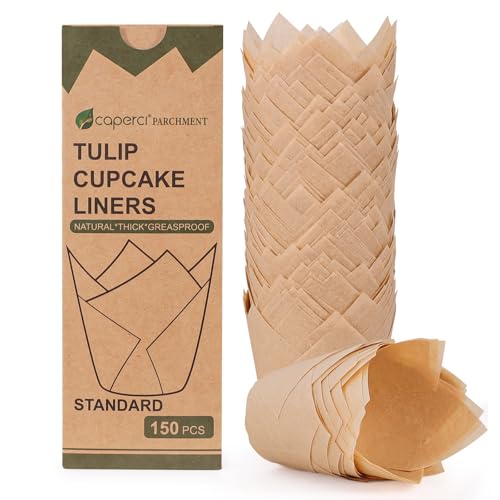
Tulip paper cups create taller walls and a more decorative appearance. Bake Choice and Neyimqr document high points of 3.75 and 3.5 inches respectively. That extra height can be useful for tall cupcakes, but it also means the pan and batter level need closer attention. Neither listing supplies a universal fill rule, so follow the recipe and avoid assuming that a taller wrapper always means a larger safe batter load.
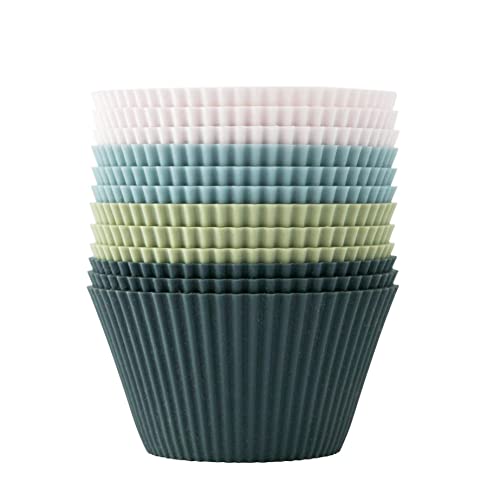
Foil is another documented design type, but the selected products in this list do not include a foil option because the most specification-aligned candidates offered more complete evidence for size, material, or use. Silicone is the main reusable alternative here. Mirenlife, Pharamat, and The Silicone Kitchen list food-grade silicone construction and reusable use. Silicone may be a better fit for repeated baking, while paper or parchment may be more convenient when cleanup and disposal are priorities.
Compare temperature and appliance details
Heat limits are not uniform. Bake Choice states 428°F, Neyimqr states 428°F, PaperChef states 425°F, Caperci states 425°F, and Pharamat lists a range ending at 392°F. The Silicone Kitchen confirms oven, microwave, and freezer compatibility but does not provide a maximum oven temperature in the supplied evidence. Norpro and Goalfly also lack a stated maximum temperature in the listing data.
Use the lowest documented limit that applies to your recipe, and do not treat a general oven-safe statement as a precise temperature rating. Microwave or refrigerator compatibility is also product-specific. Neyimqr lists microwave and refrigerator use, while The Silicone Kitchen lists microwave and freezer use. Those claims should not be generalized to every paper or silicone cup.
Think about release and cleanup
Non-stick or greaseproof wording is useful, but it describes the design rather than guaranteeing a result for every batter. Bake Choice, PaperChef, Caperci, and Neyimqr describe non-stick or clean-release features. Mirenlife describes naturally non-stick silicone, and The Silicone Kitchen lists dishwasher-safe construction. Pharamat also states that its silicone cups can go in a dishwasher.
Disposable cups can reduce washing, but reusable silicone cups shift the work to cleaning and drying. Handles on Mirenlife’s cups may make lifting easier, while The Silicone Kitchen specifically documents freestanding use on a baking sheet. If you plan to bake without a muffin tin, choose only a product whose listing explicitly supports that configuration rather than assuming all silicone cups will stand securely.
Match the pack to your baking frequency
Pack size matters for recurring batches. Caperci and Goalfly list 200 cups, Bake Choice and Neyimqr list 100, and Norpro lists 48. PaperChef lists a two-pack totaling 60 cups. These quantities can be practical for parties or frequent baking, but they do not indicate quality by themselves.
Reusable sets are smaller by design: Mirenlife, Pharamat, and The Silicone Kitchen each list 12 cups. Their value is tied to repeated use rather than a high one-time count. Consider storage, washing, and whether you normally bake one batch or several before choosing between a bulk disposable pack and a reusable set.
Verify the recipe and pan before ordering
Large and jumbo labels are not standardized across every brand. Confirm the pan cavity, cup bottom, height, and recipe portion before ordering. Also check whether the listing gives an actual capacity. Mirenlife lists approximately 7.6 ounces to the rim, and Bake Choice lists a 4-ounce capacity for its extra-large tulip design. Most other entries provide dimensions without a capacity, so avoid converting those measurements into an assumed serving size.
Final Recommendation
The Silicone Kitchen Reusable Jumbo Cups, 12 Pack ranks first overall in this specification-based comparison under the published weighted criteria.
Bake Choice Jumbo Parchment Liners, 100 Count is the highest-scoring specification-based choice among these best large baking cups because it combines precise jumbo dimensions, a documented siliconized parchment design, grease resistance, and a 428°F heat limit. Caperci is a strong alternative for frequent batches because it lists 200 cups and similarly useful jumbo measurements.
For tall presentation, choose Bake Choice Extra Large Tulip Liners or Neyimqr Extra-Large Tulip Liners after checking pan fit. For repeated use, The Silicone Kitchen and Mirenlife provide the clearest reusable designs, with freestanding or handled features respectively. In the broader group of top large baking cups, the right choice depends on whether your priority is exact pan matching, decorative height, bulk quantity, or avoiding disposable liners.
Frequently Asked Questions
Among the best large baking cups, what size pan do large baking cups fit?
There is no single universal size. The selected products list bottom diameters from about 2.4 inches to 2.75 inches, while some also provide top diameters. Compare the cup’s bottom diameter and height with your muffin or cupcake pan before purchasing. A jumbo label alone is not enough to confirm fit.
Are large baking cups reusable?
Paper and parchment cups in this comparison are disposable. Mirenlife, Pharamat, and The Silicone Kitchen list reusable silicone construction. Their pack sizes are smaller than bulk paper packs, but they are designed for repeated baking. Check the individual care instructions; Pharamat and The Silicone Kitchen list dishwasher compatibility, while Mirenlife’s supplied evidence emphasizes non-stick cleaning rather than a dishwasher claim.
Can large baking cups be used without a muffin pan?
The Silicone Kitchen explicitly states that its cups can be used freestanding on a baking sheet. Other products should be used only in the configuration supported by their listing and by your recipe. Do not assume that a paper liner or every silicone mold will hold its shape without pan support.
What temperature can large baking cups handle?
The documented limits vary. Bake Choice and Neyimqr list 428°F, PaperChef and Caperci list 425°F, and Pharamat lists a range ending at 392°F. Several listings do not provide a precise maximum. Always follow the temperature information for the specific product you select rather than applying one limit to the entire category.
Are tall tulip cups better for cupcakes?
Tall tulip cups are useful when you want a high-wall, decorative presentation. Bake Choice and Neyimqr document tulip designs with maximum heights above three inches. They may not fit every pan or recipe in the same way as a conventional liner, so check the bottom diameter, depth, and recipe instructions before filling them.