Buying Guide
Choosing the best led outdoor deck lights starts with the deck’s wiring, mounting surface, and intended role. Some products are wired low-voltage fixtures designed for a transformer and consistent power. Others are solar step or fence lights that avoid wiring but depend on direct sunlight. Recessed kits create a low-profile appearance, while surface-mounted lights can be added without cutting large openings.
Wired or solar power
Wired low-voltage lights are useful when a transformer and cable route are already part of the project. LEONLITE and CLOUDY BAY suit projects where consistent power and planned cable routing are acceptable. These products can fit placement along posts, railings, or steps, but the power source and cable routing must be planned unless the listing says otherwise.
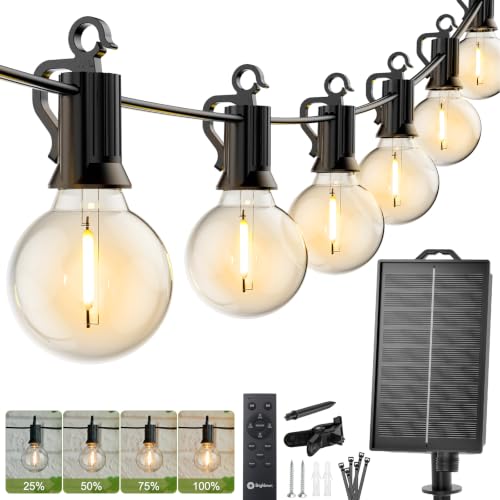
Solar lights are easier to place where running cable would be inconvenient. NIORSUN, GIGALUMI, VOLISUN, and BKBB PPBB describe automatic solar operation. Install solar panels where they can receive direct sunlight; listings indicate that charging and runtime depend on available sun. Shade, seasonal daylight, and weather can affect nighttime output. Solar is convenient for retrofit work, but wired lighting may be preferable where consistent operation matters more than avoiding cables.
Recessed versus surface mounting
Recessed lights sit inside drilled openings and can provide a discreet line of illumination across steps or flooring. JUABREY, SMY Lighting, and HIBOITEC document recessed designs. Their listings describe drilling, inserting the lights, and connecting the cables. Measure the light diameter and required cutout before drilling. SMY Lighting lists a 30mm cutout with its protective shell, while JUABREY describes lights measuring 1.26 inches across. HIBOITEC also requires attention to hole size and spacing.
Surface-mounted lights generally place fewer demands on the deck structure. LEONLITE and CLOUDY BAY include mounting hardware, making them suitable for rails, fences, posts, and stair faces. Solar models commonly use screws, adhesive, or both. Adhesive can be useful for a quick installation, while screw mounting may be suitable when the surface and product design support it. Check the deck material and keep fixtures clear of walking surfaces.
Weather protection and construction
Compare the documented ingress rating rather than treating every outdoor light as equally protected. JUABREY, SMY Lighting, and HIBOITEC specify IP67, while NIORSUN specifies IP65. VOLISUN lists IP44. Other selected products describe weather-resistant construction with different levels of technical detail. These ratings are useful comparison points, but they do not remove the need to follow placement and installation instructions.
Construction materials can affect visual fit and the stated durability features. LEONLITE and CLOUDY BAY use die-cast or aluminum housings. JUABREY, SMY Lighting, and HIBOITEC describe 304 stainless steel components in their recessed designs. Several solar options use ABS shells, while XLUX specifies stainless steel housing. A metal finish may suit a structured railing installation, whereas a compact ABS fixture can be less visually prominent.
Brightness and color
Do not compare brightness solely by pack count. NIORSUN lists 60 lumens per light, VOLISUN lists 40 lumens per light, and LEONLITE lists 180 lumens per light. Those figures come from the product listings and are not a direct test comparison because fixture design, lensing, placement, and viewing distance also affect perceived light.
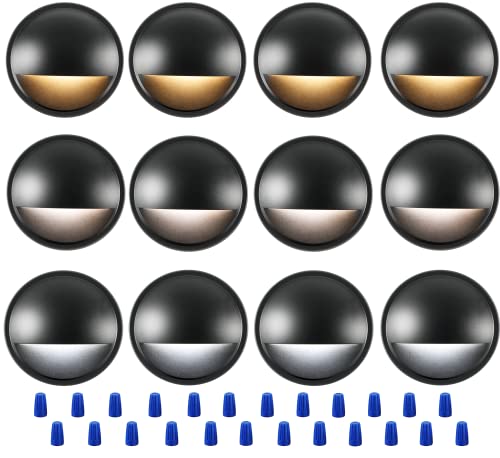
Color control is another distinction. LEONLITE offers five selectable color temperatures, including an 1800K candlelight-style option. CLOUDY BAY offers 2700K, 3500K, and 5000K settings. JUABREY and SMY Lighting use warm-white lighting but add brightness adjustment, timers, photocells, and memory functions. The remaining selected solar products generally emphasize automatic warm-white operation rather than user adjustment.
Timers, sensors, and maintenance
Automatic operation reduces the need to switch lights manually. Solar products in this comparison use light sensors to turn on at night. JUABREY and SMY Lighting add more detailed controls: photocell operation, timer settings, dimming, and memory. These features may be useful when the deck is used at different times or when a softer glow is preferred late at night.
Wired systems require attention to transformer compatibility, connector placement, and cable protection. Recessed systems require accurate drilling and spacing. Solar systems require panel exposure and occasional cleaning of the panel surface. Product listings provide different warranty periods, so review the coverage before purchase and keep installation records where appropriate.
How to choose pack size
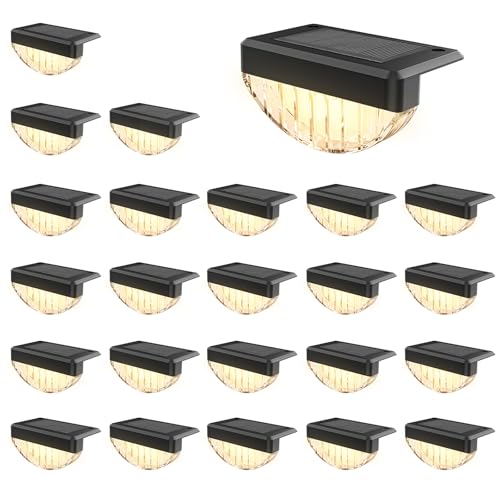
Count the locations that need light, then account for spacing and the visual effect you want. A six-pack such as XLUX suits a short stair run or a few accent points. Twelve-light options such as LEONLITE, CLOUDY BAY, and NIORSUN can cover a moderate area depending on spacing. JUABREY and SMY Lighting provide 20 lights, while VOLISUN supplies 24 solar lights for broader distribution.
A higher count is not automatically better. Closely spaced lights may create a brighter, more continuous line, while wider spacing can create separate pools of light. For recessed products, also confirm that the deck can accommodate the required holes and that the wiring path reaches every intended fixture.
Final recommendation
JUABREY 20-Pack Dimmable Recessed Deck Lights ranks first overall in this specification-based comparison under the published weighted criteria.
JUABREY 20-Pack Dimmable Recessed Deck Lights is the first specification-based choice among these best led outdoor deck lights. Its combination of IP67 construction, 20 lights, a transformer, photocell, timer, dimming, and memory makes it a feature-rich option for a planned recessed installation.
Choose SMY Lighting if detachable parallel wiring and similar control features suit your layout. LEONLITE is a wired surface-mount alternative for shoppers who want five color temperatures and a stated 180-lumen output. CLOUDY BAY is simpler and supports a broad low-voltage input range.
For wire-free installation, NIORSUN offers a documented 60-lumen output and IP65 protection, while VOLISUN suits large perimeters because of its 24-light format. GIGALUMI is a compact solar accent choice. BKBB PPBB suits broader solar layouts with its 20-light package, while XLUX uses stainless steel housing for smaller accent installations. These are practical ways to narrow the top led outdoor deck lights by installation conditions rather than by a single ranking.
Frequently Asked Questions
Are the best led outdoor deck lights wired or solar-powered?
Both types can work well. Wired options such as LEONLITE and CLOUDY BAY use low-voltage systems and suit projects where consistent power and planned cable routing are acceptable. Solar models such as NIORSUN and BKBB PPBB avoid wiring but need direct sunlight for charging. Choose based on the deck’s existing infrastructure, shade, and installation access.
Do recessed deck lights require drilling?
Yes. JUABREY, SMY Lighting, and HIBOITEC describe recessed installations that involve drilling holes before inserting the lights and connecting cables. Confirm the specified light dimensions, cutout size, and spacing before making openings. Surface-mounted wired and solar products can avoid this type of deck modification.
What IP rating should I look for in outdoor deck lights?
A higher documented IP rating generally indicates more protection against dust and water entry, but installation still matters. JUABREY, SMY Lighting, and HIBOITEC list IP67, while NIORSUN lists IP65 and VOLISUN lists IP44. Compare the rating with the fixture’s planned exposure and follow the manufacturer’s placement instructions.
Can deck lights be dimmed or scheduled?
Some can. JUABREY and SMY Lighting document dimming, timer settings, photocell operation, and memory functions. LEONLITE and CLOUDY BAY focus on selectable color temperature instead. The selected solar lights generally provide automatic dusk-to-dawn operation, but their listings do not document the same dimming and timer controls.
How many deck lights do I need?
Start by measuring the railing, stair run, or deck edge and marking the desired light positions. Six-light packs fit smaller areas, while 12-, 16-, 20-, and 24-light packs can cover larger layouts. Recessed installations also need adequate spacing for drilled openings and wiring. Use the pack count as a planning reference, not as a guarantee of uniform coverage.