Buying Guide
Choosing best led path lights starts with the power system, not the appearance. The products in this comparison fall into two practical groups: solar fixtures that charge during the day and wired low-voltage fixtures that connect to a 12V or 12-24V landscape system. Solar models are usually easier to place because they do not need a transformer, cable, or wiring route. Wired models are better suited to a permanent system where the transformer and cable can be planned with the landscape.
Solar or low-voltage power
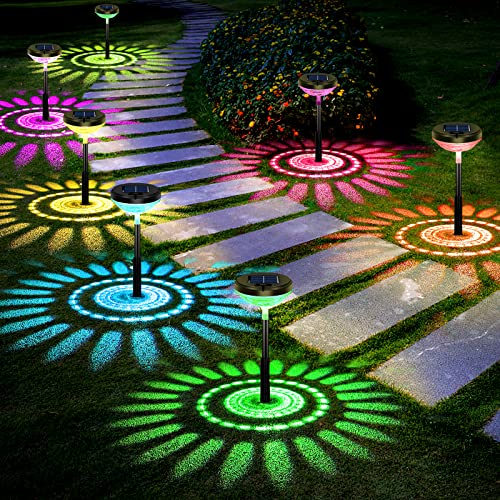
Solar path lights contain their own panel and rechargeable battery. That makes installation simple: assemble the fixture, switch it on, and stake it where the panel receives sunlight. The ELECLINK, Ahaorigin, DOESLAG, Nupostai, and Bobcat Lighting models all document solar operation and automatic lighting behavior. Their practical limitation is that charging and nighttime operation depend on the amount of usable sunlight. A shaded garden, winter conditions, or a panel facing away from the sun may reduce the available charge.
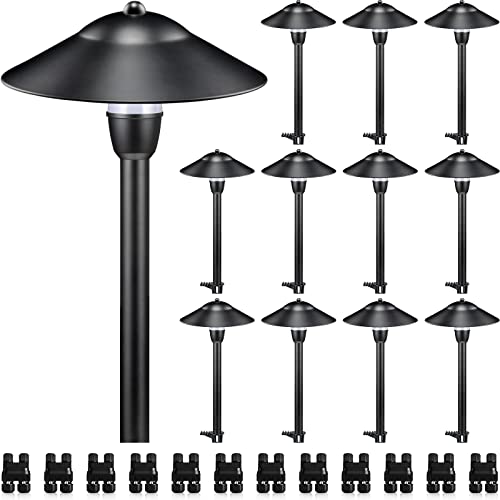
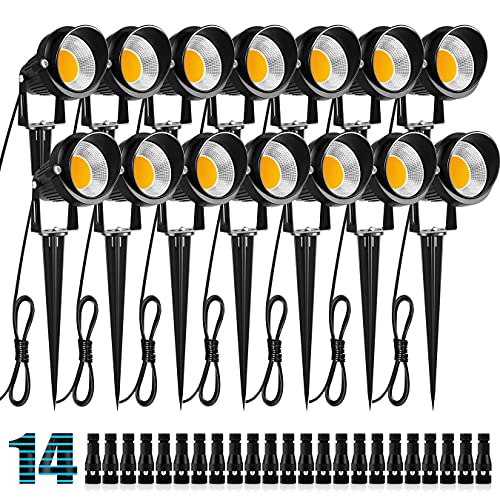
Low-voltage fixtures connect to an existing landscape-lighting system. The SUNVIE, LEONLITE, PARTPHONER, and SUNVIE mixed kit document 12V or 12-24V compatibility. These lights do not depend on daylight for charging, but several listings state that the transformer and main cable are not included. Check the system voltage, connector type, cable route, and transformer capacity before ordering. The low-voltage category also makes more sense when you want a consistent schedule or plan to combine path lights with spotlights.
Light output and beam shape
Published light measurements are not uniform across listings, so avoid treating LED count as a direct substitute for lumens. The Bobcat Lighting set lists up to 300 lumens per light, while the SUNVIE models list 150 lumens per light. Other products emphasize a larger lens, a spotlight optic, or a decorative pattern without giving a lumen figure.
Beam direction matters as much as the headline output. Downward designs can reduce glare and place light on the walking surface. The SUNVIE 12-pack documents 360-degree downward light, and the SUNVIE 3W model documents downward, double-sided illumination. Bobcat Lighting uses an angled internal LED arrangement, while Ahaorigin uses a spotlight-optic lampshade. Choose a wider downward pattern for general path guidance and a more concentrated optic when you want to emphasize a defined edge or feature.
Color temperature and visual character
Color temperature changes the mood and the way planting and hardscape appear. The 3000K options from SUNVIE and DOESLAG provide a warm-white appearance. Bobcat Lighting adds a choice between 3000K warm white and 5000K daylight. Nupostai provides multicolor and warm-white modes for a more decorative installation. LEONLITE offers the broadest documented range, from 1800K candle-like warmth through 5000K daylight.
For a uniform walkway, use the same color temperature throughout the route. If the lights are near a porch or exterior wall, compare their color with the existing fixtures before installing a full set. A selectable model offers flexibility, but a fixed-color set can be simpler when the desired appearance is already clear.
Weather protection and materials
Look for an IP rating and a housing material rather than relying only on general outdoor wording. IP65 appears on the SUNVIE, LEONLITE, Ahaorigin, and ELECLINK listings. Nupostai documents IP67, which is a higher stated protection level than IP65. Solar products also use different materials: Ahaorigin and ELECLINK specify ABS construction, while some other listings describe stainless steel or reinforced components.
Wired selections commonly use aluminum housings. Materials affect appearance, stake design, and resistance claims, but they do not replace careful placement. Avoid locations where mower traffic, standing water, or loose soil could stress the fixture.
Installation details and placement
Solar fixtures are generally staked into soil after assembly, and several selected products state that no tools or wiring are required. Nupostai adds a flat-table placement option, while ELECLINK, Ahaorigin, and DOESLAG document adjustable or taller configurations. Before pushing a stake into hard soil, loosen the ground as directed by the product listing. This reduces the chance of stressing the stake during installation.
For wired lights, measure the route before purchasing. The SUNVIE and LEONLITE listings include connectors or wire leads, but they still require a compatible transformer and cable in the broader system. Place fixtures far enough from the path edge to avoid foot traffic while keeping the beam directed toward the walking surface. Space the lights consistently when the goal is an even border; use varied spacing only when a deliberately decorative layout is intended.
Pack size, bulbs, and maintenance
Pack size affects both coverage and visual consistency. Twelve-light sets are useful for longer walks or broad borders, while four- and six-light sets can suit a short entrance or a small garden. A larger pack is not automatically better if the route is short or the fixtures would be crowded.
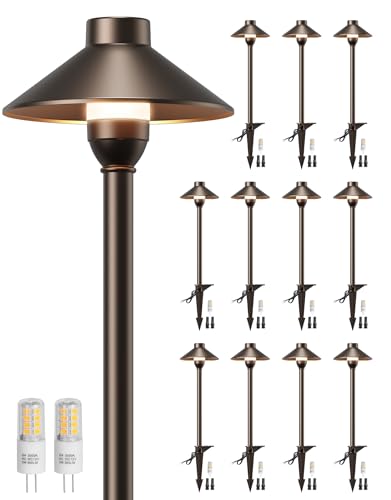
Integrated LEDs reduce the need for routine bulb changes, but a failed fixture may require replacement of the whole unit. PARTPHONER takes a different approach with replaceable G4 LED bulbs. That design may be preferable when future bulb replacement or light-source changes are important. Confirm the bulb type and power requirements before substituting any compatible source.
Solar models need clear access to daylight and clean panels. Wired models need secure connections and a suitable transformer. These are basic installation considerations, but they are more useful than relying on volatile marketplace claims. This comparison uses only the supplied public listing specifications; it does not represent hands-on brightness, durability, or runtime testing.
Final Recommendation
ELECLINK Larger-Lens Solar Path Lights, 12 Pack ranks first overall in this specification-based comparison under the published weighted criteria.
SUNVIE 3W Low Voltage Pathway Lights, 12 Pack is the first overall specification-based choice among these best led path lights because it combines documented 150-lumen output, CRI 90+, downward distribution, IP65 aluminum construction, 12-24V compatibility, and included connectors. It is the most specification-aligned fit when an existing low-voltage system is available and consistent warm path lighting is the priority.
For a solar installation, ELECLINK Larger-Lens Solar Path Lights, 12 Pack is the most broadly useful option for a longer route, with a larger lens, monocrystalline panels, an 800? battery? No, the supplied listing specifies a 600mAh battery, up to 12 hours of stated runtime, IP65 protection, and adjustable height. Bobcat Lighting is the better targeted choice when the documented 300-lumen figure and dual color modes matter more than pack size. Nupostai is the better decorative choice when multicolor modes, IP67 protection, and flexible placement are priorities.
Among the top led path lights, the right choice depends on infrastructure. Select a wired SUNVIE or LEONLITE model for a permanent low-voltage plan, PARTPHONER for replaceable bulbs, and a solar set when trenching and transformer installation are not practical. Recheck included components, voltage, dimensions, and current listing specifications before purchase.
Frequently Asked Questions
Are solar or wired fixtures better for a walkway?
Neither type is universally better. Solar fixtures are easier to install and can be placed without a cable, but their charge depends on sunlight. Wired low-voltage fixtures provide a defined system connection and do not rely on a daytime solar charge, but they require compatible power equipment. Choose based on the site, existing infrastructure, and desired installation effort.
What brightness should I look for in best led path lights?
Use published lumens when available, but also examine beam direction. Bobcat Lighting lists up to 300 lumens per light, and the SUNVIE models list 150 lumens. A downward or angled design may place light more usefully on a path than a fixture with a similar LED count but no documented distribution. The listings do not establish a universal lumen requirement for every walkway.
What does IP65 or IP67 mean for path lights?
They are ingress-protection ratings supplied in the product listings. IP65 is documented for several selected wired and solar products, while Nupostai lists IP67. A higher rating can be a useful specification for exposed placement, but installation still matters. Keep fixtures stable, follow the product directions, and avoid treating the rating as a guarantee against every site condition.
Not always. The SUNVIE, LEONLITE, and PARTPHONER listings state that a transformer and/or main cable are not included. Check the package contents and match the fixture voltage to the transformer before installation. Connectors or short fixture leads do not necessarily provide the complete power system.
Are replaceable-bulb fixtures worth considering?
They can be useful when future bulb replacement or light-source changes are important. PARTPHONER documents replaceable G4 LED bulbs, while many other selected models use integrated LEDs. Replaceable bulbs may simplify maintenance, but confirm the correct bulb type, voltage, and recommended wattage before making a substitution.