Buying Guide
Liquid ibuprofen is available in two substantially different formats: pourable oral suspensions and liquid-filled capsules. The best liquid ibuprofen for one person may be unsuitable for another because concentration, age labeling, and administration method vary. Start by identifying whether the product is intended for an infant, a child, or an adult or older teen.
Children’s suspensions are pourable liquids measured in milliliters. The selected pediatric products commonly specify 100 mg per 5 mL, while the infant products use a more concentrated 50 mg per 1.25 mL format. Adult products in this comparison contain liquid inside softgels or liqui-gels, usually at 200 mg per capsule. These are not interchangeable formats, so read the package directions rather than estimating an equivalent volume or capsule amount.
A suspension can be useful when a child cannot swallow a capsule. The Children’s Motrin Oral Suspension includes a measuring cup, while the Amazon Basic Care Children’s Ibuprofen Oral Suspension and GoodSense Children’s Ibuprofen Oral Suspension document the liquid concentration but do not identify a dosing device in the supplied listing data. The Children’s Advil suspension is a smaller 4-fluid-ounce option and documents a weight-based dosing instruction interval.
Match the product to the labeled age group
The selected children’s products identify ages 2 to 11. The Amazon Basic Care Infants’ Ibuprofen Concentrated Drops and Motrin Infants’ Concentrated Drops identify ages 6 to 23 months. The adult liquid-gel products identify adults and, in several listings, children 12 years and older.
Age labeling is one of the most important differences in this category. Infant drops use a concentrated volume and should be used only with the enclosed or specified syringe. A children’s 100-mg-per-5-mL suspension should not be treated as the same product as an infant 50-mg-per-1.25-mL dropper formula. For a child outside the stated range, ask a healthcare professional which formulation and dose are appropriate.
Compare concentration and measuring details
Dose concentration clarity helps prevent confusion between products. Children’s Motrin, Amazon Basic Care, and GoodSense each state 100 mg per 5 mL. Children’s Advil identifies 200 mg per 10 mL in the supplied evidence. The two infant products state 50 mg per 1.25 mL. Adult softgels and liqui-gels identify 200 mg per capsule.
The measuring device matters for pourable products. Both infant selections document a syringe, and Motrin Infants’ Concentrated Drops specifically describes markings on that syringe. Children’s Motrin documents a measuring cup. When a listing does not identify a device, check the package before use and use an appropriate medicine-measuring tool rather than a household spoon.
Several selected suspensions document dye-free characteristics, and some also identify alcohol-free or gluten-free formulations. Children’s Advil adds a sugar-free specification. Amazon Basic Care Children’s Ibuprofen and GoodSense Children’s Ibuprofen describe non-staining berry formulations, while the infant options identify berry flavor and dye-free characteristics.
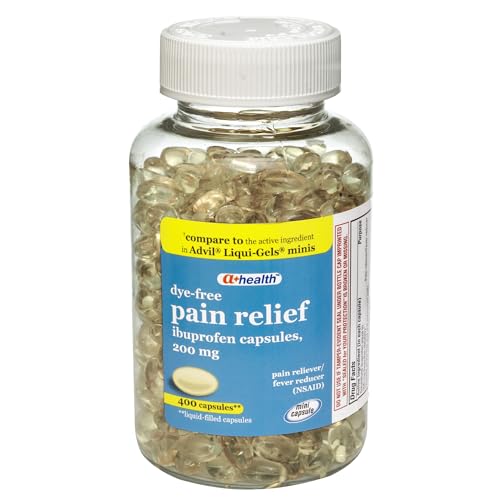
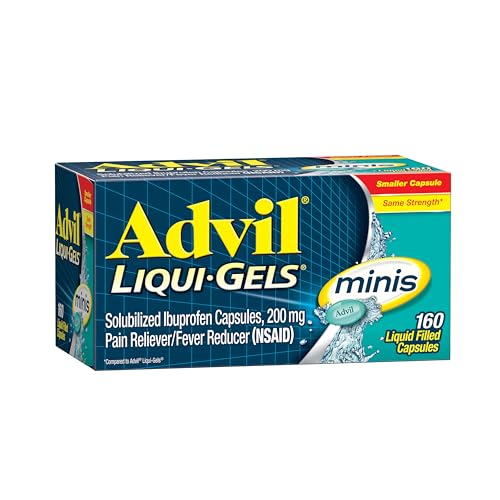
The adult capsule group offers different design choices. Good Sense Mini Liquid-Gels, Advil Liqui-Gels Minis, and A+Health Mini Softgels all document smaller capsule formats. A+Health specifically identifies a dye-free formulation. Motrin IB Liquid Gels uses a standard liquid-gel capsule format. These details can help narrow the format, but they do not replace reading the complete ingredient panel and label directions.
The listings describe ibuprofen as a pain reliever and fever reducer. Pediatric suspensions document common cold, flu, sore throat, headache, toothache, and teething-related uses. Adult liquid-gel listings include headache, backache, menstrual cramps, muscular aches, minor arthritis pain, toothache, and cold-related aches.
The use-case lists are product-description evidence, not a diagnosis or treatment recommendation. Follow the individual package label, including age, dose, frequency, and maximum-use instructions. Ask a healthcare professional or pharmacist if the person taking the medicine has a medical condition, uses other medicines, or needs advice about an infant or child.
Look for practical package details
Bottle size and count affect how the format fits a medicine cabinet or travel kit, but they should be considered after the active ingredient and age group. Pediatric bottles in this comparison range from 4 fluid ounces to 8 fluid ounces, while infant concentrated drops are supplied in 1-fluid-ounce bottles. Adult capsule counts range from 80 to 400 units across the selected products.
A child-resistant cap appears in the Amazon Basic Care children’s and infant listings. Measuring devices appear in the Motrin products and the Amazon Basic Care infant drops. Mini softgels and mini liqui-gels may be preferable for someone who has difficulty with standard-size capsules, although the evidence only describes their dimensions relative to regular softgels and does not establish swallowing results for every user.
Final Recommendation
Amazon Basic Care Infants’ Ibuprofen Concentrated Drops ranks first overall in this specification-based comparison under the published weighted criteria.
The final choice among the best liquid ibuprofen depends on the documented features that match your intended use.
Children’s Motrin Oral Suspension 100 mg/5 mL is the highest-scoring returned product and the first overall specification-based choice. It has a clearly stated concentration, a supplied measuring cup, a defined 2-to-11 age range, and dye-free and alcohol-free formulation details. For infants, Motrin Infants’ Concentrated Drops and Amazon Basic Care Infants’ Ibuprofen Concentrated Drops provide clearly documented 50-mg-per-1.25-mL formats with syringes. For adults or older teens who prefer capsules, Advil Liqui-Gels Minis and A+Health Mini Softgels document smaller designs, while Motrin IB Liquid Gels provides a standard 200-mg liquid-gel format. These top liquid ibuprofen selections should still be used only according to their individual labels.
Frequently Asked Questions
What is the best liquid ibuprofen for children?
Children’s Motrin Oral Suspension is the highest-ranked children’s option in this comparison because its 100-mg-per-5-mL concentration, measuring cup, age range, and formulation details are all clearly documented. Amazon Basic Care Children’s Ibuprofen and GoodSense Children’s Ibuprofen use the same stated concentration and also document berry, dye-free formulations. Choose based on the label, age, and any formulation preferences rather than assuming that similarly named products have identical instructions.
Are infant drops the same as children’s liquid ibuprofen?
No. The selected infant drops state 50 mg per 1.25 mL and are labeled for ages 6 to 23 months, while the selected children’s suspensions generally state 100 mg per 5 mL and are labeled for ages 2 to 11. The concentrations and measuring volumes differ. Use only the dosing device and directions supplied for the specific product.
Do liquid gels count as liquid ibuprofen?
They contain liquid-filled ibuprofen inside a capsule, but they are not pourable suspensions. Motrin IB Liquid Gels, Advil Liqui-Gels Minis, Good Sense Mini Liquid-Gels, and A+Health Mini Softgels all document 200 mg of ibuprofen per capsule. This format may suit people who prefer capsules, while a suspension may be more appropriate when liquid measurement is required.
Multiple selected products do. The children’s and infant suspensions from Amazon Basic Care document dye-free characteristics, Children’s Motrin and Motrin Infants’ Concentrated Drops identify dye-free formulations, Children’s Advil is dye-free and sugar-free, and A+Health Mini Softgels are explicitly dye-free. Always check the current package label for the complete ingredient information.
What should be checked before using liquid ibuprofen?
Check the active-ingredient concentration, labeled age group, measuring device, dose interval, and maximum directions on the package. Do not substitute a household spoon for a marked medicine device. For infants, children outside the stated age range, or anyone with questions about other medicines or health conditions, consult a pharmacist or healthcare professional before use.