Buying Guide
The best liquid milk thistle supplements are not identical tinctures. Public listings describe different extract amounts, standardization claims, serving volumes, companion herbs, bases, and bottle durations. This comparison therefore focuses on specifications that can be checked before choosing: what form of milk thistle is named, how much detail the label supplies, how the liquid is directed to be used, which dietary attributes are documented, and whether the bottle’s stated supply is clear.
Look first for the botanical source and extract description. Herb Pharm identifies USDA Organic Silybum marianum seed and describes a double-extraction process. MaryRuth’s also names organic milk thistle seed, while Nature’s Answer identifies Silybum marianum and states a 2,000 mg extract amount. These details are more useful than a broad claim that a product supports liver health because they tell you what the listing actually specifies.
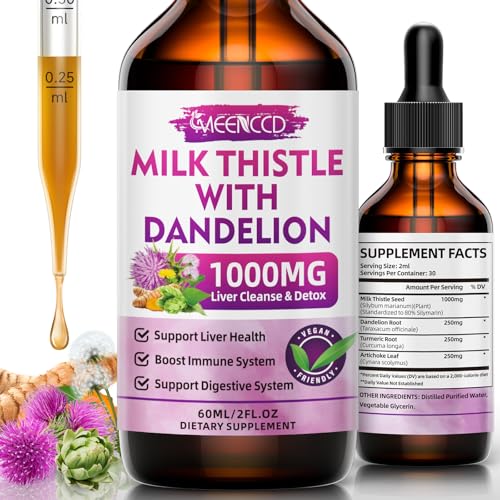
Some products provide standardization information. Biduka states 80% silymarin and 1,280 mg per serving. OASIS FORCE states at least 70% silymarin and 1,000 mg of milk thistle extract per serving. Other selected products mention silymarin without giving a percentage. A percentage, ratio, or serving amount can make labels easier to compare, but the figures should not be treated as interchangeable: an extract ratio, total extract weight, and silymarin amount describe different parts of a formula.
A single-herb design may be preferable when you want the milk thistle listing to remain easy to interpret. Herb Pharm and Double Wood provide relatively focused milk thistle profiles. Nature’s Answer also centers its listing on milk thistle. A focused formula can simplify ingredient screening, especially when you already use other herbal products.
Blended formulas take a different approach. OASIS FORCE adds dandelion, artichoke, turmeric, schisandra, and L-glutathione. Biduka includes dandelion and artichoke plus an additional herbal blend. These products may appeal to shoppers who specifically want several botanicals in one liquid, but the added ingredients create more label considerations. Clean formulas are not necessarily single-ingredient formulas, so read the complete ingredient panel rather than relying on the product name.
Compare serving instructions carefully
Liquid products can use drop counts, milliliters, dropperfuls, or a stated number of daily servings. MaryRuth’s gives guidance of up to 30 drops, or 1 mL, one to three times per day. Vimergy specifies 2 mL, approximately 44 to 48 drops, and lists 57 servings. MEENCCD gives a 2 mL once-daily direction, while Biduka also lists 2 mL daily and 30 servings. These instructions are not equivalent, even when two bottles have the same fluid volume.
A clearly stated serving can make a routine easier to plan. It can also show why bottle duration varies. Wild & Organic lists 168 servings and a 56-day supply when used three times daily. Herb Pharm lists up to 42 servings from 1 ounce. When the listing gives a range or an optional frequency, the actual duration depends on how the directions are followed. Follow the product label rather than combining directions from different brands.
Review the liquid base and dietary profile
Vegetable glycerin and purified water appear in several selected formulas. MaryRuth’s lists organic glycerin and purified water alongside milk thistle. Wild & Organic describes a glycerin-based, alcohol-free tincture, and Vimergy identifies organic flax glycerin. Herb Pharm states that its product is vegan, non-GMO, sugar-free, and gluten-free.
Dietary claims vary, so match them to your own screening needs. Nature’s Answer lists alcohol-free, gluten-free, non-GMO, and kosher attributes. Biduka documents vegan, gluten-free, and GMO-free positioning. MaryRuth’s adds dairy-free, nut-free, and GMP-facility information. These statements can help narrow a selection, but they do not replace checking the current package label for ingredients, allergens, and directions.
Bottle size is only useful when considered with the stated serving. Vimergy’s 115 mL bottle lists 57 servings, while Wild & Organic’s 4-ounce bottle lists 168 servings. Several selected products use 1- or 2-ounce bottles with 30 or more listed servings. A smaller bottle may be easier to store or carry, whereas a larger bottle may reduce how often you need to replace it. The supplied listing data does not establish how long an opened bottle remains suitable, so follow the manufacturer’s storage instructions.
A dropper format can help with measured liquid use, but drop counts are approximate when the label says so. MaryRuth’s and Vimergy provide both volume and drop-related information, which makes their directions easier to interpret. If a product gives only a general instruction, do not infer a precise serving from another product’s dropper.
Read combination claims with care
Many liquid milk thistle products use wellness language involving liver function, digestion, detoxification, or antioxidant support. Those statements are supplied listing claims, not findings from this comparison. This guide does not independently test absorption, potency, taste, or health outcomes. It also does not determine whether any product is appropriate for a medical condition or alongside medication.
For that reason, compare the label structure rather than selecting a bottle based on the broadest benefit language. A product with a clearly stated extract, serving, base, and bottle supply offers stronger purchasing information than one that makes extensive claims but leaves those details unclear.
How this list was assembled
The list uses public listing titles, feature statements, and technical specifications. Eligible products had to independently qualify as liquid milk thistle supplements; accessories and unrelated items were not included. Products with non-empty identical parent identifiers were treated as one product, and exactly one ASIN was selected from each distinct parent group. The editorial criteria are ingredient and extract detail, formula design, liquid-use guidance, dietary and additive information, and bottle-supply clarity. This is a specification-based comparison, not a hands-on test or customer-opinion summary.
Final Recommendation
Biduka Milk Thistle Liquid Drops ranks first overall in this specification-based comparison under the published weighted criteria.
The final choice among the best liquid milk thistle supplements depends on the documented features that match your intended use.
Herb Pharm Milk Thistle Liquid Extract is the highest-scoring returned product and the first overall specification-based choice. Its organic whole-seed source, double-extraction description, dietary attributes, and stated serving capacity provide an unusually complete label profile.
Among the top liquid milk thistle supplements, Nature’s Answer is a strong fit when a stated 2,000 mg extract amount and alcohol-free format matter most. MaryRuth’s is particularly practical for people who want detailed drop instructions and a simple organic glycerin formula. Vimergy suits shoppers who prefer a larger bottle with a measured 2 mL serving, while Biduka is the clearest option for comparing an 80% silymarin claim.
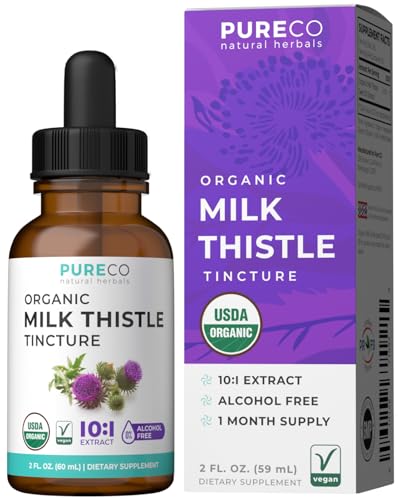
Choose OASIS FORCE when a multi-herb formula is intentional, PURE CO when a 10:1 organic extract ratio is the deciding specification, and MEENCCD when a once-daily 2 mL direction is useful. Double Wood offers a compact organic option with a stated 108 mg serving, while Wild & Organic emphasizes bottle capacity and a long listed supply. Before use, compare the current label with your dietary requirements and ask a qualified health professional about personal suitability.
Frequently Asked Questions
What should I compare in the best liquid milk thistle supplements?
Start with the named plant material, extract amount, silymarin percentage or ratio when provided, serving volume, and complete ingredient list. Then check whether the bottle supply is stated clearly and whether the documented base and dietary attributes match your needs. These specifications are more useful for a label comparison than broad wellness wording alone.
Is a higher milligram amount always a better choice?
Not necessarily. The listings use different ways to describe extracts, including total extract weight, extract ratios, and silymarin percentages. A product stating 1,280 mg and 80% silymarin is not directly comparable to one stating 110 mg of extract without a percentage. Compare like-for-like label details and follow the manufacturer’s serving directions.
Are alcohol-free liquid products available?
Yes. Nature’s Answer, MaryRuth’s, OASIS FORCE, PURE CO, Double Wood, and Wild & Organic all document alcohol-free formats in the supplied evidence. The exact base differs, with several products listing glycerin and purified water. Always check the current ingredient panel if avoiding a particular substance is important.
Should I choose a single-ingredient or multi-herb liquid?
A single-herb product may be easier to interpret and screen alongside other supplements. A multi-herb formula may be suitable when you specifically want ingredients such as dandelion, artichoke, turmeric, or schisandra together. OASIS FORCE and Biduka document those kinds of combinations, while Herb Pharm and Double Wood provide more focused milk thistle profiles.
How should I use liquid drops?
Use only the serving method and frequency stated on the product label. Directions in this comparison range from measured 1 mL or 2 mL servings to approximate drop counts and variable daily frequency. Do not substitute another product’s dropper size or combine instructions. If you have a health condition, take medication, or are unsure about an herbal supplement, consult a qualified health professional before use.