Buying Guide
Choosing the best locking c-clamps starts with the shape and size of the workpiece, not simply the overall length of the tool. A locking C-clamp uses an adjustable screw and locking plier mechanism to hold material while you work, but useful capacity depends on jaw opening, throat depth, pad design, and adjustment control. These products are compared from public listing specifications and features; they were not hands-on tested.
Match clamp size to the work
Six-inch models are easier to position in crowded work areas. The IRWIN 6-Inch Locking C-Clamp lists up to a 2-inch jaw adjustment and a 1.5-inch throat depth. Klein Tools 38620, ARROW, WORKPRO, SK 6-Inch, and IRWIN 6-Inch Swivel-Pad models also fit the compact category.
An 11-inch clamp is a better starting point when a workpiece needs more clearance. The IRWIN Vise-Grip 11-Inch Swivel-Pad C-Clamp, SK 11-Inch, URASISTO 11-Inch, and MAXPOWER 11-Inch provide larger frames. MAXPOWER lists a 3.4-inch maximum opening and 2.4-inch jaw depth. Check each listing against the material because nominal tool length does not establish identical capacity.
Choose swivel pads for changing surfaces
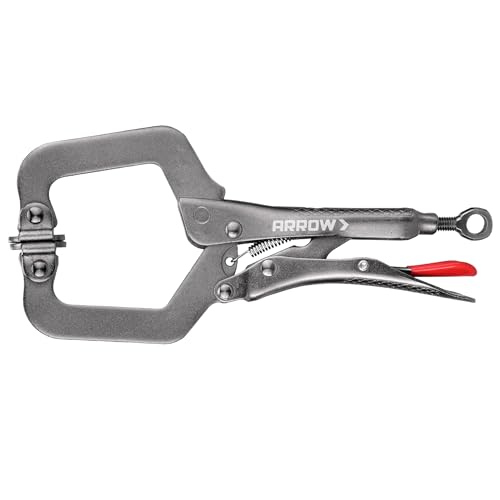
Swivel pads can rotate to meet angled, tapered, or irregular surfaces. The IRWIN 11-Inch, Klein, ARROW, WORKPRO, URASISTO, and IRWIN 6-Inch Swivel-Pad models document this design. It can be useful for fabrication, woodworking, and work where a fixed tip could concentrate pressure unevenly.
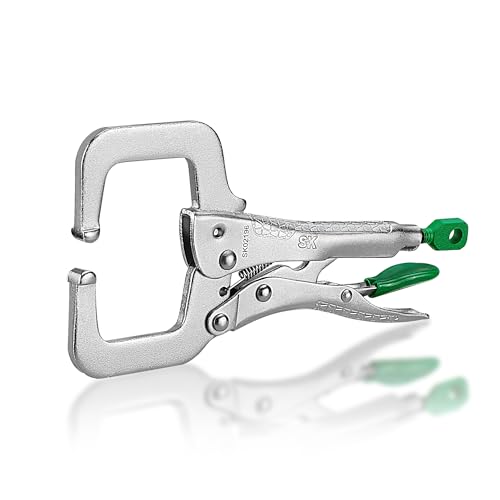
Regular jaws can suit predictable edges and direct gripping. SK 6-Inch uses hardened regular jaws, while MAXPOWER uses regular tips. These may be less surface-adaptive than swivel-pad alternatives, so consider the finish and shape of the workpiece before tightening.
Compare adjustment and release features
Turn-screw adjustment lets the user set the opening and pressure before locking. It is listed on the IRWIN, SK, URASISTO, and MAXPOWER models. WORKPRO also identifies an adjustable screw lock, while Klein specifies a thumb knob for size changes.
A through-hole can provide another way to turn the adjustment screw with a screwdriver or hex key. ARROW, SK 11-Inch, SK 6-Inch, and MAXPOWER document this feature. It may improve adjustment control but does not replace selecting the correct opening or pressure.
Release design matters when clamps must be repositioned. IRWIN describes trigger-based operation, Klein lists a lever release, ARROW lists a one-handed release trigger, and WORKPRO lists a quick-release trigger. These are design distinctions from the listings, not measured operating results.
Assess construction evidence
The IRWIN 11-Inch model uses high-grade heat-treated alloy steel. Klein lists forged steel and a rust-preventative coating. ARROW identifies drop-forged, heat-treated steel, and WORKPRO specifies a carbon-steel jaw with a Cr-V arm. SK lists CR-V steel, heat treatment, and nickel-plated finishes, while URASISTO lists heat-treated alloy steel with nickel plating.
These details describe construction but do not guarantee a particular service life or clamping force. For welding and metalworking, a heat-treated or forged-steel description may be relevant. For humid storage, a documented plated or rust-preventative finish may also matter.
Final recommendation
IRWIN Vise-Grip 11-Inch Swivel-Pad C-Clamp ranks first overall in this specification-based comparison under the published weighted criteria.
IRWIN Vise-Grip 11-Inch Swivel-Pad C-Clamp is the first overall specification-based choice in this comparison.
Its wide-opening jaws, swivel pads, turn-screw adjustment, heat-treated alloy steel, and trigger release form a particularly complete documented package. Among the top locking c-clamps, Klein Tools 38620 is a compact alternative with forged steel, swivel pads, thumb-knob adjustment, and corrosion-focused finishing. ARROW adds a through-hole and one-handed release. For regular jaws, SK 6-Inch and MAXPOWER offer direct-grip alternatives, with MAXPOWER providing the larger frame and clearer capacity figures.
The best locking c-clamps for a particular shop depend on reach, pad behavior, and the material being held. A swivel-pad 6-inch model suits many compact tasks, while an 11-inch clamp gives more working room. Treat the published specifications as selection evidence and confirm current listing details before purchase.
Frequently Asked Questions
What size locking C-clamp should I choose?
Choose a 6-inch model for compact access and smaller assemblies, or an 11-inch model when the workpiece needs more reach. The IRWIN 6-Inch model lists up to a 2-inch jaw adjustment and a 1.5-inch throat depth. MAXPOWER lists a 3.4-inch maximum opening and 2.4-inch jaw depth. Compare those figures with the material rather than using nominal tool length alone.
Are swivel pads better than regular jaws?
Neither design is universally better. Swivel pads can adapt to angled, tapered, or irregular surfaces; that is why they appear on the IRWIN 11-Inch, Klein, ARROW, WORKPRO, URASISTO, and IRWIN 6-Inch Swivel-Pad models. Regular jaws, such as those on SK 6-Inch and MAXPOWER, may suit direct clamping on accessible edges. Surface finish and workpiece shape should guide the choice.
Which best locking c-clamps include added adjustment leverage?
ARROW, SK 11-Inch, SK 6-Inch, and MAXPOWER document a through-hole or receiving hole for screwdriver or hex-key leverage. This can provide another way to turn the adjustment screw. It does not establish a specific force rating, so use it as a control feature rather than a guarantee of greater clamping strength.
Can these clamps be used for welding and woodworking?
Several listings identify both types of work. ARROW, WORKPRO, URASISTO, and MAXPOWER mention welding-related applications, while ARROW, WORKPRO, and URASISTO also list woodworking or general workshop use. Use suitable protection for the material and task, and verify the tool’s fit before beginning work.
What should I check before tightening a locking C-clamp?
Check that the jaw opening and throat reach the intended contact points, that the pads or jaws sit squarely, and that the adjustment screw is set for the workpiece. Confirm that the release mechanism is accessible and that the surface will tolerate the selected jaw design. A proper fit is more useful than simply applying more pressure.