Buying Guide
Small spring clamps are simple tools, but the right specification depends on what must be held and how much room is available around the workpiece. When comparing the best small spring clamps, start with jaw capacity rather than pack count alone. A clamp that is compact in overall length may still have a useful opening, while a very small metal clip may be limited to narrow sheets, fabric, paper, or light craft components.
Match jaw opening to the material
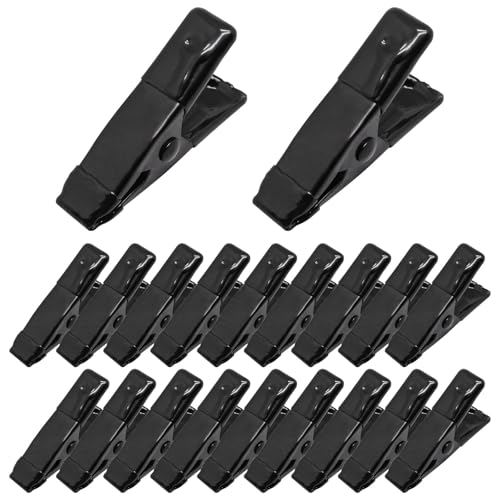
Jaw opening is the clearest specification for deciding whether a clamp can fit a project. The selected products range from compact openings of about 3/4 inch to wider formats reaching 2 inches. The Amazon Basics set documents two small sizes: 3/4-inch and 1-inch openings. FASTORS documents an approximately 0.8-inch opening, while GDFYMI lists an 18-millimeter jaw size. These formats are appropriate when the material is thin or when the clamp must fit into a confined space.
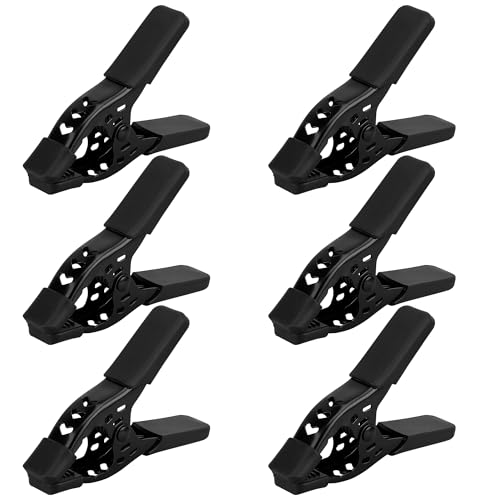
For thicker pieces, backdrop tubing, folded fabric, or layered craft materials, the wider plastic designs offer more room. Quamate and EQUIPTZ list 1.5-inch openings, Toresano also reaches 1.5 inches, and HORUSDY reaches 1-5/8 inches. ELEAD goes to a 2-inch maximum opening in a longer 4-inch metal format. A wider opening does not automatically mean a clamp is better for every use; it usually means the tool is less restricted by material thickness.
Metal spring clamps are a practical choice when a compact body and rigid construction are priorities. FASTORS, Amazon Basics, GDFYMI, and ELEAD specify steel or metal bodies with plated or galvanized finishes. Their listings also describe tempered or heat-treated springs in several cases. These details support consideration for workshop, studio, and household tasks, though the supplied specifications do not establish a measured load limit for every model.
Plastic and nylon clamps can offer wider jaw shapes and more flexible pad designs. HORUSDY specifies reinforced glass-fiber nylon, while Toresano specifies fiberglass-filled nylon. Quamate, EQUIPTZ, Aphila, and NUITPY describe plastic or nylon bodies paired with steel springs. These designs may be convenient for backdrops, crafts, and woodworking where a broad jaw and softer contact area are more important than an all-metal body.
Look closely at jaw pads
Jaw protection matters when clamping finished wood, fabric, painted surfaces, photography backdrops, or other materials that could be marked. Several selected clamps document PVC, rubber, or soft jaw covers. Amazon Basics and FASTORS specifically describe non-marking or protective PVC-coated tips.
Rotating or pivoting pads can be useful when the two surfaces are not perfectly parallel. HORUSDY, Quamate, and Toresano document adjustable or rotating jaw designs. Aphila and NUITPY describe removable flexible grippers, while EQUIPTZ emphasizes non-detachable pads. Removable pads can make replacement or repositioning convenient, but a user who wants fewer loose components may prefer the fixed-pad approach documented by EQUIPTZ.
Consider the handle shape
A spring clamp must open easily enough for the user to position it accurately. Coated handles can improve grip, especially for repeated use. Quamate and NUITPY describe ergonomic or anti-slip handle features. EQUIPTZ and HORUSDY specify TPR or rubberized handles, while Amazon Basics and FASTORS list coated handles. Metal mini clamps such as GDFYMI also include covered handles and an ergonomic design.
The evidence supports comparing handle materials and shape, but it does not support claims about hand fatigue based on testing. Treat comfort statements as design intentions rather than measured performance. If the clamp will be repositioned frequently, textured or coated handles are a sensible specification to prioritize.
Decide how many clamps you need
Pack size changes the practical role of a set. A six-piece pack such as ELEAD may be sufficient for occasional positioning or a few large attachment points. A 20-, 24-, or 30-piece set is more suitable when several edges must be held simultaneously, such as a photography backdrop, fabric panel, tarp, or multi-part craft assembly.
Large packs are not automatically the best choice. They take more storage space, and a user working on small model parts may benefit more from a mixed-size set than from dozens of identical clamps. Amazon Basics is useful for that reason: its set combines 3/4-inch and 1-inch openings. FASTORS, Aphila, and NUITPY provide larger quantities when uniform clamp size is more helpful.
Check the intended application
The listings repeatedly identify woodworking, crafts, photography, backdrops, home decoration, fabric, and tarp-related work. Those applications are useful signals for choosing a design, but they do not replace checking the actual dimensions. A 2-inch metal clamp may be easier to place in a narrow area, while a 3- or 3.5-inch plastic clamp may give a broader grip around backdrop material. ELEAD is the selected option with a documented 4-inch length and 2-inch opening, so it is the better fit when extra reach is needed.
For delicate surfaces, prioritize documented protective pads and avoid assuming that every coated tip provides identical protection. For uneven surfaces, prioritize a product that explicitly documents pivoting or rotating jaws. For many simultaneous attachment points, compare unit count after confirming that the opening is suitable.
Final Recommendation
HORUSDY 16-Pack 3-Inch Mini Clamps ranks first overall in this specification-based comparison under the published weighted criteria.
Quamate 24-Pack 3-Inch Spring Clamps is the first overall specification-based choice among the best small spring clamps in this comparison. Its documented 1.5-inch opening, rotating jaws, coated steel spring, TPR handles, 24-piece quantity, and stated 9-pound clamping force give it a well-rounded feature set for crafts, woodworking, and backdrop work.
EQUIPTZ is a close alternative for users who place special importance on non-detachable jaw pads and a rubberized grip. HORUSDY is the stronger capacity-oriented option because its 1-5/8-inch opening is the widest among the selected 3-inch designs. Toresano is a practical uneven-surface choice with pivoting pads, while FASTORS and Amazon Basics suit users who prefer compact metal sets.
The top small spring clamps are not identical in design. Plastic and nylon models generally emphasize broad openings, rotating or removable grippers, and backdrop versatility. Metal models generally emphasize compact bodies, plated construction, and narrow-to-moderate openings. Select the design that matches the workpiece thickness, required quantity, and need for surface protection rather than choosing only by pack size.
Frequently Asked Questions
What should I check first when buying the best small spring clamps?
Check the maximum jaw opening first, then compare body material, jaw protection, handle covering, and pack quantity. The opening determines whether the clamp can fit around the material. After that, choose between metal and plastic or nylon construction based on the type of work and the features documented for the specific product.
Neither construction is universally better. Metal options such as FASTORS, Amazon Basics, GDFYMI, and ELEAD document plated or galvanized bodies and are useful when a compact metal format is preferred. Plastic or nylon options such as Quamate, EQUIPTZ, HORUSDY, and Toresano document wider openings or adjustable jaw designs that can be useful for crafts, woodworking, and backdrops.
Which selected clamp has the widest documented opening?
ELEAD documents a 2-inch maximum opening, although it is also the longest selected metal format at 4 inches. HORUSDY documents a 1-5/8-inch opening, while Quamate, EQUIPTZ, and Toresano document 1.5-inch openings. Choose the opening based on the material thickness and the available working space.
Do rotating jaw pads matter for small clamps?
They can matter when the surfaces are uneven or not parallel. HORUSDY, Quamate, and Toresano document rotating, adjustable, or pivoting jaws. Aphila and NUITPY document removable flexible grippers. These features may help the clamp contact the workpiece more evenly, but the supplied evidence does not establish a measured improvement in holding performance.
How many small spring clamps should a project use?
Use enough clamps to support the edges or points that need holding without forcing one clamp to carry an unsuitable load. Six-piece sets can fit occasional tasks, while 20-, 24-, and 30-piece sets are better suited to backdrops, fabric, or assemblies requiring several holding points. Always confirm the opening and material compatibility before relying on the quantity alone.