Buying Guide
Choosing the best long jobber drill bits starts with the hole, material, and access problem rather than the advertised length alone. A long bit can reach through an obstruction or make a deep hole, but its diameter, construction, flute design, and intended material determine whether it is a sensible match. The products above range from single 12mm and 1/4-inch bits to broad metric and fractional sets.
Match length to the access problem
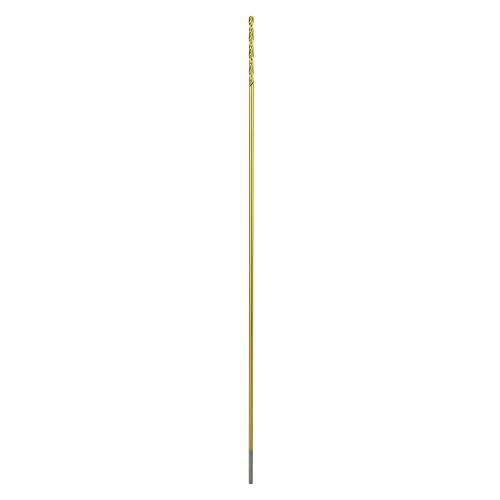
The selected products document three useful length groups. The 12-inch NEIKO, VALYRIANTOOL, Greycore, and DEWALT options provide the greatest stated reach in this comparison. They are appropriate when the workpiece is deep or an obstruction prevents use of a conventional bit. Their added length can also make alignment more important, especially with narrow diameters.
The 200mm class includes HOLLSUM, HARFINGTON, DUDUA, and RMTCEG. These bits offer substantial reach while remaining shorter than the 12-inch designs. HARFINGTON documents a 200mm overall length and 150mm flute, which is particularly useful when both total reach and cutting length matter. HOLLSUM and DUDUA provide 200mm sets for users who need several metric sizes.
The 150mm YIJIZE and Flylin sets are useful when a moderate extension is enough. They may be easier to manage in a smaller setup than 12-inch bits, while still extending beyond ordinary short bits. In every case, compare the stated overall length with the required hole depth and the available clearance behind the workpiece.
Choose HSS, cobalt, or black oxide carefully
HSS is the most common construction in this selection. HOLLSUM, HARFINGTON, DUDUA, Flylin, and RMTCEG identify high-speed steel, with listings describing hardness, heat resistance, or wear resistance. HSS is a reasonable starting point for mixed materials and general drilling, especially where the product specifically names wood, plastic, aluminum, PVC, or thin sheet.
Cobalt options add a more specialized material specification. VALYRIANTOOL, Greycore, and YIJIZE identify cobalt HSS, while the first two specify M35 and 5% cobalt. Cobalt is documented here alongside applications involving stainless steel, cast iron, steel, and other hard metals. That does not remove the need to control speed, pressure, and heat; VALYRIANTOOL and YIJIZE explicitly call attention to those factors.
Black oxide is a surface treatment rather than a substitute for choosing the correct base material or diameter. The supplied evidence for DEWALT is brief, so it is best treated as a straightforward single-size option rather than compared with the more fully specified cobalt sets.
Consider point and flute geometry
A 135-degree split point appears on VALYRIANTOOL, Greycore, HOLLSUM, and YIJIZE. The listings associate this geometry with self-centering, reduced walking, or quicker penetration. That can be useful when starting a hole, but it should not be read as a guarantee of results in every material.
Twist flutes help carry chips away from the cutting area. HARFINGTON describes a spiral design for chip evacuation, while RMTCEG specifies a deep-cut helix. Flylin also describes twisted flutes and a bifurcated tip. These features are relevant for deeper holes because chips have farther to travel, but the work still requires appropriate clearing and lubrication where applicable.
Since this comparison uses public specifications rather than hands-on testing, that claim is reported as a documented feature, not independently verified performance. The bit is also listed for steel, copper, aluminum, brass, several woods, plastics, and composites.
Decide between a set and a single bit
A set is usually more adaptable. NEIKO covers five fractional sizes, VALYRIANTOOL covers five, HOLLSUM lists eight metric sizes, and DUDUA lists eight metric sizes. YIJIZE and Flylin provide smaller metric assortments. These products reduce the need to buy another bit when the required hole changes.
A single bit can be the better fit when the diameter is fixed. Greycore is a 1/8-inch bit, DEWALT is 1/4-inch, and HARFINGTON is 12mm. RMTCEG takes a different approach by supplying two identical 4mm bits. That format may be useful for repeated work, but it provides no flexibility for other hole sizes.
Check the listing carefully when pack information matters. HOLLSUM’s description refers to a five-piece set while listing eight metric sizes, so that inconsistency deserves verification before ordering. The other products also differ in whether their listed unit count reflects individual bits or a set.
Check shank and drill compatibility
Most selected products describe straight shanks, and HOLLSUM specifically states compatibility with standard corded and cordless drills, drill presses, right-angle drills, and pin vises. HARFINGTON and RMTCEG also identify straight-shank designs. These details help confirm that the bit is intended for a conventional chuck rather than a specialized holder.
Long bits need stable handling. Secure the workpiece, align the drill before starting, and use the speed and pressure appropriate to the material. HARFINGTON supplies a recommended speed range and advises lubricant use; VALYRIANTOOL and YIJIZE also emphasize control of speed, pressure, and heat. Those instructions are especially relevant for long, narrow bits and metal drilling.
Final Recommendation
VALYRIANTOOL M35 Cobalt 12-Inch Set ranks first overall in this specification-based comparison under the published weighted criteria.
The final choice among the best long jobber drill bits depends on the documented features that match your intended use.
VALYRIANTOOL M35 Cobalt 12-Inch Set is the highest-scoring returned product and the first overall specification-based choice. It combines 12-inch reach, M35 cobalt HSS with 5% cobalt, five fractional sizes, a 135-degree split point, and fully ground flutes. For a broader general-purpose option, NEIKO 10047A provides the same stated 12-inch reach with heat-treated M2 HSS and five sizes. Greycore is more appropriate when one 1/8-inch cobalt bit is all that is required.
Among the top long jobber drill bits, HOLLSUM and DUDUA are the most flexible metric sets because each lists eight sizes, while YIJIZE offers a shorter 150mm cobalt assortment. HARFINGTON is the focused choice for a large 12mm hole. DEWALT offers a simple 1/4-inch format, and Flylin covers smaller metric sizes. RMTCEG makes sense for repeated 4mm work. Match the final choice to the required diameter first, then verify length, material, and drill compatibility.
Frequently Asked Questions
What makes the best long jobber drill bits different from standard bits?
They provide extra overall length for deep holes or areas where a conventional bit cannot reach. In this selection, lengths include approximately 150mm, 200mm, and 12 inches. Extra reach is useful, but it also makes alignment, workpiece support, and speed control more important.
Are cobalt long bits suitable for stainless steel?
The listings for VALYRIANTOOL, Greycore, and YIJIZE specifically name stainless steel among their applications. VALYRIANTOOL and Greycore identify M35 construction with 5% cobalt. Use the manufacturer’s guidance and control speed, pressure, and heat; the material specification does not replace proper drilling practice.
Should I buy a metric or fractional set?
Choose metric sizes when the project specifies millimeters, and fractional sizes when the required hole is given in inches. HOLLSUM, DUDUA, YIJIZE, Flylin, HARFINGTON, and RMTCEG provide metric formats, while NEIKO, VALYRIANTOOL, Greycore, and DEWALT use fractional-inch sizing.
Are 200mm bits better than 12-inch bits?
Neither length is automatically better. A 12-inch bit offers more reach, while a 200mm bit may be easier to control when that length is sufficient. Compare the required hole depth, obstruction, clearance, diameter, and material before selecting a length.
What should I verify before using a long drill bit?
Verify the diameter, overall length, flute length when provided, shank style, and stated material applications. Secure the workpiece and follow the listed guidance for speed, pressure, chip clearing, and lubrication. Long bits should be used with care because alignment becomes more important as reach increases.