Buying Guide
The best male-to-male speaker cables are defined first by the connections they make. A cable can have excellent conductors and still be unsuitable if its plugs do not match the amplifier and speaker terminals. The supplied selection covers straight 1/4-inch cables, mixed Speakon-to-1/4-inch designs, banana-plug cables, and RCA stereo cables. Those formats are not interchangeable, so identify both device sockets before comparing construction details.
For a guitar or bass amplifier with a 1/4-inch speaker output, a straight 1/4-inch-to-1/4-inch cable is the most direct option. The GLS Audio and Ernie Ball models use this format, while the Yuyaokk and Yoico listings also specify 1/4-inch male connections for stage and amplifier applications. The AkoaDa cable uses 1/4-inch TRS plugs and is listed for amplifiers and speakers, but its TRS design is described in broader pro-audio terms, so confirm the equipment manual before using it for a passive speaker load.
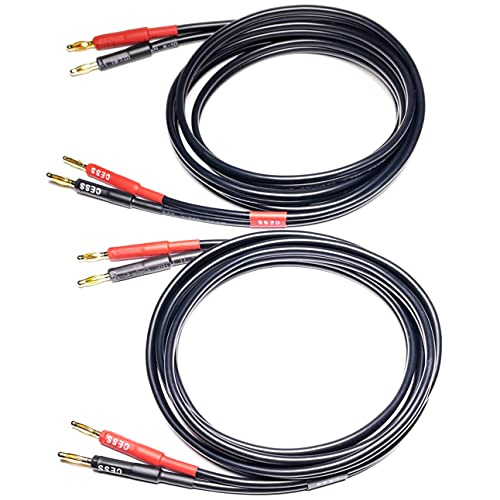
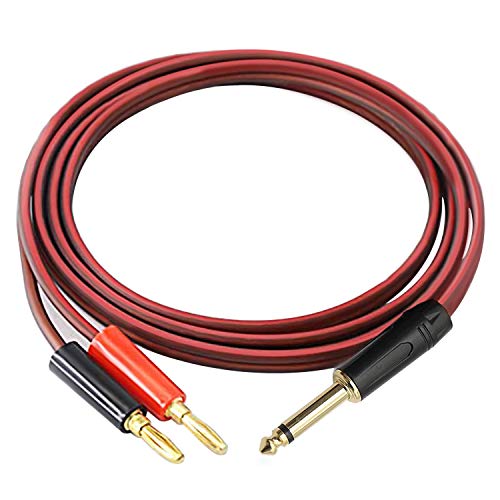
Banana plugs are common on compatible receivers, amplifiers, and speaker terminals. The CNCESS cable uses 4mm banana plugs, and the Mygatti pair uses dual banana-tip plugs. The XMSJSIY model combines a 1/4-inch TS plug with dual banana plugs, making it useful when the two devices use different connection styles. Check whether the speaker accepts single or dual banana insertion and confirm polarity before connecting.
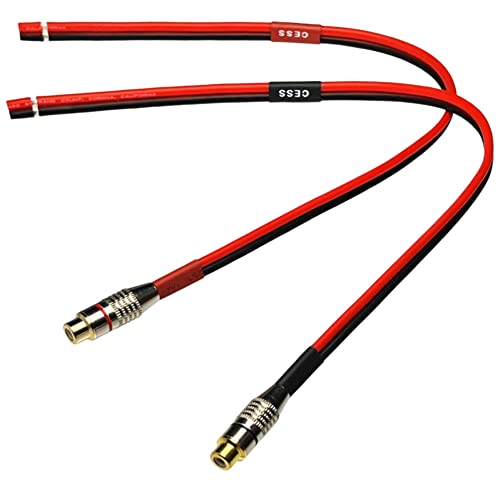
Speakon connections are aimed at compatible loudspeaker equipment. The Yuyaokk Speakon-to-1/4-inch cable is useful for mixed systems, but its two ends serve different connector standards. The supplied evidence also contains a Speakon-to-Speakon listing whose description identifies female connectors; it is therefore not included in this male-to-male ranking. Connector terminology matters more than a product title alone.
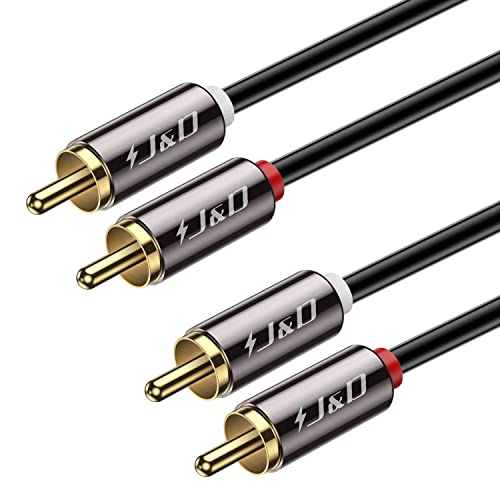
RCA is a separate stereo-audio format. The J&D cable has two RCA male connectors on each end and is listed for receivers, amplifiers, speakers, and subwoofers. It is best considered for equipment with RCA inputs and outputs, particularly powered or home-theater components. It should not be treated as a replacement for a dedicated passive-speaker cable.
Compare conductor gauge and material
Gauge is one of the most useful specifications for speaker-cable selection. Lower AWG numbers indicate thicker conductors. Several selected models specify 12 AWG, including CNCESS, Yuyaokk, Yoico, GLS Audio, and XMSJSIY. These listings also identify copper-based conductors, with CNCESS specifying tinned copper and the stage-oriented models specifying full copper. The Mygatti and Ernie Ball cables use 16 AWG conductors, which may be more convenient for shorter, less demanding connections.
Material descriptions should be read carefully. CNCESS states that its copper strands are tinned to help resist rust. XMSJSIY identifies oxygen-free copper, while Mygatti specifies tinned OFC copper. Ernie Ball lists 99.99% oxygen-free copper. These are documented construction details, not a substitute for checking the cable length, connected equipment, and manufacturer guidance.
Consider jacket construction and routing
A flexible jacket helps with routing and storage, but different designs serve different installations. CNCESS uses soft silicone-rubber cable, while GLS Audio specifies a 10.5mm rubber jacket. The Yuyaokk and Yoico listings describe flexible PVC construction intended to coil and withstand handling. AkoaDa uses a braided nylon sheath, and Mygatti uses a flat transparent cable shape that can run along edges or under carpet.
For frequent setup changes, look for a jacket described as flexible or abrasion resistant and consider whether a wrap is included. GLS Audio includes a reusable hook-and-loop wrap. The J&D cable is bonded for neat management but can be separated into two individual RCA leads when needed. Flat cable is useful where appearance and routing are priorities, although it may not be the best fit for every high-power or long-distance application.
Check shielding and connector protection
Shielding is particularly relevant to RCA and other audio cables used near potential interference sources. J&D documents both copper-braid and aluminum-foil shielding. AkoaDa describes gold-plated 6.35mm connectors and a braided jacket, while XMSJSIY lists gold-plated plugs and a non-magnetic shell.
Gold plating and connector shells can help protect contact surfaces, but they do not make an incompatible plug suitable. For passive speaker links, prioritize correct connector fit and suitable conductor specifications before cosmetic connector features. Also inspect whether the plug locks, twists, or seats firmly in the target socket.
Choose a practical length
Measure the route rather than choosing only by the advertised distance. Leave enough slack for equipment movement without creating a large coil. The Ernie Ball 3-foot cable and CNCESS 3-foot pair suit compact setups. GLS Audio offers 6 feet, XMSJSIY offers 5 feet, Mygatti offers 10 feet, and the Yuyaokk models extend to 25 or 50 feet. AkoaDa also provides a 20-foot length.
Longer cables can simplify stage layouts, but they may be harder to coil and store. Shorter cables reduce excess routing in a fixed rack or amp arrangement. When a listing contains conflicting length information, as with some stage-cable descriptions, verify the specific variant before ordering.
Final Recommendation
Yuyaokk 1/4-Inch TS Speaker Cable, 25 Feet, 2-Pack ranks first overall in this specification-based comparison under the published weighted criteria.
The final choice among the best male-to-male speaker cables depends on the documented features that match your intended use.
CNCESS CESS-037 is the first overall specification-based choice among the returned products. Its 4mm male banana plugs, 12 AWG tinned copper, 680-strand construction, soft silicone-rubber cable, and two 3-foot leads provide the clearest combination of connector fit and documented build detail for a compact banana-plug system.
For long stage runs, Yoica offers 50-foot cables with 12 AWG full-copper conductors, while the 25-foot Yuyaokk 1/4-inch set provides a shorter alternative. AkoaDa is the more suitable selection when 1/4-inch TRS connectivity and a two-cable, 20-foot format match the equipment. For mixed connectors, the Yuyaokk Speakon-to-1/4-inch and XMSJSIY TS-to-dual-banana designs solve different connection problems.
The top male-to-male speaker cables are not interchangeable across every audio system. Select Ernie Ball or GLS Audio for compact 1/4-inch amp connections, Mygatti for flat banana-plug routing, and J&D for a shielded RCA stereo link. Confirm the connector, polarity, signal type, and cable length before installation. These rankings use public listing specifications rather than hands-on testing.
Frequently Asked Questions
Among the best male-to-male speaker cables, are 1/4-inch male-to-male cables suitable for every speaker?
No. A 1/4-inch cable requires compatible 1/4-inch sockets on the relevant equipment. GLS Audio, Ernie Ball, Yoico, and the 1/4-inch portion of the Yuyaokk designs are intended for documented amplifier, PA, stage, or speaker applications, but the connected equipment manual remains the final reference.
What is the difference between banana-plug and 1/4-inch speaker cables?
They use different connector formats. CNCESS and Mygatti use banana-style plugs, while GLS Audio and Ernie Ball use straight 1/4-inch plugs. XMSJSIY combines a 1/4-inch TS plug with dual banana plugs. Choose the format that matches the terminals on both devices and observe polarity markings.
Is a 12 AWG cable always the right choice?
Not automatically. The selected 12 AWG models provide thicker documented conductors than the 16 AWG Ernie Ball and Mygatti models, but cable length, equipment requirements, connector fit, and routing still matter. A shorter 16 AWG cable may be more practical in a compact setup, while a longer run may call for a heavier specified conductor.
Can an RCA male-to-male cable replace a speaker cable?
Only when the equipment is designed for RCA connections. J&D is listed for RCA-equipped receivers, amplifiers, speakers, and subwoofers, but RCA is a different audio connection format from dedicated passive-speaker cables. Do not substitute it for a 1/4-inch, banana, or Speakon cable without confirming the system design.
How should I choose cable length?
Measure the complete route, including bends and equipment movement, then choose a little working slack. The 3-foot CNCESS and Ernie Ball options suit short links, while Mygatti, GLS Audio, XMSJSIY, AkoaDa, and the Yuyaokk models cover progressively longer layouts. Avoid leaving unnecessary cable loosely coiled near equipment.