Buying Guide
The best male-to-male aux cables are defined less by marketing language than by a few practical specifications: both ends must use the correct 3.5mm plug, the cable must be long enough for the intended layout, and the connector must fit the device without being obstructed by a case or recessed port. The products in this comparison are documented as male-to-male audio cables or closely related 3.5mm stereo cables.
Confirm the audio standard
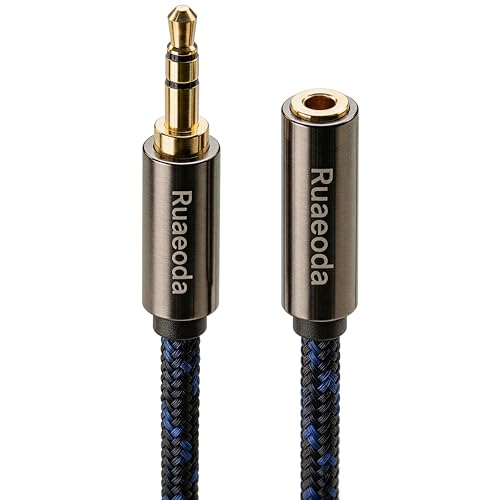
Most car stereos, portable speakers, older phones, tablets, laptops, and headphones use a standard 3.5mm audio jack. A conventional 3-pole TRS cable carries stereo audio only. Syncwire, UGREEN, Nanxudyj, Ruaeoda, Amazon Basics, DUKABEL, MCSPER, CableCreation, and the StarTech.com cable document this type of stereo connection or describe audio-only use.
A male-to-male cable does not automatically provide microphone or call controls. Those functions depend on the plug standard and the connected hardware. The selected UGREEN cable is described as a 3-pole audio cable and specifically notes that it does not support microphone function. If a headset uses a microphone, check whether the equipment requires TRRS before choosing a cable.
Choose length by layout
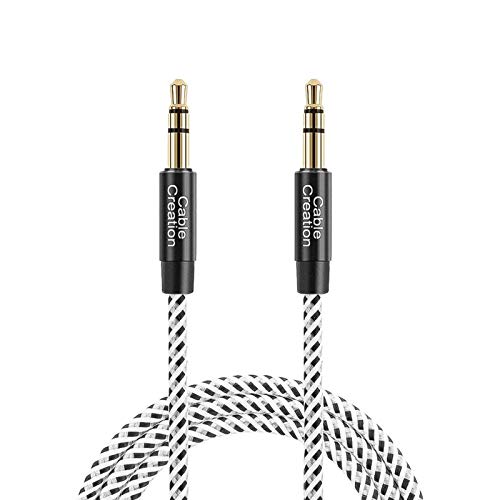
Cable length should follow the distance between the source and the audio input. Short options such as the StarTech.com 1-foot cable and CableCreation 1.5-foot cable are intended for closely positioned components. They can reduce loops around a car console, speaker, or gaming setup, but they may not reach from a rear seat or across a desk.
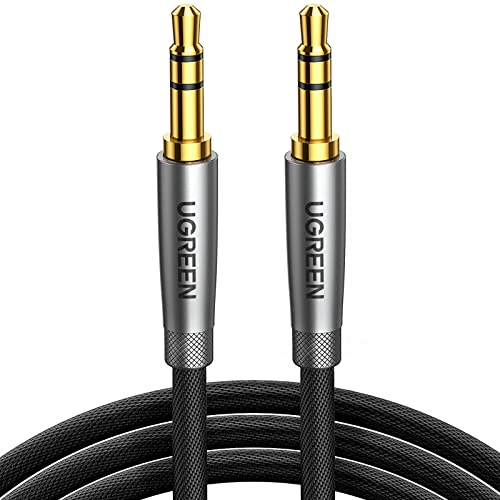
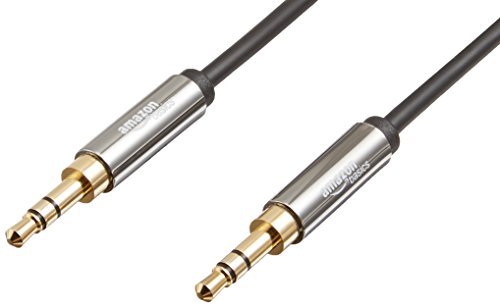
The 3- to 4-foot group offers a middle ground. Syncwire, UGREEN, Ruaeoda, Amazon Basics, and DUKABEL fall into this practical range. These sizes are easier to route than very long cords while still allowing some movement around a desk or dashboard.
For greater reach, Nanxudyj and MCSPER provide 6-foot-class options, and CLAVOOP extends to 10 feet. Longer cables can help when a television, speaker, or car input is farther from the source. They also create more slack, so look for a braid or smooth jacket that coils without excessive tangling. The CLAVOOP listing describes a cotton-woven exterior, while Nanxudyj and MCSPER specify nylon braiding.
Evaluate the connector shape
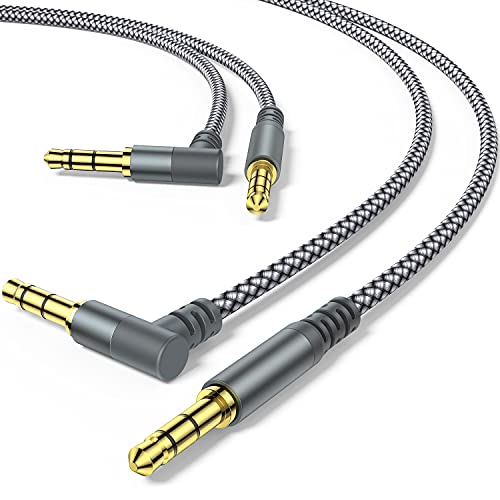
Straight plugs are suitable for open, easily accessible ports. A right-angle connector can be more practical when the jack sits close to a wall, dashboard edge, controller, or case. Nanxudyj, MCSPER, and StarTech.com document right-angle designs. These selected products cover both short and long use cases.
A step-down or slim connector can matter when a phone or tablet remains inside a protective case. Amazon Basics, DUKABEL, CLAVOOP, and UGREEN document step-down or slim-fit features. CableCreation specifically describes an ultra-slim connector intended to fit standard jacks around cases. These designs do not guarantee compatibility with every case, so compare the opening around the device jack with the connector housing.
Look at construction details
Braided jackets are common in this group and are described as helping with flexibility, storage, or resistance to tangling. Syncwire lists a 15,000-plus bend lifespan, Nanxudyj lists 15,000-plus bends, Ruaeoda lists 20,000-plus bends, and CableCreation lists 10,000-plus bends. These are supplied listing claims, not independent measurements, so they should be treated as specification points rather than test results.
Several cables also identify aluminum or metal housings, reinforced joints, or copper conductors. DUKABEL lists an oxygen-free copper core and triple shielding. Ruaeoda lists a pure copper core and dual shielding. Nanxudyj lists pure copper cores and triple shielding. CableCreation lists double shielding and an aluminum-alloy shell. Such details can help distinguish a cable designed for repeated routing from a minimally specified cord, but they do not replace checking the plug standard and length first.
Match the cable to the use
For a typical car or speaker connection, Syncwire combines a moderate length with broad compatibility, braided construction, and double shielding. For a crowded jack, Nanxudyj or MCSPER offers a right-angle approach. For a compact connection with little slack, StarTech.com and CableCreation are more appropriate. For a long home-audio route, CLAVOOP provides the longest selected cable. DUKABEL is notable for its detailed shielding and conductor specifications, while UGREEN is a practical 3-foot braided option.
Remember that a 3.5mm cable cannot replace a missing port. Devices that use USB-C or Lightning require a compatible adapter, and the adapter’s output must support the intended audio connection. Also verify whether a headset uses TRS or TRRS before expecting microphone operation. These checks prevent a mechanically correct plug from being used with an electrically unsuitable connection.
Final Recommendation
Nanxudyj 6ft Right-Angle AUX Cable ranks first overall in this specification-based comparison under the published weighted criteria.
Syncwire 3.5mm Nylon Braided Aux Cable is the highest-scoring returned product and the first overall specification-based choice. Its documented combination of standard 3.5mm compatibility, 3.3-foot length, nylon braiding, double shielding, gold-plated connectors, and stated bend-life specification makes it a balanced option for ordinary stereo links.
The top male-to-male aux cables still depend on the installation. Choose UGREEN for a straightforward 3-foot braided connection with documented shielding and a slim step-down plug. Choose Nanxudyj or MCSPER when a right-angle plug and longer reach are useful. Select StarTech.com or CableCreation when the devices sit close together and excess cable would be inconvenient. CLAVOOP is the long-run selection, while DUKABEL is notable for its detailed shielding and conductor specifications.
The best male-to-male aux cables should be selected by the actual port standard and cable path, not simply by a familiar device name. Confirm TRS or TRRS, measure the required reach, and check connector clearance around any case before connecting.
Frequently Asked Questions
Among the best male-to-male aux cables, are male-to-male aux cables all the same?
No. They can differ in plug standard, length, connector shape, shielding, jacket material, and case clearance. Most ordinary stereo options in this guide use a 3-pole TRS layout. Right-angle plugs, such as those on Nanxudyj, MCSPER, and StarTech.com, are intended for tight spaces rather than being a universal improvement.
What length should I choose for a car stereo?
Measure from the source device to the car’s input while leaving enough slack for normal handling. CableCreation’s 1.5-foot length and StarTech.com’s 1-foot length suit closely positioned equipment. Syncwire, UGREEN, Amazon Basics, Ruaeoda, and DUKABEL offer roughly 3- to 4-foot formats for more flexible dashboard use. Nanxudyj and MCSPER provide about 6 feet when the source may be farther away, such as for rear-seat use.
Does a 3.5mm male-to-male cable support a microphone?
Not necessarily. The selected cables are primarily 3-pole stereo or audio-only designs, and UGREEN’s listing specifically states that its cable does not support microphone function. Microphone operation depends on a compatible TRRS cable and matching connected equipment. Check the device documentation before choosing a cable for calls or headset recording.
Can these cables fit through a phone case?
Some listings describe slim or step-down connectors intended to improve clearance around protective cases. Syncwire, Amazon Basics, DUKABEL, CLAVOOP, UGREEN, and CableCreation include such connector details. Fit still depends on the case opening and the device port, so compare the physical connector shape before assuming compatibility. A right-angle connector may also help when the jack is near an edge or crowded surface.
Do I need an adapter for a phone without a 3.5mm jack?
Yes. A phone or tablet without a native 3.5mm port needs a compatible USB-C or Lightning audio adapter. The adapter must provide the appropriate audio function for the cable and receiving device. The aux cables themselves connect equipment that already exposes a compatible 3.5mm audio port; they do not add a missing jack.