Buying Guide
Picking the best mason canning jars in 2026 means matching documented specifications to the way you preserve food, store pantry staples, or serve drinks at home. This guide walks through what separates a strong jar set from a weak one across glass composition, lid engineering, capacity, mouth geometry, pack value, and food-grade compliance.
Match Capacity to Your Preserving Habits
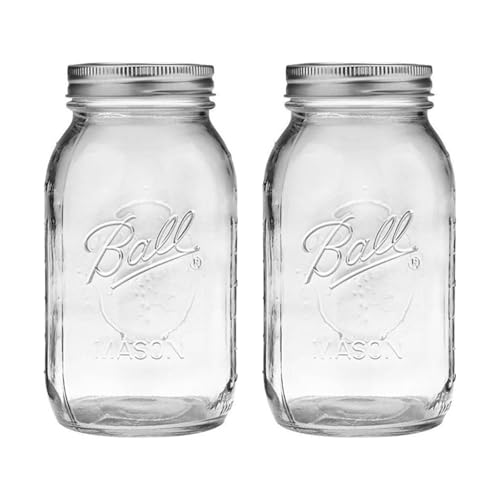
Capacity ranges from 8 oz jelly jars all the way up to 64 oz half-gallon jars in this selection, and each tier supports a different preserving style. The Ball Quilted Crystal 8 oz format is built around small-batch jams and gift portions, while pint-style jars at 16 oz are the workhorse for sauces, salsas, and pickles. Quart-size 32 oz jars accommodate sliced tomatoes, peaches, and broth batches, and the Ball 64 oz half-gallon jars are aimed at fermenting kefir or storing bulk pantry items. Matching the jar size to your recipe’s headspace and processing time helps keep lids sealed and food safe through storage.
Compare Lid and Seal Engineering
Sealing performance rests on the lid system. Several options in this guide document BPA-free plastisol liners on a silver split lid, including the Ball 64 oz half-gallon set and the ELAORY 16 oz jars. Others add a silicone sealing ring on the rim, as described for the PINIWON and Mcupper pint sets, which supports an airtight, leak-resistant closure for ferments and overnight oats. Ball’s separate product listings call out improved “sure-tight” geometry with a multi-month sealing window, and lower-spec sets may use only standard metal discs without documenting a separate gasket.
Consider Mouth Geometry
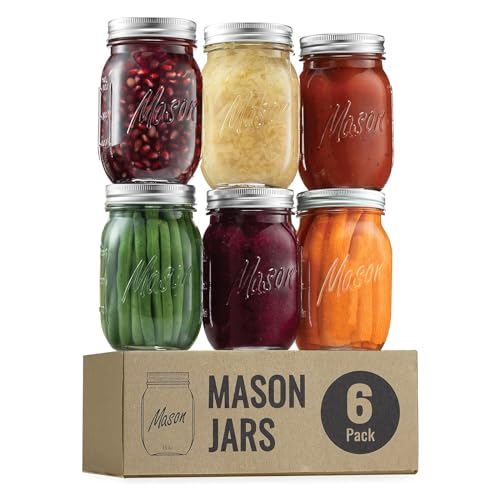
Wide mouth jars simplify packing whole fruits, scooping thicker preserves, and reaching the bottom of the jar for cleaning. Regular mouth jars at 16 oz, such as the PINIWON, Mcupper, and ELAORY sets, present a narrower opening that can slow filling and cleaning but supports controlled pouring of liquids and dry goods.
Evaluate Glass Composition and Heat Tolerance
Ball’s listings state the use of heat-resistant, USDA certified food-grade glass, which is an important specification for water-bath and pressure canning. Jars that document freezer-fill limits, such as filling only to 10 oz or 12 oz of nominal capacity, give clearer guidance for cold storage.
Weigh Pack Value and Included Accessories
Pack size affects how many canning runs you can complete in parallel. Prioritizing bundled accessories can reduce the need to source labels and brushes separately.
Confirm Food-Grade Compliance
Food-grade glass construction is documented across the field, with most brands stating BPA-free and lead-free materials, and Ball’s listings also noting USDA certified food-grade glass. Wide mouth pint and quart jars tend to include the most explicit safe-temperature language, while smaller specialty jars may rely on generic food-safe claims. Cross-check each listing for explicit BPA-free, lead-free, and food-grade wording before you commit to larger packs.
Final Recommendation
Ball 64 oz Half Gallon Wide Mouth Jars, 6-Pack ranks first overall in this specification-based comparison under the published weighted criteria.
The final choice among the best mason canning jars depends on the documented features that match your intended use.
If you want the most balanced specification profile in this category, the Ball 16 oz Wide Mouth Mason Jars, 6-Pack is the first overall specification-based choice: it documents heat-resistant USDA food-grade glass, airtight grommeted lids, and a wide mouth that supports traditional water-bath canning. Smaller-batch preservers may find the Ball Quilted Crystal 8 oz Jelly Jars 12-Pack a strong fit for jellies, spices, and favors, while a wide mouth pint set like SEWANTA’s adds embossed measurement markings to assist precise filling. These three jars cover the most common preserving scenarios, and the top mason canning jars for most homes tend to pair a wide mouth jar in 16 oz or 32 oz with a smaller specialty jar for jams and gifts.
Frequently Asked Questions
Among the best mason canning jars, what size mason canning jar is best for beginners?
A 16 oz wide mouth pint jar is the easiest entry point for beginners because it fits standard water-bath canners, accepts whole small fruits, and clears standard canning racks. Wide mouth options also simplify reaching the bottom during cleaning, which matters when jars are reused across seasons.
Are wide mouth or regular mouth jars better for canning?
Wide mouth jars are easier to fill, empty, and clean, which is useful when packing whole produce or thick preserves. Regular mouth jars offer a more controlled pour for liquids and dry goods and often use lids that fit standard canning racks. Pick wide mouth for chunky foods and regular mouth for syrups, juices, and dry storage.
How important is a silicone gasket on a mason jar lid?
A silicone gasket or plastisol liner helps form an airtight, leak-resistant seal during processing and storage, which is especially relevant for ferments and overnight oats that sit in liquid. Lists that document a silicone ring or plastisol compound give more confidence about seal performance than those that mention only a generic metal disc.
Can any of these jars go in the freezer or microwave?
Always follow each product’s specific guidance for cold storage.
How do I choose between a 6-pack and a 15-pack mason jar set?
A 6-pack suits occasional canning, gift packaging, or trying out a single size, while a 15-pack or 12-pack gives more parallel jars for large seasonal batches and bulk pantry storage. Larger sets frequently bundle extras such as labels, tags, and cleaning brushes, which adds functional value if you plan to organize or gift the contents.