Buying Guide
The best mechanical archery broadheads should be selected by matching the head’s documented design to the bow, crossbow, arrow weight, and tuning routine. A broadhead that looks attractive on paper may still be a poor fit if its weight or retention system does not match the rest of the setup. The products above are ranked from public specifications and feature descriptions, not from hands-on testing or customer sentiment.
Start with the deployment style
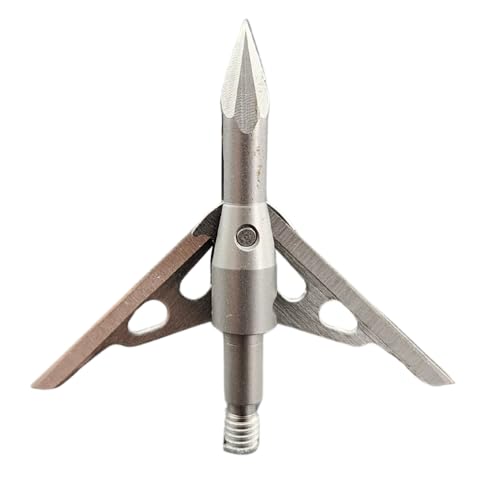
Mechanical broadheads generally keep their cutting blades closed during flight and open on impact, but the way that happens varies. Rear-deploying designs place the blades behind the tip and open backward. The RAGE Crossbow X, NAP Killzone, and NAP Killzone Maxx document rear deployment. This format can provide a compact flight profile while preserving a wider listed cut after impact.
Front-deploying models put the blades toward the front of the head. The NAP Spitfire Maxx and NAP Spitfire use front-deploying designs, while the Spitfire Maxx adds internal spring clips to keep the blades closed in the quiver and during flight. A front-deploying layout may appeal to buyers who specifically want that architecture, but the listing evidence does not establish that one deployment direction is universally better.
Hybrid products combine fixed and mechanical cutting elements. Bloodsport Gravedigger has a fixed blade and bleeders alongside cross-opening mechanical blades. NAP DK4 uses a pivoting main blade with two mechanical bleeders. These designs may offer a more complex cutting profile, but they also give you more blade geometry to inspect and tune.
Compare cutting diameter carefully
Cutting diameter is one of the clearest specification differences in this group. The NAP Killzone Maxx lists a 2 3/8-inch cut, the Swhacker #269 lists 2.5 inches, and the Bowmar Beast lists 2.3 inches. Other selected products range from 1.75 to 2.25 inches. A larger diameter can be attractive when a wider opening is part of your priority, but diameter alone does not establish penetration, accuracy, or field performance.
Blade count also changes the design. The NAP Spitfire Maxx uses three blades, while many selected models use two expandable blades. Hybrid heads add fixed blades or bleeders to the mechanical components. When comparing specifications, consider whether you want a straightforward two-blade system, a three-blade arrangement, or a hybrid format with both fixed and moving elements.
Check retention hardware
Retention is important because the listing descriptions commonly emphasize keeping blades closed in the quiver and during flight. The Bowmar Beast uses a band-free, collar-free system with stainless steel locking components. Swhacker #269 documents a blade-lock system, and several NAP products use spring clips. The RAGE Crossbow X uses Shock Collar Technology, while some other designs rely on O-rings or similar hardware.
These systems should be checked against your handling routine and replacement-part preferences. A collar, clip, lock, or band can be a useful part of the design, but it is also a component to inspect before use. Do not assume that a retention system is interchangeable across models.
Match grain weight and equipment
The selected products commonly list 100 or 125 grains. Swhacker #269 and NAP DK4 are 125-grain examples, while the RAGE Crossbow X, NAP Killzone, and Killzone Maxx selections are 100 grain. The Bowmar Beast is listed at 100 grains, and the Backflip 2 is also a 100-grain model.
Use the broadhead weight that fits your arrow and equipment plan rather than choosing solely by cutting diameter. A change in point weight can affect the overall arrow configuration and may require retuning. Crossbow users should pay particular attention to the product’s stated compatibility. The RAGE Crossbow X is explicitly presented as a crossbow model, while the Bowmar Beast and several Swhacker products identify compatibility with crossbows as well as bows.
Evaluate materials and tips
Ferrule and blade materials provide useful specification distinctions. Bowmar Beast and Bloodsport Gravedigger list 7075 aluminum ferrules. The Backflip 2 specifies a one-piece Grade 5 titanium ferrule. Swhacker models list aircraft-grade aluminum ferrules, and the NAP Spitfire Maxx lists stainless blades with a cut-on-contact point.
Tip styles also vary. Cut-on-contact points appear on the NAP Spitfire Maxx, Bloodsport Gravedigger, NAP Killzone, and Backflip 2. Other products list hardened or trophy-style tips. These descriptions identify construction and intended design; they do not prove a particular result in the field.
Consider packs and replacement parts
Most selected products are supplied in three-packs, while the Bowmar listing does not provide a comparable pack detail in the supplied evidence. The Swhacker #207, Swhacker #269, and NAP Killzone listings identify compatible replacement blades. The Backflip 2 lists replaceable blades and includes practice blades. These details may matter if you want to preserve the ferrule and replace cutting components rather than replace the entire head.
Before buying, confirm that the listed grain, thread fit, blade components, and intended bow type match your equipment. Also verify what is included in the package, since pack size and replacement availability differ by model.
Final recommendation
Bowmar Archery Beast Broadheads ranks first overall in this specification-based comparison under the published weighted criteria.
The final choice among the best mechanical archery broadheads depends on the documented features that match your intended use.
Bowmar Archery Beast Broadheads is the highest-scoring returned product and the first overall specification-based choice. Its documented bone-evading spring technology, 2.3-inch cut, 7075 aluminum ferrule, and broad compatibility claims give it the most distinctive technical profile in this comparison.
For a large two-blade cut, Swhacker #269 and NAP Killzone Maxx are strong alternatives on paper. The #269 lists a 2.5-inch cut and blade-lock system, while Killzone Maxx lists a 2 3/8-inch cut with spring-clip retention. Crossbow-focused buyers should examine RAGE Crossbow X, and those wanting a hybrid design should compare Bloodsport Gravedigger or NAP DK4.
The top mechanical archery broadheads are not interchangeable choices for every setup. Confirm grain weight, deployment style, retention hardware, and compatibility before selecting one, then follow the manufacturer’s setup and inspection instructions.
Frequently Asked Questions
What are the best mechanical archery broadheads for a crossbow?
RAGE Crossbow X is the clearest crossbow-oriented selection in this comparison because its listing specifically describes crossbow use and Shock Collar Technology. Bowmar Beast and several Swhacker models also document crossbow compatibility. Match the listed grain weight and retention design to your bolt setup, and verify fit before use.
Is a larger cutting diameter always better?
No. A larger listed diameter is one specification, not a complete performance guarantee. Swhacker #269 and NAP Killzone Maxx offer especially wide cuts, while NAP Spitfire Maxx and Backflip 2 use 1.75-inch designs. Consider blade layout, tip, ferrule, arrow weight, and equipment compatibility together.
What is the difference between a mechanical and a hybrid broadhead?
A mechanical broadhead uses moving blades that deploy on impact. A hybrid model combines moving blades with fixed cutting elements. Bloodsport Gravedigger and NAP DK4 are selected hybrid examples. Their added blade geometry may suit buyers who want both formats, but it can also make tuning and inspection more involved.
Should I choose 100 or 125 grains?
Choose the weight that fits your arrow and equipment plan. The selected range includes both 100- and 125-grain products, including Swhacker #269 at 125 grains and NAP Killzone at 100 grains. Changing point weight can alter the overall arrow configuration, so retuning may be necessary.
Do mechanical broadheads need replacement parts?
Some do not require external bands or O-rings according to their listings, while others use collars, clips, or locks. Swhacker #207 and #269, NAP Killzone, and Backflip 2 document replacement blade options. Check the exact model’s included hardware and replacement compatibility rather than assuming parts transfer between products.
Frequently Asked Questions