Buying Guide
Choosing among the best medicated dog shampoos means focusing on documented actives, the specific skin condition you need to address, and how a formulation suits your dog’s age and species. The products selected here were reviewed using manufacturer specifications, active ingredient disclosures, and documented skin-support features, rather than customer opinions.
Match the Active to the Condition
The first step is identifying the right active ingredient class for your dog’s skin concern. Antiseptic options such as Douxo S3 PYO and CeraSoothe CHX+KET list chlorhexidine concentrations designed for bacterial and yeast overgrowth, while Vetoquinol BPO-3 uses 3% benzoyl peroxide to flush hair follicles and degrease oily coats. For fungal-focused problems, MiconaHex+Triz and Mal-A-Ket use miconazole or ketoconazole pairings documented for fungal and bacterial skin concerns. Hydrocortisone-based formulas such as Miracle Vet add an anti-itch layer for allergy-driven irritation, while the Veterinary Formula Clinical Care Hot Spot & Itch Relief Shampoo relies on oatmeal and aloe vera to soothe hot spots without listing a pharmaceutical active.
Evaluate Skin Barrier Support
Medicated shampoos can sometimes be drying, so barrier-supportive ingredients matter. Several options in this list of the top medicated dog shampoos document ceramides, avenanthramides, oatmeal, or aloe vera alongside their actives. CeraSoothe CHX+KET and Pet Honesty’s chlorhexidine and ketoconazole formula both include soothing botanicals or barrier lipids, while Douxo S3 PYO lists Ophytrium specifically to support hydration. Checking for these supportive ingredients is a useful way to narrow down the best medicated dog shampoos for dogs with sensitive or compromised skin.
Consider Species and Age Suitability
Several shampoos in this comparison are explicitly labeled for dogs, cats, and sometimes horses. CeraSoothe CHX+KET, MiconaHex+Triz, and Vetoquinol BPO-3 all list multi-species use, which can be valuable in mixed-pet homes. Age suitability also varies: Veterinary Formula Clinical Care products note use on pets over 12 weeks, while options such as Miracle Vet’s hydrocortisone shampoo are described as suitable for dogs with sensitive skin. Always match the formula to the life stage and species described on the label rather than extrapolating use.
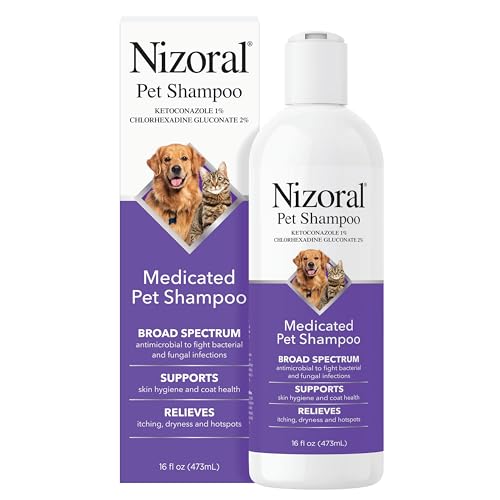
Differences in active concentration matter. The Douxo S3 PYO listing specifies 3% chlorhexidine, while CeraSoothe CHX+KET documents 2% chlorhexidine and 1% ketoconazole, and Nizoral’s pet shampoo lists 1% ketoconazole with 2% chlorhexidine gluconate. Some products, such as MiconaHex+Triz and Mal-A-Ket, mention active ingredients but do not state percentages on the listing, which may matter if you need a specific strength. Bottle sizes range from 6.7 oz for targeted treatments up to 16 oz for routine medicated bathing.
Many of the medicated dog shampoos document what they leave out. Douxo S3 PYO is free from soaps, sulphates, parabens, colorants, nanoparticles, and phthalates. The Veterinary Formula Clinical Care hot spot shampoo is paraben-, soap-, and dye-free, while Pet Honesty excludes sulfates, parabens, phthalates, alcohol, and artificial colors. Reviewing these exclusions is especially relevant for dogs with allergy-prone or reactive skin.
Final recommendation
CeraSoothe CHX+KET Antiseptic Shampoo for Dogs, Cats & Horses ranks first overall in this specification-based comparison under the published weighted criteria.
The Douxo S3 PYO Medicated Dog Shampoo with 3% Chlorhexidine is the first overall specification-based choice among the best medicated dog shampoos thanks to its clearly documented chlorhexidine concentration, Ophytrium hydration support, and exclusion of common irritants. Among the top medicated dog shampoos in this comparison, CeraSoothe CHX+KET stands out for owners who want documented dual antibacterial and antifungal action with ceramides, while Vetoquinol BPO-3 is the specification-based pick for oily or scaly coats that need follicular flushing. For dogs with allergy-driven itching, Miracle Vet’s hydrocortisone formula and Pet Honesty’s chlorhexidine and ketoconazole blend offer documented anti-itch and antimicrobial designs.
Frequently Asked Questions
What active ingredients should I look for in the best medicated dog shampoos?
Look for clearly disclosed actives such as chlorhexidine, ketoconazole, miconazole, benzoyl peroxide, or hydrocortisone, and check whether the listing states the concentration. Products like Douxo S3 PYO and Vetoquinol BPO-3 specify percentages, which helps match the shampoo to the severity of the condition.
Are the best medicated dog shampoos safe for puppies and other pets?
Suitability varies. Veterinary Formula Clinical Care products list use for pets over 12 weeks, while several antifungal shampoos such as CeraSoothe CHX+KET and MiconaHex+Triz document multi-species use across dogs, cats, and horses. Always check the age and species labels before bathing a young puppy or another animal.
How often should I bathe a dog with a medicated shampoo?
Frequency depends on the formulation and the skin condition. Veterinary Formula Clinical Care antiseptic and antifungal shampoo is labeled for twice-weekly use until skin clears, then weekly maintenance, while chlorhexidine options such as Douxo S3 PYO are often used during flare-ups as directed. Follow the label directions and your veterinarian’s guidance for any specific dog.
Can medicated dog shampoos help with hot spots and itching?
Yes, several options in this guide are designed for hot spots and itchy skin. Veterinary Formula Clinical Care Hot Spot & Itch Relief Shampoo uses oatmeal and aloe vera, Miracle Vet’s hydrocortisone shampoo targets anti-itch relief, and Nizoral’s pet shampoo lists hot spots among its intended uses. Choosing the right one depends on whether the underlying cause is bacterial, fungal, or allergy-driven.
Do I need a separate conditioner when using medicated dog shampoo?
Some medicated shampoos list skin-supportive ingredients such as ceramides, avenanthramides, aloe vera, or Ophytrium to help offset dryness. If your dog has a long or thick coat, a compatible conditioner may help maintain coat softness, but it should be selected to match the medicated routine rather than wash away the active ingredients.